
Related videos:
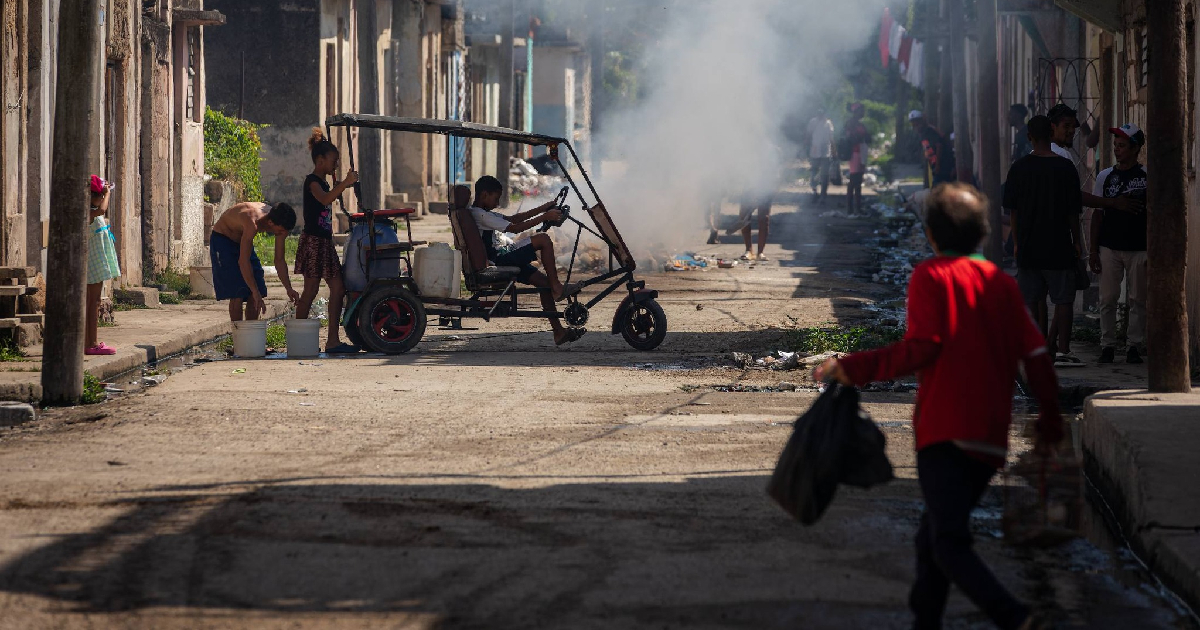
“IT HURTS ME MATANZAS.” In capital letters and accompanied by shocking images, photographer Raúl Navarro González condemned the evident state of decay in the streets of that city, in an environment tainted by the uncontrolled burning of waste, citizen unrest, and the exhaustion following many hardships.
Navarro González shared on social media that, after two months of not exploring the city with his camera, he encountered a scene marked by smoke and the smell of burning garbage, even before spotting the makeshift dumpsites.
"What I found was not silence: it was smoke," he wrote. And he described mothers with children crossing the haze, the elderly struggling to walk, and homes exposed to suspended ashes. The photojournalist referred to the pollution that seeps through the windows, the coughs that don’t show up in statistics, the fear that the fires will reach their homes: the extraordinary, in short, of everyday life.
The post generated dozens of comments reflecting alarm and exhaustion. Professor Alina Bárbara López Hernández, who shared the post, described the photo essay as “beautiful images of the horror we are experiencing” and warned that the burning of waste is very dangerous for human health and the environment, particularly in a context of limitations in medical care.
Other users pointed out that the situation is recurring in various regions of the country, with the same harmful effects. However, the public finds itself trapped between the danger of the polluted garbage hotspots flooding the streets and the risks associated with setting it on fire in the middle of the road, without the necessary control measures.
The Center for Neurosciences of Cuba published an alert explaining that uncontrolled burning of waste occurs at low and inconsistent temperatures, leading to incomplete combustion and the release of toxic substances.
The institution indicated that at least 30 compounds generated in these processes are considered harmful to human health and can persist for years in the environment and in the body. In the latter, they could cause brain damage and hormonal disruptions.
The scientific warning was also met with expressions of discomfort from dozens of users who pointed out the lack of viable solutions to the issue of garbage, in a context where the country has faced multiple infections caused by viruses such as those that lead to dengue, chikungunya, Oropouche fever, and Zika, not to mention the lack of basic medications to combat them.
Although the Minister of Science, Technology, and Environment (CITMA), Armando Rodríguez Batista, stated that the Cuban government does not promote the open burning of solid waste, many citizens wonder how something so simultaneous across various territories in the country can happen without, at the very least, the inaction and irresponsibility of the authorities, in an environment of strict surveillance and control like the one the island experiences.
The testimonies of the population emphasize respiratory discomfort, air pollution, and concern for the health of the most vulnerable. In the words of Navarro González, the city “wears down in small fires.” Flames, one could add, that feed the greater blaze in which Cuba is simmering.
Filed under: