
Related videos:
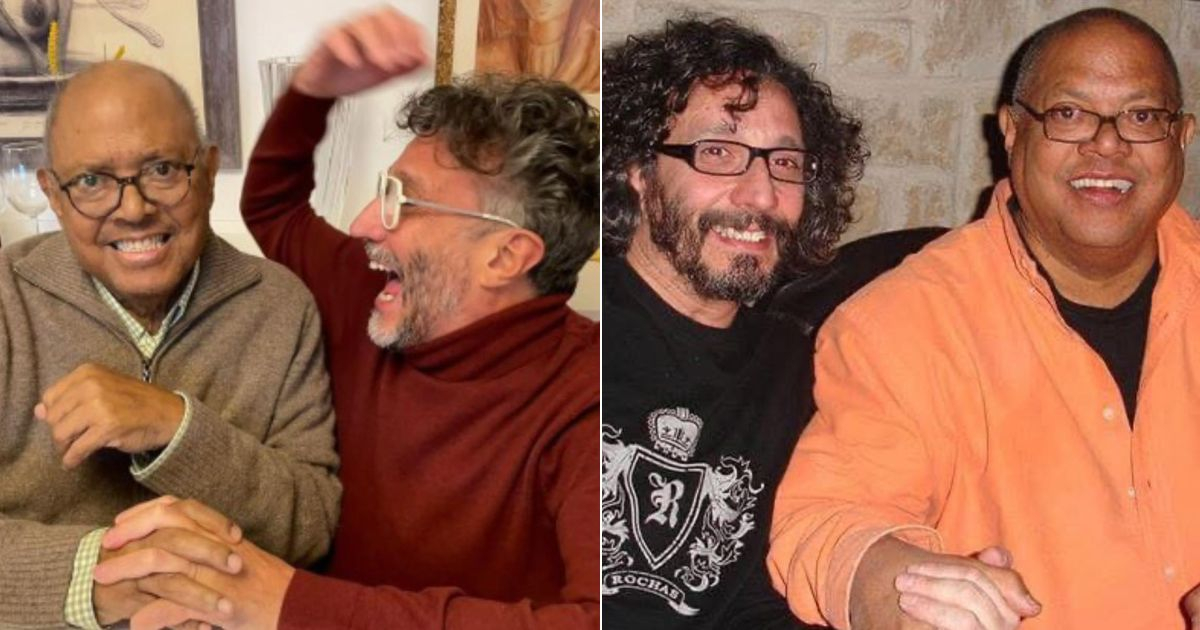
“Immeasurable artist” and “fierce defender of freedoms”: this is how the Argentine musician Fito Páez described Pablo Milanés in a tribute message on the occasion of the Cuban troubadour's 83rd birthday.
The post on the Facebook profile of Páez described the author of “Yolanda” and “Algo más que soñar” as “an extraordinary man. Classic and modern.” Milanés, it stated, “never allowed himself to be overwhelmed by cancer or the foolishness of the political bureaus in his country.”
The iconic Argentine rock musician, a multiple Grammy Award winner, emphasized Pablo's personal and artistic loyalty, stating that he stood by him "until his last breath"; just as, years earlier, the Cuban singer-songwriter had saved his life, he confessed.
“I miss him like very few others and I celebrate his existence in every step I take,” Páez wrote, describing the absent friend as “my teacher, my brother, my father, my mentor, and my unwavering companion in mischief.”
The post immediately generated hundreds of comments and was widely shared. In the digital forum, followers reminisced about concerts, songs, and special moments associated with the work of the Bayamese troubadour. Many highlighted the endearing tone of his "African velvet voice," as Páez described it.
The commemoration of the 83rd anniversary of Milanés was also celebrated by his daughter, singer Haydée Milanés, who, fittingly, got a tattoo of the chorus from “Son para despertar a una negrita,” a song her father dedicated to her when she was six or seven years old.
In the Cuban capital, tribute activities were held for the troubadour in various music venues and events, and several days prior to the date, the documentary “Para vivir: El tiempo implacable de Pablo Milanés,” directed by Fabien Pisani, was screened at the Norwegian Embassy.
This audiovisual work was excluded from the recent International Festival of New Latin American Cinema in Havana, according to the complaint by its director.
The decision once again highlighted the pervasive censorship in Cuba, even in the artistic and cultural realm, amid a backdrop of repeated controversies between creators and authorities.
Pablo Milanés, who passed away in 2022, was one of the founders of the Nueva Trova and one of the most influential voices in contemporary Cuban music. While in his youth he defended the political process that emerged after the 1959 revolution, he later became disillusioned and distanced himself from the official discourse, making his critical stance very clear.
For journalist and music critic Joaquín Borges Triana, the singer-songwriter is a glory of the nation, and further proof that culture can unite the “transnational, transterritorial, multilingual, and plural” Cuba that we are today.
The voice and compositions of the author of “Para vivir” and “El breve espacio,” among other well-known songs, leave no one indifferent, commented Fito Paéz. His post concluded with a call for everyone to “hurry to listen to him,” as “it will brighten their lives.”
Filed under: