
Related videos:
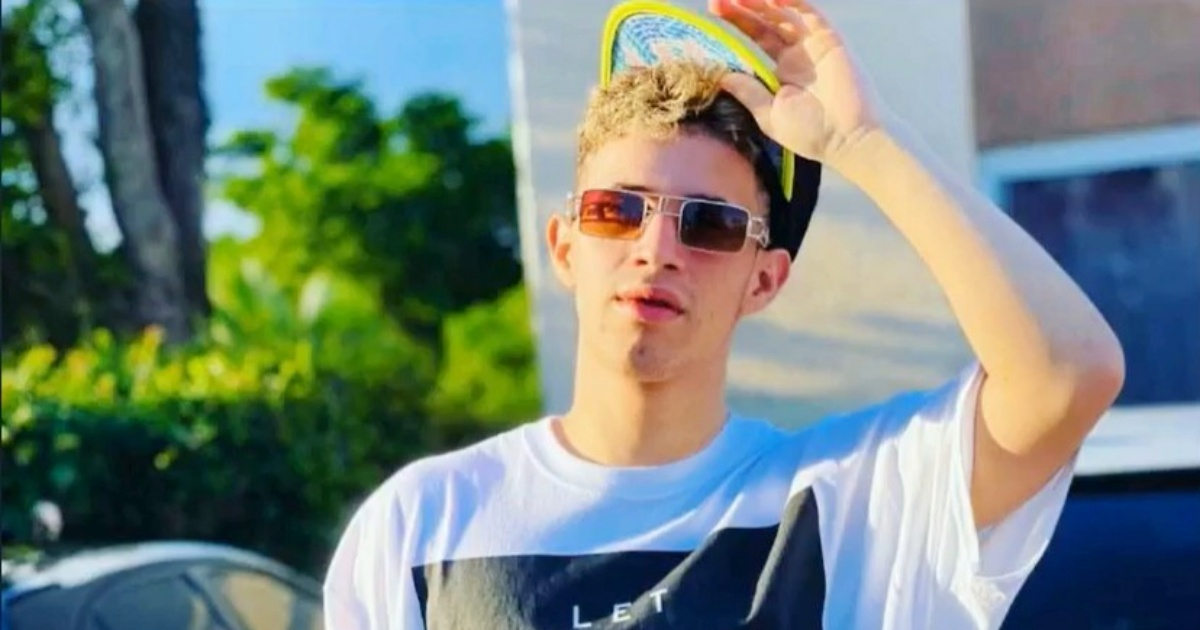
The young Cuban Ledián Padrón Guevara, 25 years old, reportedly died on February 25 in the armed clash that took place off the northern coast of Villa Clara between a boat coming from Florida and units of the Border Guard Troops.
His identity was revealed from Miami by journalist Javier Díaz, from Univision 23, who claimed to have been in contact with the family.
Although the Ministry of the Interior (MININT) confirmed the death of four people during the operation, it has officially identified only one of them so far.
The name of Padrón Guevara does not appear in the official statement, but, as Díaz explained, his family fears that he may be among the deceased because he is not listed among the survivors released by the authorities.
In a recent report, the journalist showed images of Ledián alongside Cristian Acosta holding long guns.
A young man between Miami and Houston
The available information about Ledián Padrón Guevara is scarce and fragmented. According to statements made by those close to him to the journalist, the young man lived in Houston and had recently moved to Miami.
There -according to this version- would have begun training with the aim of participating in an action against the Cuban regime.
Judging by his social media profile, Padrón was originally from Camagüey and at some point had artistic aspirations, including the desire to pursue singing.
Beyond those details, little is publicly known about his personal journey or motivations.
Díaz stated that the young man's relatives maintain that the group did not see itself as a terrorist organization.
"They would have gone to fight for Cuba", the journalist stated, citing conversations with acquaintances.
"They thought the people would join in, but apparently the plan was rushed and didn't turn out as they expected," he added.
The reporter added that the operation had supposedly been organized for "a very long time" by a group of Cubans in Miami, who initially connected through TikTok and later conducted training on a farm in South Florida.
A operation with two vessels?
According to the unofficial version disseminated by Díaz and other sources on social media, the armed action reportedly involved two boats with about ten people each, which left Miami around three or four in the morning.
It is unclear whether both vessels managed to approach Cuban territory or if only one was intercepted.
If it is confirmed that Ledián Padrón Guevara died in the clash, he would be one of the three deceased individuals who, up until Wednesday night, had not been officially identified by the Cuban government.
So far, the only victim acknowledged by authorities is Michel Ortega Casanova, who—according to reports on social media—had recently arrived in the United States and was living in Tampa.
Subsequently, the Cuban Republican Party (PRC) confirmed that Ortega was a member of their organization, although it distanced itself from any implication in the armed incursion.
"The PRC does not direct armed actions, nor does it exercise control over the decisions or actions that its members or supporters may undertake personally," the organization stated in a statement shared on Facebook, emphasizing that it was unaware of the deceased's intentions.
The official version of the confrontation
The MININT reported that a suspected "speedboat" with registration from the state of Florida (FL7726SH) was detected approximately one nautical mile northeast of the El Pino channel, in Cayo Falcones, municipality of Corralillo.
According to the official report, a surface unit of the Border Guard Troops, consisting of five personnel, approached to identify the vessel.
At that moment—according to the government’s account—gunfire was opened from the boat against the Cuban military.
In the exchange of gunfire, the commander of the Cuban unit was injured.
The official report stated that four people were killed and six were injured, who were evacuated and received medical attention.
Authorities confirmed that the vessel was carrying ten armed individuals who intended to enter the country with "terrorist purposes," according to preliminary statements from the detainees.
They also reported the seizure of assault rifles, handguns, homemade incendiary devices, bulletproof vests, telescopic sights, and camouflage uniforms.
Among those arrested is Amijail Sánchez González, Leordan Enrique Cruz Gómez, Conrado Galindo Sariol, José Manuel Rodríguez Castelló, Cristian Ernesto Acosta Guevara, and Roberto Azcorra Consuegra.
However, in the case of Roberto Azcorra Consuegra, the Cuban denied from Florida that he was arrested or that he participated in the action.
Finally, in Cuban territory, Duniel Hernández Santos was arrested, identified as the person responsible for ensuring the group's reception on the island.
The Cuban government stated that the majority of those involved are Cubans residing in the United States and that several have criminal records.
The names of Amijail Sánchez González and Leordan Enrique Cruz Gómez also appear on the list that the regime updated last July and presented to the UN as part of its national registry of individuals deemed terrorists.
A former member breaks the silence in Florida
In the midst of the controversy, a former member of the group spoke from Florida with journalist Javier Díaz, on the condition of anonymity.
According to his testimony, the movement began to take shape on TikTok and involved the participation of a figure with experience in special forces, whom he described as someone with extensive military knowledge and leadership skills.
"This that just happened should have happened earlier," he stated, suggesting that the incursion was not an improvised plan. However, he assured that he chose to step aside due to internal disagreements. "There were certain ambitions to seize power in Cuba, things that did not align with me," he declared.
The former member stated that, after his departure, the original group weakened and sought alliances with others. According to his account, training was conducted in Florida to carry out the operation, and there were even plans for a "second wave" in case the operation had been successful.
Despite claiming to know details about the structure and participants, he insisted that he had no involvement in the incursion that ended in tragedy.
Between Versions and Silences
While the Cuban government labels the incident as a "terrorist infiltration" organized from the United States, versions are emerging from South Florida that speak of a group convinced they would lead a rebellion.
In the midst of that clash of narratives stands the still incomplete figure of Ledián Padrón Guevara: a young man from Camagüey who lived between Texas and Florida, with artistic aspirations at some point in his life, and who is now one of the four men killed in an operation whose true scope and planning still raise more questions than answers.
His name does not yet appear in any official communication from Havana. However, in Miami, his family is already mourning him as one of the presumed deceased in the boat intercepted off the Cuban coast.
Filed under: