
Related videos:
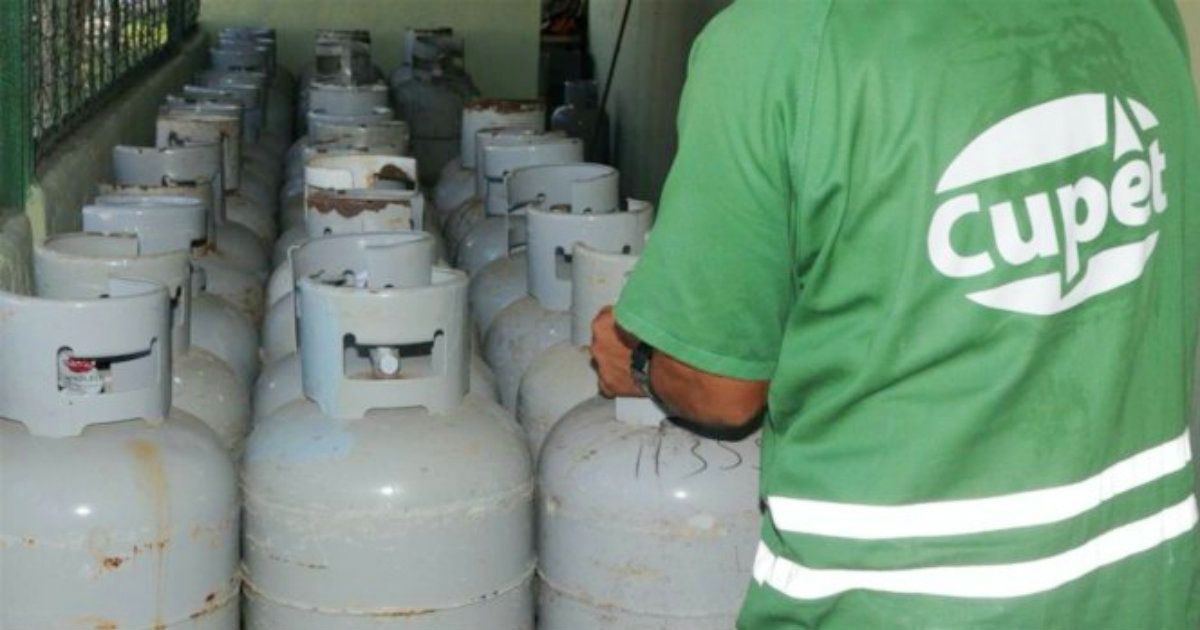
The Territorial Division of Fuel Marketing in Santiago de Cuba announced the official establishment of the Gas Licuado Oriente Company (GASLOR), as part of the process of specializing in liquefied gas activities in the region.
According to information shared on social media by the local press, the new company was established on October 1st, and the definitive transfer of the liquefied gas sales activity to the public was completed on February 1st, following the transfer from the previous structure. The statement also indicates that notices related to the service will be published on the Telegram channel identified as UEB DTCC Santiago de Cuba, which will be renamed “Comunicación GASLOR” and linked to the digital space “Clientes Con Razón.”
However, the announcement did not specify when the sale of liquefied gas to the public will resume, nor did it detail the payment currency, prices, or distribution schedule.
In the comments on the official post, the reaction was consistent. Dozens of users posed the same question: "When will the sale happen?" Others pointed out that "what's missing is gas" and questioned the announcement of administrative changes without clarifying when they would be able to purchase fuel again. There were also those who sought explanations about the ownership structure of the new company and expressed concerns about the possibility of the service being charged in dollars.
The creation of GASLOR occurred after the suspension of liquefied gas distribution in Santiago de Cuba and the other eastern provinces, announced last January due to a lack of supply. At that time, it was explained that the gas was on a ship coming from Russia and that the process of unloading and distribution "will take time," without providing a specific date to restore the service.
The shutdown caused prices in the informal market to skyrocket. A canister of household gas was sold for between 10,000 and 12,000 pesos in rural areas, and up to 50,000 pesos in eastern cities, figures that are unaffordable for most households.
In the face of scarcity, thousands of families have returned to cooking with charcoal and firewood amid prolonged blackouts and difficulties accessing other fuels. In several provinces, bags of charcoal have surpassed 2,000 and even 3,000 pesos, while social media is flooded with complaints about the return to makeshift stoves as the only domestic alternative. In this context, the crisis has been described as a forced regression that compels families to "dig up the firewood stove," while other countries are debating renewable energy and new technologies.
In Santiago de Cuba, where the suspension was officially confirmed weeks ago, the establishment of a new business structure does not resolve the main uncertainty for the population: when liquefied gas will be sold regularly again and under what conditions.
For now, the question that keeps circulating on social media remains unanswered.
Filed under: