
Related videos:
The crisis of the National Electric System (SEN) continues to deepen as authorities acknowledge new figures that confirm the magnitude of the generation deficit.
According to the informative note from Unión Eléctrica (UNE), dated Thursday, February 26, the country experienced power outages throughout the 24 hours of the previous day, a situation that has continued into this morning.
The highest recorded impact was 1879 MW at 7:10 PM, a figure that highlights the increasing imbalance between supply and demand during peak consumption hours.
As of 6:00 AM today, the availability of the SEN was 1170 MW, against a demand of 1930 MW, resulting in 832 MW affected.
For the midday schedule, an impact of 850 MW is anticipated, confirming that the shortfall is not exclusive to the nighttime peak.
The outlook during peak hours is not encouraging either.
Although the commissioning of unit 2 of the Santa Cruz thermoelectric plant, with 70 MW, is anticipated and is currently in the start-up process, the estimated availability will be 1346 MW, while the projected maximum demand reaches 3100 MW.
This implies a deficit of 1,754 MW and a forecasted impact of 1,784 MW if the expected conditions prevail.
The UNE itself acknowledges multiple structural problems that continue to impede progress in generation.
Currently, five units from the CTE Mariel, Santa Cruz, Felton, and Antonio Maceo are out of service due to breakdowns.
This is complemented by maintenance work on three blocks of the Mariel, Nuevitas, and Carlos Manuel de Céspedes power plants.
In addition, there are limitations in thermal generation that keep 434 MW out of service.
While the official report highlights that the 51 new photovoltaic solar parks generated 5,308 MWh, reaching a maximum power output of 916 MW during peak hours, this contribution does not compensate for the burden of accumulated breakdowns and maintenance in the thermoelectric system, which continues to be the backbone of national generation.
In Havana, the situation is also critical.
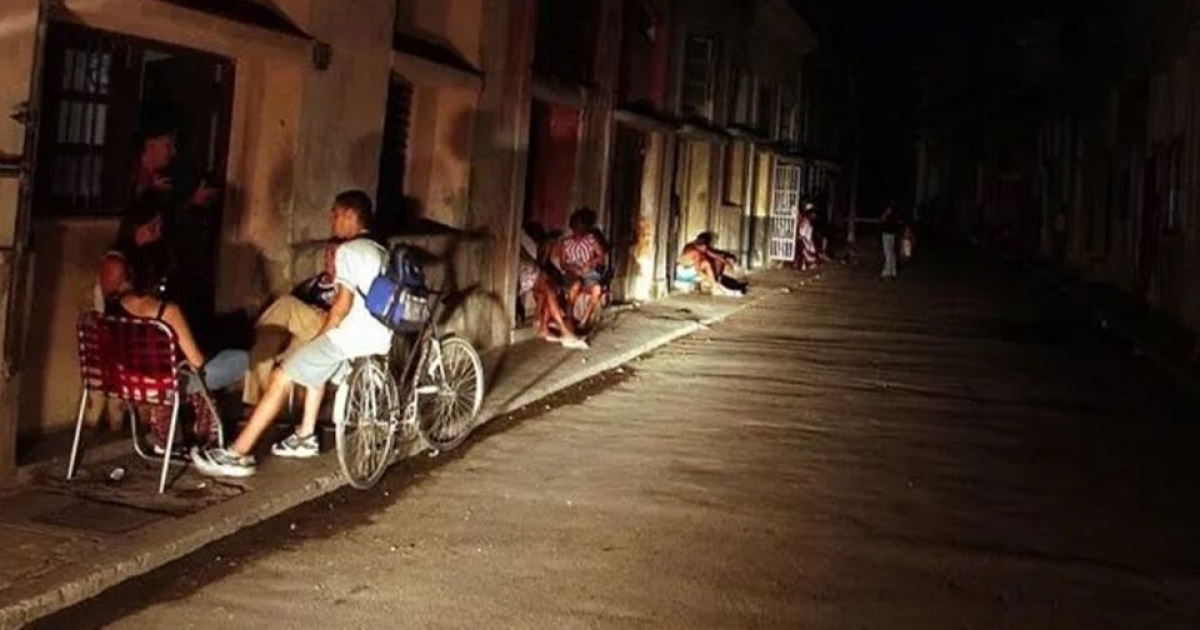
The Electric Company of the capital reported that on Wednesday, the service was affected starting at 7:00 AM, with a maximum impact of 359 MW at 7:00 PM, of which 70 MW were due to emergencies.
The service was restored at 11:24 PM, but at the time of this report, four blocks remain affected, totaling 172 MW, with a restoration forecasted for the morning.
The company also warned that if the availability of the SEN does not improve, there could be new disruptions due to energy contingencies, without a set schedule, leaving the population once again waiting for unforeseen interruptions.
Official figures reveal a system operating at its limit, with deficits that far exceed one thousand megawatts during peak demand hours.
The constant breakdowns, simultaneous maintenance, and thermal limitations reflect problems that have accumulated over the years, resulting in prolonged blackouts and daily uncertainty for millions of Cubans.
Filed under: