
Related videos:
For the average Cuban, who receives their salary electronically and needs to support themselves and their family, the situation of constant obstacles to carry out the most basic digital transactions has become unbearable.
Thus, he reported on Facebook the self-employed worker Dariel Vicedo, who in a lengthy and detailed account described multiple irregularities in the acceptance of electronic payments at businesses in the city of Matanzas.
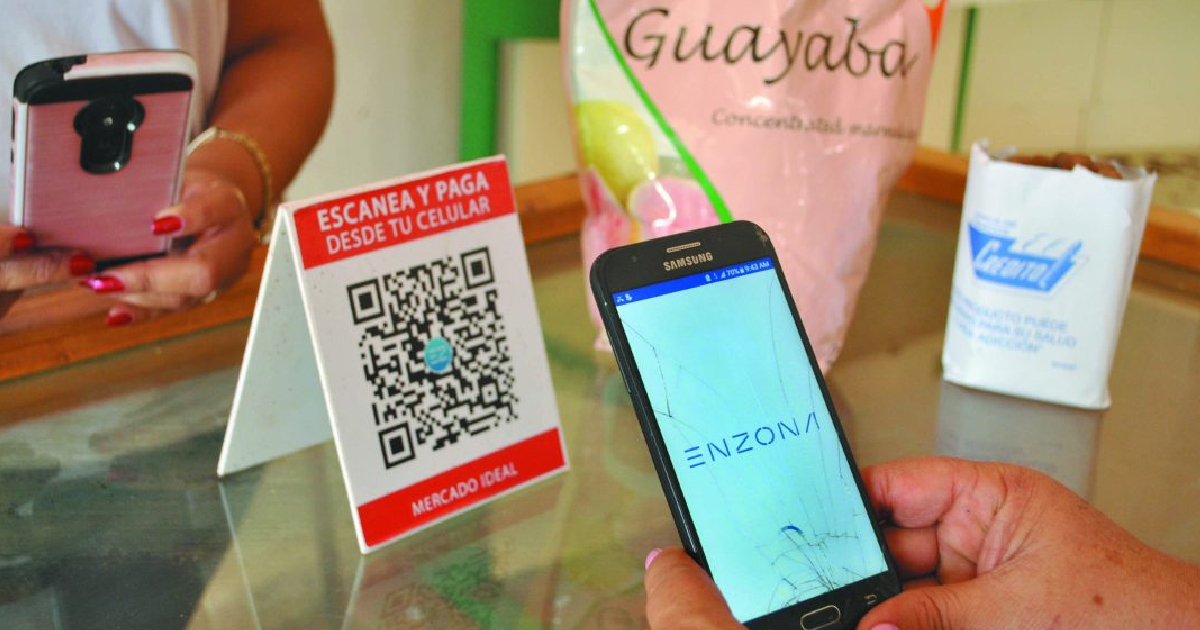
Amid humorous anecdotes and timely reflections, Vicedo questioned the practical implementation of banking services and compliance with Resolution 111/2023. The resident of Matanzas described a journey through various establishments, where he attempted to make payments, unsuccessfully, through Transfermóvil or EnZona.
He explained that at a hamburger sales point, the QR code had been removed, and the clerk indicated that he needed to transfer directly to a card because, if he used the QR code, "the money goes to the tax account and the bank doesn't deposit it on time"; this also meant losing the 6% discount for online payment.
In another private establishment, where he had previously paid in cash, attempts to make digital payments returned messages such as "transfer failed" and "card does not exist." When he asked to verify the information, the employee informed him that the card was with the owner and argued that "you cannot transfer from BANDEC to BPA," a statement that Vicedo questioned and turned into one of the many inquiries in his complaint.
The self-employed worker also recounted outright refusals to accept transfers at other businesses and presented options that he deemed illegal, such as requiring "half cash and half transfer," charging up to 10% extra for electronic payments, or referring clients to third parties who provided cash in exchange for transfers with commissions of 20%.
In his text, supported by comments from dozens of forum users who shared their own hardships on the matter, Vicedo emphasized that Resolution 111/2023 acknowledges the right to pay using QR codes from Transfermóvil or EnZona, and deemed it illegal to mandate the use of other alternatives.
Furthermore, he questioned whether the money deposited in tax accounts flows less smoothly than in other accounts and raised the possibility of tax evasion practices or distortions in banking implementation.
"Is there distrust among economic actors in the banking system? If this is true, shouldn't it be a greater concern for these institutions?" the resident of Matanzas asked.
And he added, "Shouldn't the solution to this problem be the provision of guarantees instead of the financial clampdown? Or, even more seriously, at a political level, is there an unspoken desire for private economic actors not to thrive?"
The self-employed worker from Matanzas urged institutions such as the Provincial Government, banks, and ONAT to take responsibility without shifting the burden of reporting and oversight onto the citizens. He also encouraged the public to be more assertive and determined in demanding their rights.
The testimony occurs in a context of repeated complaints about the functioning of e-commerce in Cuba. This week, also from Matanzas, reports indicated long lines at branches of Bandec due to power outages during working hours and limitations in banking services.
Likewise, in Holguín and other provinces, users have reported receiving wages in electronic accounts, while numerous businesses refuse to accept transfers or impose extra charges.
In the midst of the acute energy crisis, cash shortages, connectivity failures, and long lines at banks and other establishments, citizen criticism has once again called into question the effectiveness of the digital transformation promoted by the Cuban government.
The functionality of electronic payments, in a country that can't even ensure daily bread for its population, falls among the many pending issues.
Filed under: