
Related videos:
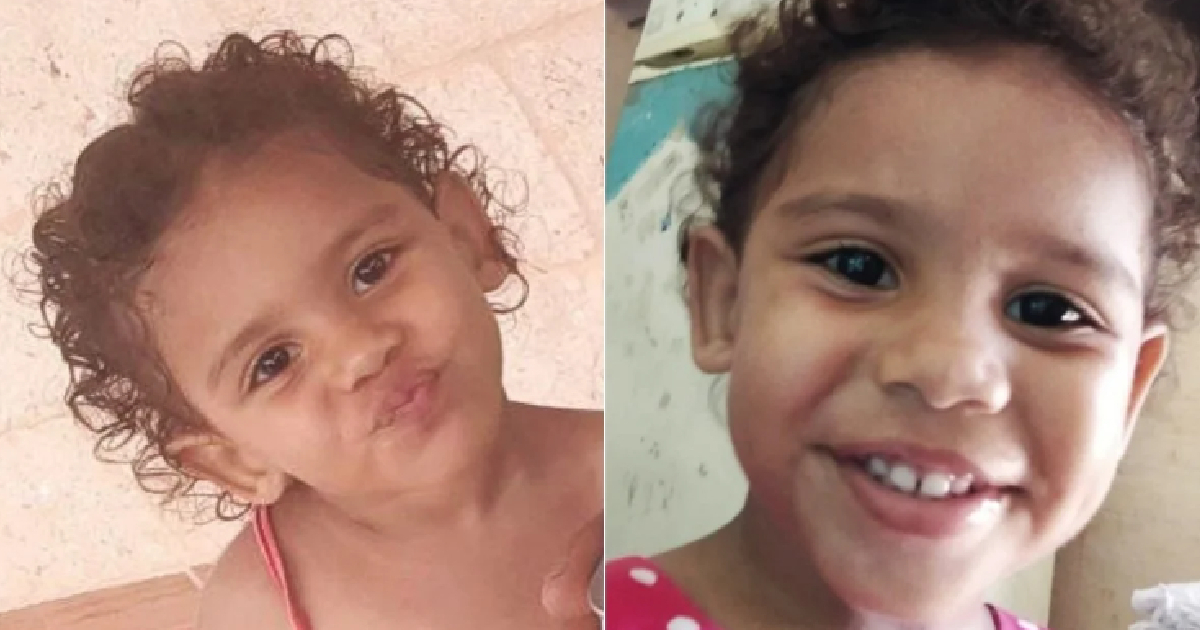
Two years after the disappearance of the girl Lali Paola Moliner Bosa, her family continues without answers and with the same uncertainty that began on February 25, 2024.
This time it was her aunt, Valia Zaldívar Salazar, who raised her voice on social media with a message filled with pain, unanswered questions, and a direct accusation against the authorities who, according to the family, have been unable to clarify what happened.
"And so what happens? I respond, nothing happens," he wrote on Facebook.
In her post, she lamented that two years later, no one has explained to them what happened, who separated the girl from her family, or why.
She denounced that institutional silence is not synonymous with calm, but rather with abandonment. "Our silence is not forgetfulness, it is pain," she stated, hinting at the feeling of helplessness that the family has endured since day one.
The girl disappeared when she was three years old. Today she would be five. However, time has not brought any visible progress or public information about the course of the investigation.
The family asserts that they have not received clear answers or consistent communication from the authorities.
In her message, the aunt emphasized that they are waiting for her, that they do not lose hope, and that the love remains intact despite the passing years.
The post was not an isolated act of nostalgia, but a reminder that the case remains open and that the wait continues without certainties.
The story of Lali Paola began to shake the country on February 25, 2024, when she was last seen in the Bahía neighborhood, in the municipality of Habana del Este, accompanied by her mother, Teresa Moliner Bosa, who is 24 years old.
The next day, the body of the young woman was found near the coast in Cojímar, showing signs of violence. No trace of the girl was ever found.
Since then, the family has visited police stations, offices, and government agencies in search of information.
Lali Paola suffers from allergies and experiences severe asthma attacks, which increases the anxiety of her loved ones due to the lack of news about her health condition.
The grandmother, Beatriz Bosa Alfonso—who raised her since she was a baby—recounted months ago that she went several times to seek answers and always received evasions or was referred from one place to another without any concrete information.
According to what they said, not even a message to inform them that the case is still open has been offered to them regularly.
The repeated lack of official communication has forced family members to independently maintain the search and visibility of the case.
They have and have shared phone numbers -58385107, 53161904, 59040389, and 51976232- to receive any leads.
A significant part of the mobilization has relied on the solidarity of people who, without a direct connection to the family, have shared information in the hope of providing some useful details.
Throughout these two years, neither the authorities nor state-run media have provided detailed reports on the progress of the investigation or on the mother’s murder.
The absence of information has been one of the constant demands of the family, who believe that institutional silence deepens the pain.
Meanwhile, they insist on not giving up. "I will always wait for you," Valia wrote.
But behind that promise lies an implicit accusation: in the absence of effective mechanisms for search, transparency, and state support, it is the families themselves who must bear the burden of keeping memory and hope alive.
Independent organizations such as the Gender Observatory Alas Tensas have documented that in Cuba there are at least ten women who have disappeared under unclear circumstances, some for more than a decade.
According to reports gathered by that platform, there is no effective public alert system for cases of disappearance, and families often face opaque processes, lacking access to regular information or visible search protocols.
Filed under: