
Related videos:
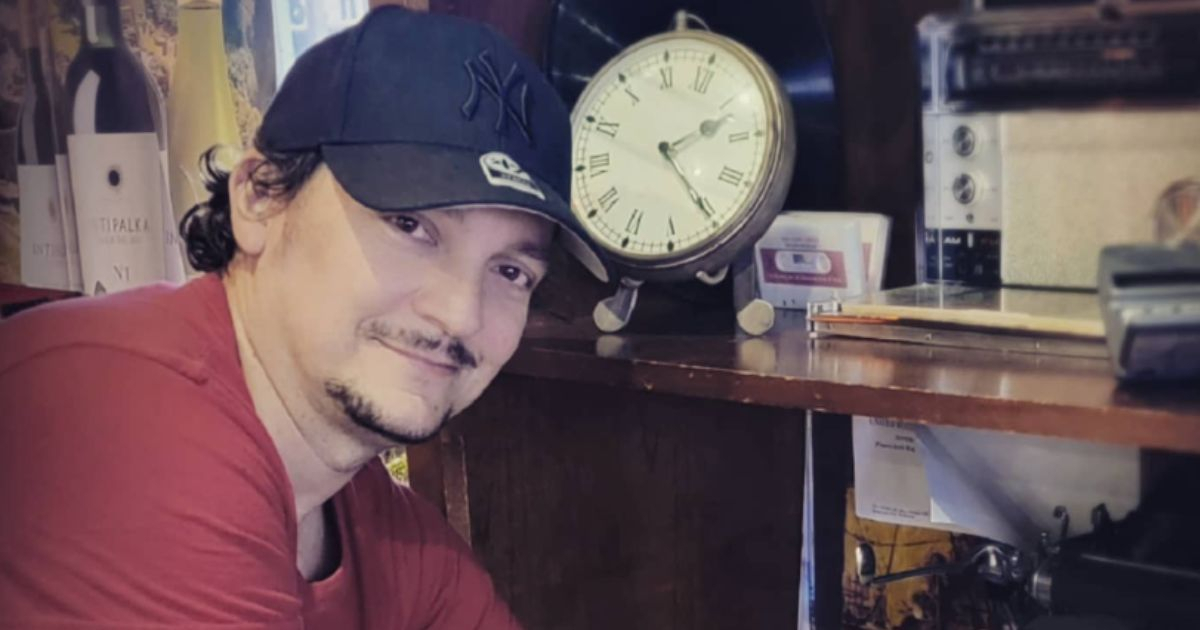
The family of Pavel Allín, one of the four deceased in the boat incursion last week in Cuba, received the news of his death with shock and sorrow.
According to journalist Alexis Boentes from Telemundo 51, his associates believed he was in Miami when, unexpectedly, they saw his name on the list of victims released by the regime following the maritime incident that occurred off the coast of Villa Clara.
Simón Rodríguez, brother-in-law of the writer who passed away at just 45 years old, spoke through tears. "It was in the middle of the night, and I never got to say goodbye to him," he expressed, weeping.
The man proudly displayed the books written by his brother-in-law. He insisted that he wants him to be remembered for his work and ideals. "Let them remember him as an artist who always dreamed of his country's freedom. As a patriot of Cuba," he said.
Although he tries to come to terms with what has happened, the blow is still hard to understand. "It's a surprise that this happened, but I understand it because he loves Cuba, he loves Cuba with all his life, obviously," he pointed out.
In one of the toughest moments of his testimony, he reflected on the decision his brother-in-law would have made.
"I hope that everything he has done was not for nothing, because thinking about the situation, I mean, a person like him putting himself in such a crazy position and thinking about his last moment is difficult, but he made that choice, and I hope that everything he did was not in vain," he emphasized.
Simón went further in referring to the Cuban government's version. He stated that if the events occurred as the regime describes, it would have been a suicide mission. Therefore, he explained that the family does not trust that narrative and requests an independent investigation from the United States government.
A close friend described Pavel as "a modern Martí, a man of words and paper, not of weapons," emphasizing his intellectual character.
On his social media, Pavel Allín shared poems, excerpts from novels, and political reflections.
In one of the videos, his voice was recorded defending national identity: "The patriotic symbols, the flag of the lone star, the national anthem, the green of our palms, are not mere ornaments; they are the living memory of those who believed that a people without sovereignty is a people with a foreign future."
The writer, originally from Camagüey, was officially identified as one of the four deceased following the confrontation at sea, which Cuban authorities described as an attempted armed infiltration from the United States.
His name appears on the list released by the Ministry of Foreign Affairs, while the investigation is still ongoing and the details remain preliminary.
Before his death, Allín had directed repeated messages to the Cuban community in exile.
In his posts, he insisted that the freedom of Cuba was possible, but it depended on unity. He urged to move past division, "sterile criticism," and attacks among fellow countrymen, which - he warned - only strengthen the oppressive apparatus.
A U.S. citizen for several years, he argued that denouncing the situation on the Island from abroad did not diminish the legitimacy of the cause. He maintained that while fear continued to reign in Cuba, the word could become a powerful weapon in exile.
He also openly rejected annexation as a political alternative. In a video, he stated: "I do not want annexation and I do not intend to discuss it with anyone."
For him, trading sovereignty for pragmatism represented a profound renunciation of national identity. "Freedom is not about changing masters; it is about learning to walk on one's own legs, even if the path is strewn with thorns," he stated in another intervention.
With a degree in Art History and a literature professor, Allín had received awards in poetry and narrative.
In his messages, he referenced Marti's thought and advocated for sovereignty, cultural identity, and the need for a collective struggle on multiple fronts: from international denunciation to the mobilization of consciousness.
His final slogan was clear: "Homeland, life, and liberty." He repeatedly stated that "divide and conquer" must come to an end and that only unity would allow progress.
Today, his family is trying to come to terms with the loss. Amid the pain and the questions surrounding what happened, Simón holds on to a single thought: that his brother-in-law's sacrifice was not in vain.
Filed under: