
Related videos:
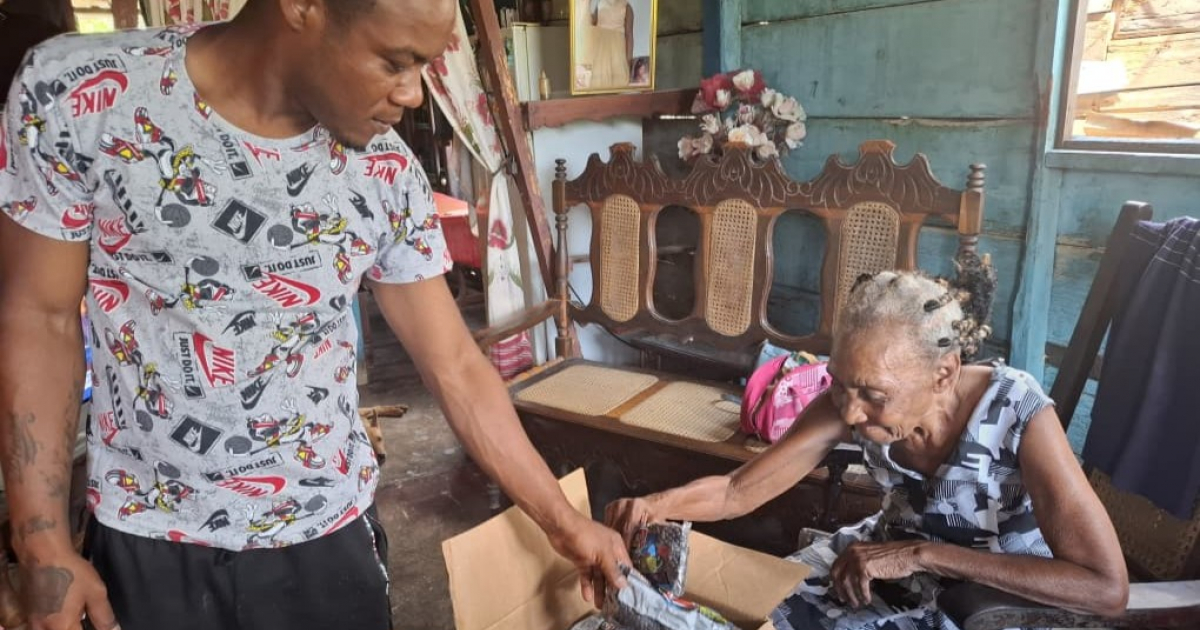
The four dioceses of the Eastern Region of Cuba have begun distributing food and hygiene kits that arrived at the port of Santiago de Cuba, a donation from the United States intended for the most vulnerable families after the passage of the hurricane Melissa.
The assistance, channeled through Cáritas Cuba, aims to alleviate the situation of approximately 6,000 families who, months after the cyclone, are still suffering the aftermath of the storm in a context of vulnerability that was already alarming before the cyclone.
The seven containers that arrived were distributed among the dioceses of Santiago de Cuba, Holguín, Bayamo, and Guantánamo-Baracoa.
In Santiago de Cuba, 480 food kits and 600 hygiene kits are being distributed.
In Holguín, 840 food modules and 597 hygiene modules are being delivered, including those intended for communities in the municipality of Cacocum such as La Rufina, Arroyo Blanco, and San Blas.
In Bayamo, 600 food kits and 603 hygiene kits were assigned, while in Guantánamo-Baracoa, 480 food modules and 300 hygiene modules are being distributed.
The images shared show the unloading of goods at the Cáritas Guantánamo-Baracoa center in Baracoa at midnight after a long journey, as well as deliveries in the Cecilia community and the village of Maqueicito.
Volunteers actively assist in the unloading and subsequent distribution, in a process that is carried out in an organized, safe, and swift manner, despite the transportation challenges to remote areas.
The modules are provided free of charge to individuals previously identified by the diocesan teams and their volunteers, in coordination with priests and religious who support the humanitarian response.
The aid prioritizes elderly adults, single mothers with small children, and individuals with disabilities or reduced mobility, sectors particularly affected after the hurricane.
The cyclone Melissa struck eastern Cuba on October 29 as a Category 3 hurricane, leaving thousands of people homeless and causing damage to crops, telecommunications, power networks, and water infrastructure.
All of this occurred in a context already marked by food shortages, prolonged blackouts, and the deterioration of basic services. Months later, many families are still unable to regain their homes, belongings, or stable access to essential resources.
The assistance is part of a three million dollar package announced in November by the Trump administration for those affected by Melissa.
The plan included three shipments: two by air and one by sea.
The State Department ordered that aid be channeled in close collaboration with the Catholic Church in Cuba to ensure it reaches the population directly, transparently, and effectively.
The shipments include staple foods such as rice, beans, oil, and sugar, as well as supplies for purifying and storing water, and essential household items like pots, cooking utensils, sheets, blankets, and solar lanterns, the latter being particularly necessary amid frequent blackouts.
Washington estimated that the assistance could benefit up to 24,000 people in Santiago de Cuba, Holguín, Granma, and Guantánamo.
Meanwhile, the regime publicly criticized the dispatch of this aid.
Through a statement from the Ministry of Foreign Affairs, it accused the United States of using the tragedy for "political manipulation" and asserted that there was no official coordination between the two governments.
The authorities stated that they learned about the initiative through the Catholic Church and insisted that all humanitarian contributions should be channeled through state avenues.
Despite these objections, the goods are being received and distributed in communities that continue to face extremely difficult conditions.
The reality on the ground shows that without this kind of external support, many of these families would be left in an even more critical situation.
The scale of the assistance, which reaches thousands of households, highlights both the depth of the need and the limitations of the state's response to a population that continues to cope with the aftermath of the hurricane and a structural crisis that did not begin with the cyclone but was significantly exacerbated by it.
Filed under: