
Related videos:
Republican congress members from South Florida celebrated the decision of the President of Ecuador, Daniel Noboa, to declare the Cuban ambassador non grata and give all diplomatic personnel from the island 48 hours to leave the country.
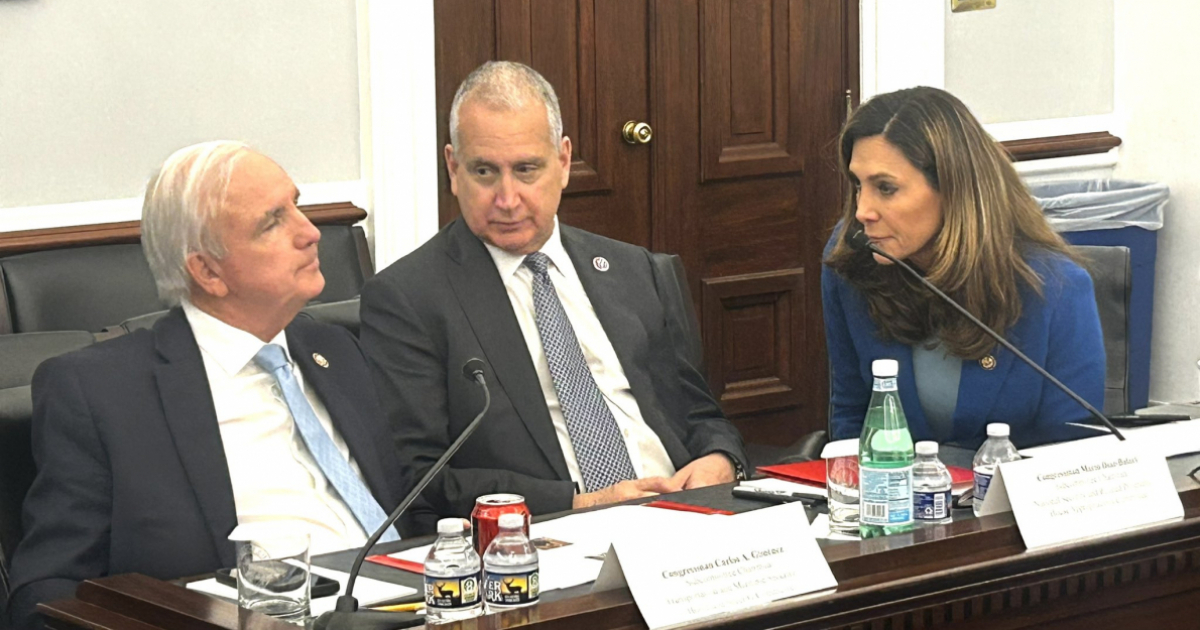
Congresswoman María Elvira Salazar stated that the measure sends “a clear message to the entire region: enough with the Cuban dictatorship.”
In a message published on social media platform X, he praised Noboa for, as he stated, facing “a regime that not only oppresses its own people but also exports repression, destabilization, and misery throughout the hemisphere.”
"More and more countries are waking up and coming together to accelerate the end of the Cuban terrorist dictatorship," the lawmaker added.
In the same vein, Congressman Mario Díaz-Balart praised what he called a "decisive decision" by the Ecuadorian president and asserted that the measure aligns with Ecuador's national security interests.
He also noted that it strengthens cooperation in defense and security between the United States and Ecuador.
The decision was formalized on Wednesday through a diplomatic note from the Ministry of Foreign Affairs and Human Mobility of Ecuador, dated March 4, 2026, which notifies that the Cuban ambassador Basilio Antonio Gutiérrez García and all diplomatic, consular, and administrative staff must leave Ecuadorian territory within 48 hours.
The measure is based on Article 9 of the Vienna Convention on Diplomatic Relations of 1961, which empowers a state to declare a member of a diplomatic mission as non grata.
In parallel, Noboa signed an executive decree that terminates the functions of Ecuador's ambassador to Cuba, José María Borja López, which implies a break in the current level of diplomatic representation between the two countries.
This event, criticized by former president and long-time ally of Havana Rafael Correa, occurs in a context of increasing pressure on the regime of Miguel Díaz-Canel and following the announcement by the commander of Southern Command, General Francis L. Donovan, of closer collaboration between Ecuador and the United States against organizations designated as terrorist.
Following Ecuador's decision, military presence was reported around the Cuban Embassy in Quito. The broadcaster Radio Pichincha reported on the deployment of personnel outside the diplomatic mission amid the tension created by the decision.
The expulsion of the Cuban diplomatic corps occurs within a context of growing regional confrontation with the Havana regime and marks a new episode in the realignment of alliances in Latin America, accelerated after the capture of Nicolás Maduro in Venezuela, one of Cuba's key supporters in the region.
Filed under: