
Related videos:
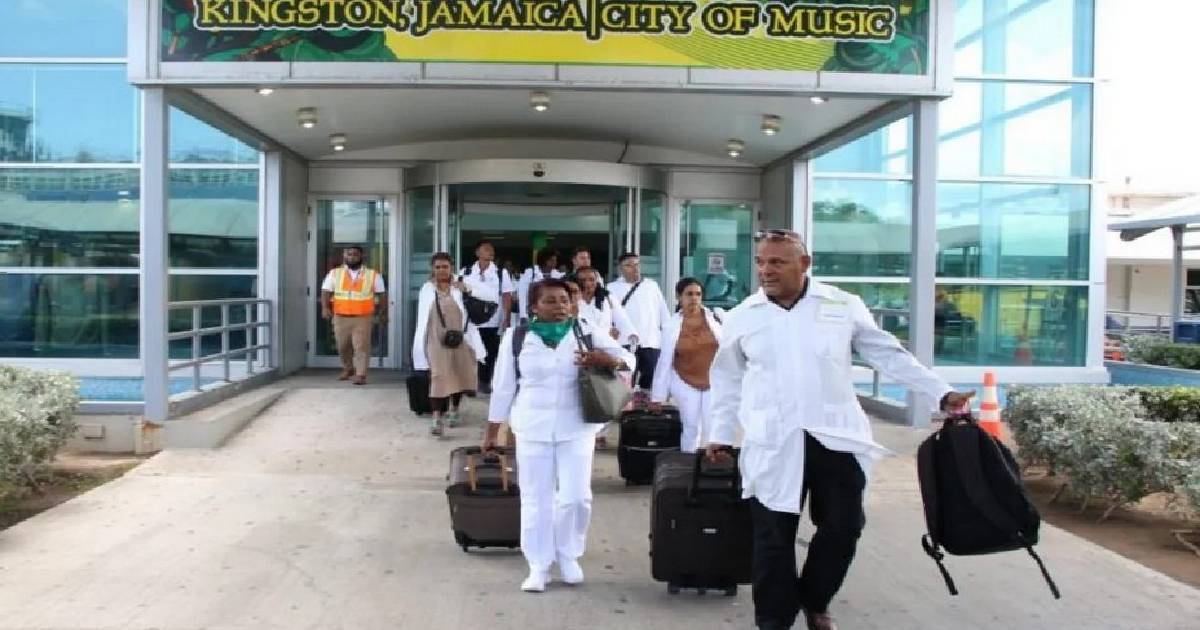
The Cuban government announced on Friday the withdrawal of its medical brigade in Jamaica after that country decided to terminate the health cooperation agreement, a move that Havana attributed to pressure from the United States.
In an official statement, the Ministry of Foreign Affairs of Cuba (Minrex) indicated that on March 4, the Jamaican government communicated to the Cuban embassy in that country the unilateral decision to terminate the health agreement that has been in place for decades.
The Foreign Ministry stated that with this measure Jamaica "bows to the pressures from the United States government," which it accused of not caring about the health needs of the Caribbean.
According to the text, at the time of the cancellation of the agreement the brigade was made up of 277 health professionals.
He also stated that Cuban medical cooperation has had a significant impact on the Jamaican healthcare system over the last three decades.
The medical cooperation program between both countries lasted nearly five decades, since 1976, and allowed Cuban doctors, nurses, and specialists to fill gaps in Jamaica's public health system.
According to the official data released by Minrex, more than 4,700 Cuban collaborators have worked in Jamaica over the past 30 years.
During that period, Cuban doctors would have attended to more than 8,176,000 patients, performed 74,302 surgeries, and assisted in 7,170 births.
The statement also affirms that more than 90,000 lives were saved thanks to the work of Cuban professionals on the island.
The government also highlighted the participation of the medical brigade in the Operation Miracle program, present in Jamaica since 2010, through which nearly 25,000 people have recovered or improved their vision.
According to Havana, Cuban doctors also participated in disease control programs such as malaria and in the health response to the COVID-19 pandemic.
The statement also noted that the healthcare professionals remained in their positions following the passage of Hurricane Melissa (October 2025), with some working for over 72 consecutive hours in medical care and hospital recovery efforts.
Despite the decision of the Jamaican government, Cuba affirmed that it remains committed to cooperation with the people of that Caribbean country and reiterated its readiness to provide healthcare assistance when needed.
In recent months, several countries have canceled or revised their agreements with Cuba for the hiring of medical brigades, amid growing diplomatic pressure from the United States against these health cooperation programs.
This Thursday, 172 Cuban healthcare professionals returned from Honduras, after the government of the Central American country decided to terminate the agreement that had been in place since 2024, allowing doctors to work there.
According to official data released by state media, during their stay they carried out more than 30 million consultations and approximately 900,000 surgical interventions.
In February, Guatemala also announced the end of a program for Cuban doctors, while the Bahamas indicated that it is considering canceling contracts with health professionals from the island following discussions with the U.S. government.
Antigua and Barbuda recently chose to hire 120 nurses from Ghana to strengthen its healthcare system, after ending its cooperation with Cuban medical brigades.
Similarly, Guyana and Saint Vincent and the Grenadines signed health contracts with the government of the largest of the Antilles.
Washington has intensified its diplomatic offensive against these programs by denouncing them as schemes of labor exploitation that conceal forced labor and human trafficking.
According to the State Department, the Cuban government retains a significant portion of the salaries paid by countries that hire these professionals.
Various reports place the export of professional services, particularly medical services, among the main sources of foreign currency income for the Cuban state, with estimated figures ranging between 6 billion and 8 billion dollars annually in recent years.
Despite these criticisms and cancellations, Havana continues to defend its international medical missions and maintains health cooperation agreements with dozens of countries in Latin America, Africa, and other regions.
Filed under: