
Related videos:
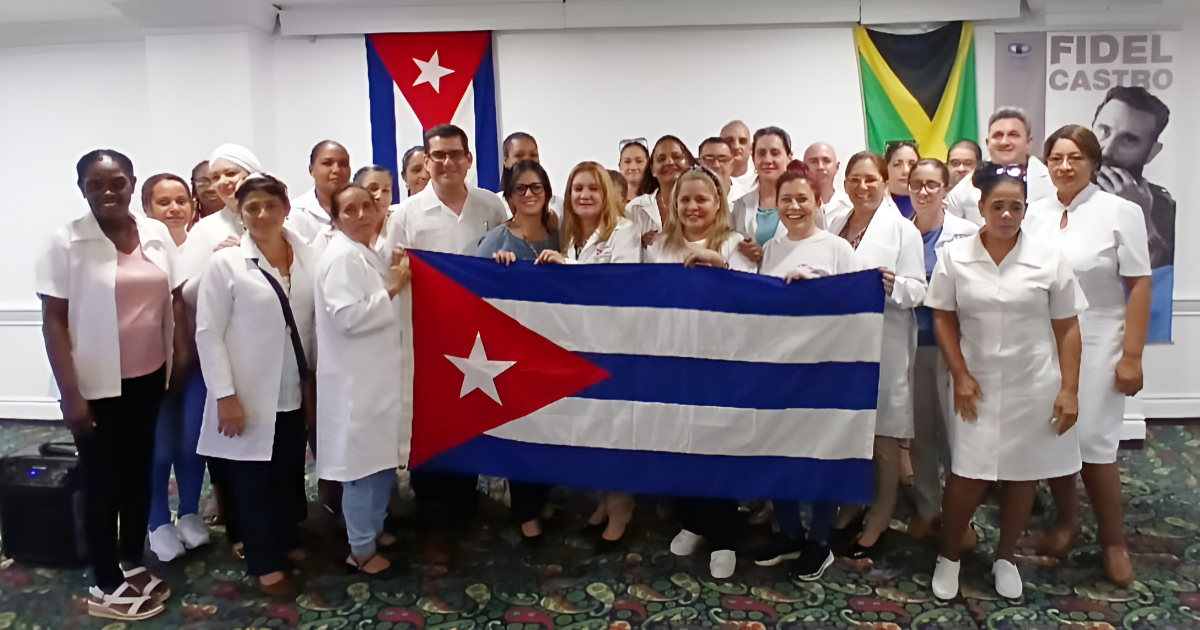
The United States Embassy in Havana publicly praised the Jamaican government's decision to cancel the state recruitment program for Cuban medical brigades, in a new episode of the increasing international pressure against one of the main mechanisms for exporting services of the Cuban regime.
The message was posted on the social network X by the U.S. diplomatic mission in Cuba, which reproduced a statement from the senior official at the State Department Jeremy Lewin, identified as Senior Official at the State Department and linked to the undersecretary for financial affairs.
"We commend Jamaica's decision, our close partner, to stop using Cuban medical brigades. A key source of cash income for the Cuban regime, medical brigades are one of the worst examples of modern slavery. They must end everywhere," stated Lewin.
Washington's reaction comes just days after the Jamaican government confirmed that it will cease renewing the medical collaboration program with Cuba, an agreement that for years allowed the dispatch of health professionals from the island to the Caribbean nation.
According to the Jamaican government itself, the change does not mean closing the door to Cuban doctors, but it does signify the end of the state agreement with Havana.
From now on, professionals will be able to work in Jamaica through individual contracts under local labor laws, a model that removes the direct involvement of the Cuban government.
The medical missions program is one of the main sources of foreign currency for the Cuban regime. Various investigations and testimonials from doctors who have participated in these brigades indicate that the state retains the majority of the salaries paid by the recipient countries, while the professionals receive only a fraction of the money.
Washington has repeatedly denounced this system as a form of labor exploitation. In recent years, U.S. authorities have labeled medical brigades as potential forced labor schemes and have pushed for diplomatic actions to pressure governments that maintain agreements with Cuba.
In that context, Lewin's comment highlighted the economic weight of these missions for Havana. "A key source of cash income for the Cuban regime," the official wrote, emphasizing that the model "must end everywhere."
Jamaica's decision comes amid a regional trend in which several countries have reviewed or canceled their agreements with Cuban medical brigades.
A domino effect in the Caribbean and Central America
Jamaica's decision is part of a broader trend in Latin America and the Caribbean, where several governments have begun to review or cancel their agreements with Cuban medical brigades under diplomatic pressure from the United States and amid growing criticism regarding the working conditions of professionals sent by Havana.
In recent weeks, countries such as Honduras and Guyana have ended their agreements with Cuba, while Guatemala announced that it will gradually stop renewing the contracts of the medical brigade in its territory.
In other cases, such as that of Jamaica, the authorities have chosen to terminate the state agreement with the Cuban government and allow for the direct hiring of doctors under local labor laws.
This change in the model is significant because it reduces the control of the Cuban State over the contracts and payments associated with these missions.
Various testimonies and reports collected in international investigations assert that the regime retains a significant portion of the salaries that recipient countries pay for medical services, making these brigades one of the main sources of foreign currency income for the island.
The United States has intensified its diplomatic offensive against this system, which it accuses of operating as a scheme for labor exploitation and deprivation of rights for Cuban professionals abroad.
U.S. officials have argued that doctors should be allowed to work directly with the countries that hire them and receive the full amount of their salary.
The issue has also generated tensions in other Caribbean countries. While some governments have begun to dismantle these agreements, others acknowledge that their health systems rely heavily on Cuban medical personnel, complicating any immediate break with Havana.
Amid the severe economic crisis in Cuba, the potential reduction of medical mission contracts abroad poses a possible blow to one of the most important sources of foreign currency for the regime.
Therefore, each cancellation or renegotiation of these agreements is watched with special attention both in Washington and in Havana.
Filed under: