
Related videos:
Rubio warns Arab ministers that the war with Iran could last several more weeks
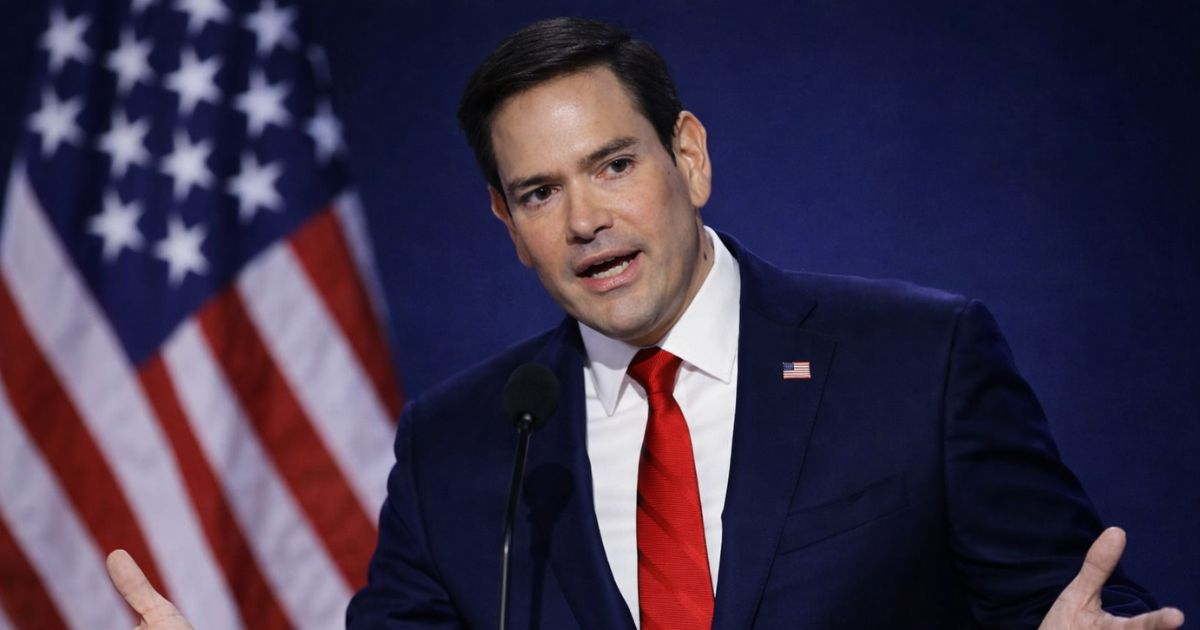
The U.S. Secretary of State, Marco Rubio, informed Arab foreign ministers during a series of phone calls last Thursday that the war with Iran could extend for several more weeks, according to sources with direct knowledge of the conversations cited by Axios.
The calls occurred on the eighth day of the Epic Fury Operation, the joint military offensive launched by the U.S. and Israel on February 28 against more than 1,700 targets in Iranian territory, including nuclear facilities in Natanz, Isfahan, and Fordow, barracks of the Revolutionary Guard, and the regime's naval fleet.
Rubio explained to his Arab counterparts that Washington's current military focus is on destroying Iranian missile launchers, their arsenals, and their production facilities. According to Axios, the Secretary of State clarified that the U.S. goal is not regime change, although he simultaneously made it clear that Washington wants "different people leading the country".
The head of U.S. diplomacy also confirmed that there is no ongoing dialogue with Tehran, warning that any negotiations at this stage would "undermine ongoing military objectives."
This position aligns with the stance taken by President Donald Trump, who stated that Iran wanted to negotiate, but it was too late. On Truth Social, Trump was more categorical: there will be no agreement "except unconditional surrender," promising that afterward, the U.S. and its allies will work to rebuild the country under new leadership acceptable to Washington.
In the military realm, Admiral Brad Cooper, head of the U.S. Central Command, announced a new offensive phase focused on permanently destroying the Iranian ballistic missile industrial base to prevent its future rebuilding. The U.S. reports having eliminated approximately 60% of Iranian launch platforms and missile arsenals, which is said to have resulted in a 90% decrease in missile attacks from Tehran.
Iran responded to the initial offensive with over 500 ballistic missiles and 2,000 drones targeting Israel and U.S. bases in Bahrain, Jordan, Qatar, Kuwait, the United Arab Emirates, and Saudi Arabia. The attacks on February 28 resulted in the death of Supreme Leader Ayatollah Ali Khamenei and dozens of high-ranking officials in the regime.
From Tehran, Iranian President Masoud Pezeshkian pointed out that several countries have begun mediations to contain the conflict and that Iran supports efforts aimed at achieving "lasting peace," although he warned that Iranians "have no doubts about defending the dignity and sovereignty of the nation."
This Saturday, Trump stated that the Iranian military "has disappeared", in the most emphatic statement yet regarding the status of the regime's military forces after nine days of continuous bombing.
Filed under: