
Related videos:
The recent attack by the United States and Israel against Iran has raised new questions about the potential impact of this geopolitical escalation on other governments allied or close to Tehran, including that of Cuba.
However, for analyst and economist Daniel DiMartino, the effects on the island, if they were to occur, would not necessarily imply an immediate political transformation.
During a Virtual Meeting with journalist Gloria Ordaz, for Telemundo 51, DiMartino examined the potential implications of the conflict and explained why he believes the Cuban case is very different from that of Iran from a strategic, military, and economic perspective.
“Iran is a militarily capable country with a much larger economy that produces oil and has very strong armed forces. Cuba has nothing,” stated the economist.
In his view, the comparison between the two countries highlights a significant structural difference. Iran has a much larger economy, produces oil, and possesses a military apparatus with substantial capability, as well as a considerable arsenal of missiles and rockets.
Cuba, on the other hand, lacks those strategic resources, which limits its ability to respond to external pressures.
A possible message for the Cuban government
Despite the differences between the two countries, DiMartino believes that recent international events could send an indirect signal to the Cuban government.
The analyst believes that Washington's display of strength against an adversary like Iran could be interpreted by the Cuban leadership as a reminder of the costs associated with maintaining a prolonged confrontation with the United States.
In that regard, he suggested that the current international context could encourage Havana to reconsider its position.
“This will encourage the Cuban regime to say: ‘look, we surrender because we don’t want to end up like the ayatollah’”, he pointed out.
For the economist, the Cuban regime might consider exploring negotiated solutions before being pushed into a situation of greater international pressure.
The context of Trump's statements
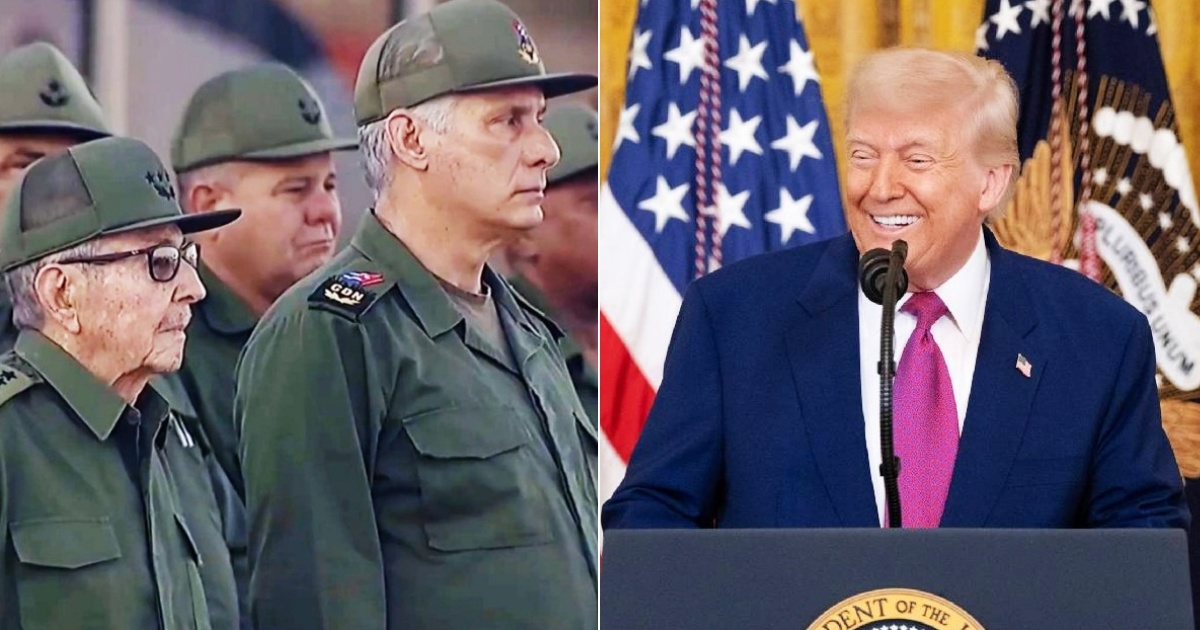
DiMartino's analysis comes amid recent statements from the President of the United States, Donald Trump, who claimed that Washington might consider a "friendly takeover" of Cuba in light of the deep economic crisis facing the island.
According to the president, the Cuban government is facing serious economic problems, which could pave the way for a scenario in which the United States increases its influence in the country.
These statements have revived the debate over the political and economic future of Cuba amid the deterioration of its internal situation.
Could sectors of the regime negotiate?
In this context, DiMartino considers it possible that some sectors within the Cuban regime, observing what has happened in countries like Venezuela or the current scenario of international tensions with Iran, may assess the possibility of reaching some kind of agreement with the United States.
The economist suggests that external pressure, combined with the economic crisis facing the island, could prompt certain actors within the government to seek alternatives to prevent further deterioration.
However, it warns that even if a negotiation or political rapprochement were to occur, that would not necessarily mean an immediate democratic transition.
The major obstacle to political change
According to DiMartino, the main challenge for any political transformation process in Cuba lies in the lack of an organized opposition within the country.
Unlike other regional contexts where there are political movements with mobilization capacity or consolidated opposition structures, the economist believes that in Cuba, that scenario is much more limited.
“I see a political change in Cuba as much more difficult than in Venezuela, because there is no active opposition in Cuba. There is nothing. Everything needs to be rebuilt from scratch,” he explained.
For the analyst, this absence of a structured opposition makes any transition process more complex and prolonged.
A gradual transition, not an immediate one
From that perspective, DiMartino believes that, if any change were to occur on the island, it would most likely be a gradual and supervised process, rather than an immediate political transformation driven from within the country.
In their opinion, the most plausible scenario would be some form of transition influenced or accompanied by the United States.
Nevertheless, the economist emphasized that any such scenario will largely depend on Washington's foreign policy and the current U.S. administration's ability to promote a transition process.
Economic impact of the war with Iran
During the virtual meeting, DiMartino also examined the possible economic repercussions of the conflict with Iran on the international stage.
Among other aspects, he mentioned the potential impact of President Trump's threat to cut all trade with Spain, in reference to the lack of support following the attack by the United States and Israel on Iran.
The trade and political tensions stemming from the war could have effects on various fronts of the global economy, a factor that also influences the analysis of Cuba's future amid an increasingly uncertain international environment.
In any case, for DiMartino, although events in the Middle East may send political signals to other governments, a real change in Cuba will depend on much more complex internal factors than mere external pressure.
Filed under: