
Related videos:
United Kingdom reduces the deployment timeframe of HMS Prince of Wales to five days due to the crisis in the Middle East
The United Kingdom has reduced the preparation time for its aircraft carrier HMS Prince of Wales to just five days in anticipation of a possible deployment to the Middle East, in response to the escalation of the conflict between the United States, Israel, and Iran that began on February 28, 2026 with the Operation Epic Fury. According to reports from GB News, The Independent, and Army Recognition published this Saturday, the Royal Navy has raised the ship's alert level from the usual 10 to 14 days down to just five days. However, no definitive shipping decision has been made yet: it is currently a contingency option.
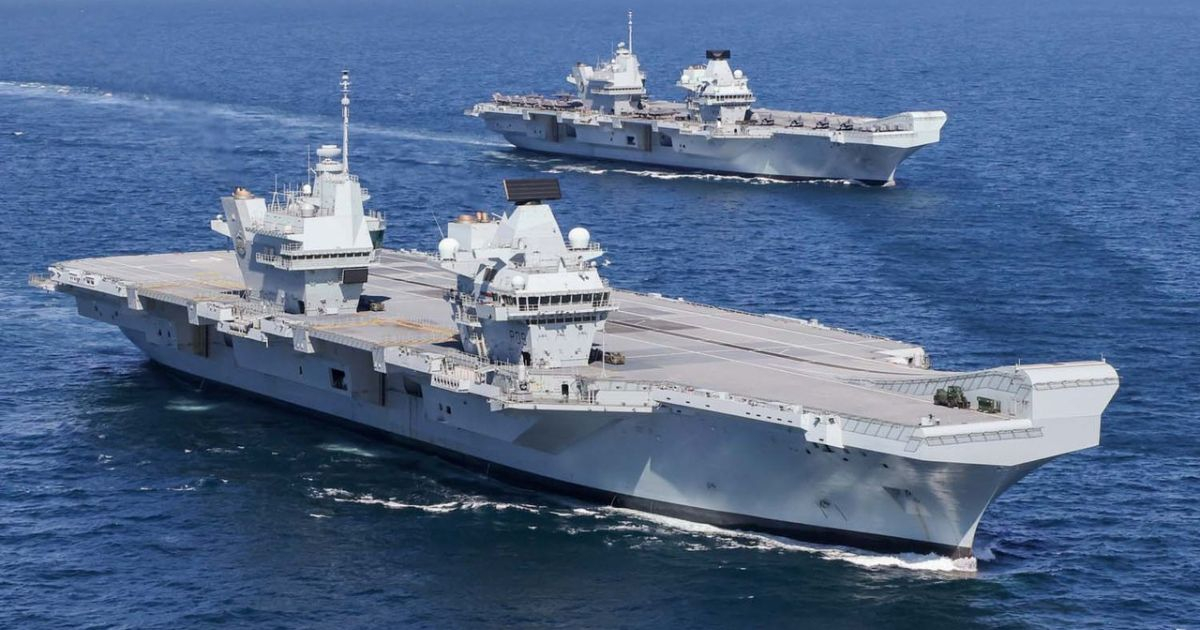
The HMS Prince of Wales is the most modern aircraft carrier in the British fleet. It displaces 65,000 tons, measures 284 meters in length, can carry up to 1,600 people with its embarked air wing, and reaches speeds of up to 25 knots. Its operational capability includes up to 36 F-35B Lightning II fighters, along with Merlin HM2 and AW159 Wildcat helicopters.
The vessel was originally assigned to Operation Firecrest in the North Atlantic, a mission announced by Prime Minister Keir Starmer in February 2026 to deter Russian maritime activity. Its possible redeployment to the Middle East reflects the magnitude of the regional crisis.
The United Kingdom became directly involved in the conflict on March 1, when a Shahed-type drone struck the RAF Akrotiri base in Cyprus, launched from Beirut presumably by Hezbollah. The attack caused minor damage to a hangar and resulted in no injuries. The following day, Starmer authorized the use of British bases by United States for operations against Iran.
As an immediate response, London deployed the destroyer HMS Dragon to the Mediterranean, sent four additional fighter jets to Qatar, and reinforced Cyprus with Wildcat helicopters armed with Martlet missiles. Secretary of Defense John Healey visited RAF Akrotiri last Wednesday.
The conflict, which marks its ninth day this Saturday, was triggered by the Epic Fury Operation, a joint offensive by the United States and Israel that carried out almost 900 attacks in its first 12 hours. The Iranian Supreme Leader Ali Khamenei was killed on the first day. Trump stated to The Telegraph: "We took them all out in one day," referring to the Iranian leadership, and added that the figures who assumed interim power in Tehran "desperately want to make a deal."
Iran responded with the True Promise Operation 4, launching over 500 ballistic missiles and 2,000 drones against Israel and 27 U.S. bases in the region. The Iranian chain of command remains fragmented following the death of Jamenei. The top Iranian security official, Ali Larijani, dismissed any diplomatic solution by stating on social media: "We will not negotiate with the United States."
The conflict has spread to Lebanon, Kuwait, Bahrain, and the United Arab Emirates. This Friday, a French naval base in Abu Dhabi was also attacked by drones without causing any casualties. Germany, France, and the United Kingdom have expressed their willingness to cooperate with Washington in defensive actions against Iranian missile and drone capabilities. Trump has indicated that hostilities could extend for up to five weeks.
Filed under: