
Related videos:
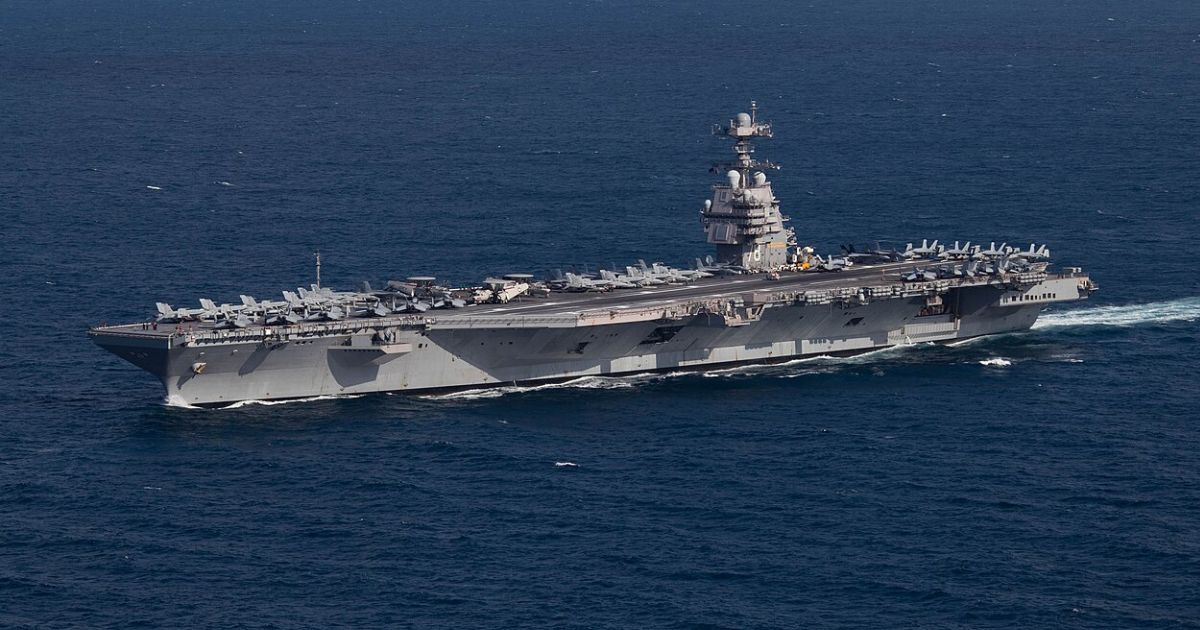
The USS Gerald R. Ford, the largest aircraft carrier in the world, arrives in the Red Sea near Iran amid active warfare
The USS Gerald R. Ford, the largest aircraft carrier in the world, crossed the Suez Canal last Wednesday and reached the Red Sea this Saturday, coming significantly closer to Iran amid an active war between the United States, Israel, and Tehran. The nuclear-powered ship, with a crew of around 4,500 and the capacity for over 75 aircraft, was deployed from the Caribbean in mid-February by order of President Donald Trump to strengthen U.S. naval presence in the Middle East until May.
Before crossing Suez, the Ford made a stop at the naval base of Souda Bay in Crete to refuel and conduct technical checks alongside the destroyer USS Mahan, departing on February 26. During its transit through the canal, it was accompanied by the destroyer USS Bainbridge.
The deployment occurs in the context of an unprecedented escalation. On February 28, the United States and Israel launched Operation Epic Fury and Operation Roaring Lion, a coordinated attack involving approximately 200 fighter jets targeting over 500 sites in Iran, including nuclear facilities in Natanz, Isfahan, and Fordow, Revolutionary Guard barracks, and the Iranian naval fleet. In the first 72 hours, more than 1,700 airstrikes were carried out.
Among the most significant Iranian casualties is Supreme Leader Ali Khamenei, who was killed in the bombing of his residence along with his wife and a 14-month-old granddaughter. Israel also bombed the Assembly of Experts headquarters in Qom on March 3, disrupting the succession process. The Iranian navy suffered the destruction of 17 ships, one submarine, and 11 additional vessels in the Gulf of Oman.
Iran responded with Operation True Promise 4, launching over 500 ballistic missiles and over 2,000 drones against Israel and U.S. bases in Kuwait, Bahrain, Qatar, the United Arab Emirates, Jordan, Saudi Arabia, and Iraq. On March 1, four American soldiers were killed in Kuwait by a drone attack. Tehran also announced on March 2 the effective closure of the Strait of Hormuz, through which 20% of the world's oil passes, leaving over 150 tankers stranded on both sides and causing Brent crude prices to spike by 7%.
With the arrival of the Ford in the Red Sea, the United States is operating two carrier strike groups simultaneously in the region for the first time: the Ford in the Red Sea and the USS Abraham Lincoln in the Arabian Sea, with a total of 13 destroyers armed with Tomahawk missiles and over 120 aircraft deployed. This concentration of naval power has no recent precedent in the Middle East.
Admiral Brad Cooper announced on Friday a new offensive phase aimed at permanently destroying the Iranian ballistic missile industrial base. On Saturday, Trump declared that Iran has surrendered after Iranian President Masud Pezeshkian announced the cessation of attacks on neighboring countries, but the American leader demands unconditional surrender and threatens with "a very strong blow" to "areas and groups not previously considered targets" if Tehran does not comply with that condition.
Filed under: