
Related videos:
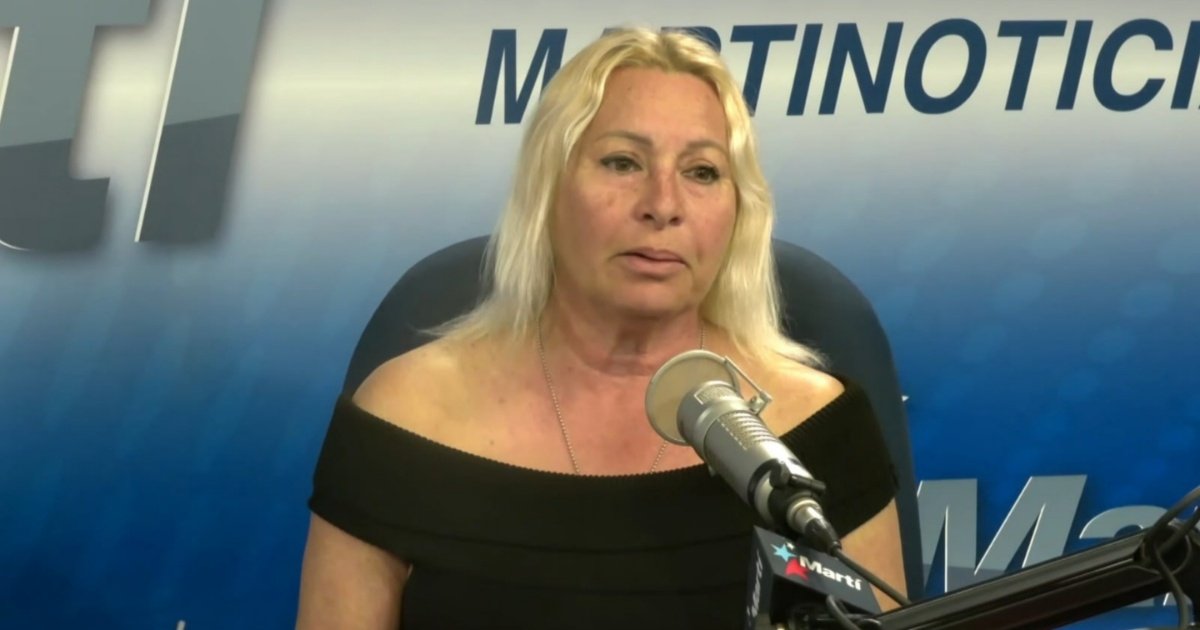
Maritza Lugo Fernández, the Cuban exile labeled by the regime as the mastermind behind the armed infiltration in Cuba, stated that the 5 Cubans arrested after the incident are not terrorists.
“They are not terrorists. They are extraordinary men, good and family-oriented (…) “Anyone who stands up to the regime is accused of being a terrorist,” the woman remarked on Sunday at a press conference in front of the Bay of Pigs Monument in Little Havana, according to El Nuevo Herald.
"God willing, and very soon, we will be able to embrace our brothers in a free Cuba. We have a lot of hope now, more than ever. This is the moment," he assured.
The activist, who asserts that even though the regime labels her a terrorist, "that doesn’t mean that’s what I am," announced that soon members of the November 30 Movement and others will spend "an entire day at the White House expressing our discontent, accusing the regime, because they accuse and accuse."
Amijail Sánchez González, Leonardo Enrique Cruz Gómez, Conrado Galindo Sariol, José Manuel Rodríguez Castelló, and Cristian Ernesto Acosta Guevara were arrested and accused of terrorism following an armed confrontation between a U.S. civilian vessel and a unit of Cuban border guard troops.
In the incident, Pavel Alling Peña, Michael Ortega Casanova, Ledián Padrón Guevara, Héctor Duani Cruz Correa, and Roberto Álvarez Ávila lost their lives.
Recently, the opposition figure firmly denied the accusations.
In statements to Univision 23, Lugo stated that she does not fear any investigation by U.S. authorities and denied financing or coordinating the operation that ended in an armed confrontation with Cuban border guard troops on February 25.
“Let them investigate me as much as they want. I am at peace,” she assured. Additionally, she launched strong criticisms against the Cuban regime: “I am the one who accuses them for the many murders and deaths within our people.”
The Cuban Ministry of the Interior linked her to the case by showing seals of the 30th of November Movement, an organization led by Lugo. According to the official version, the vessel allegedly entered Cuban waters with subversive intentions, and its occupants are said to have received logistical support from abroad.
Lugo acknowledged that he knew several of the crew members, but denied that any training took place on his property or that he contributed funds for the operation. “We absolutely haven’t given any money, but I wish I had enough money,” he stated.
Opposition trajectory of Lugo
Beyond the current official narrative, Lugo Fernández has a prior public trajectory associated with opposition activism and human rights allegations dating back to the 1990s.
Born in 1963 in Santa María del Rosario, on the outskirts of Havana, Lugo Fernández has recounted in interviews that she grew up in a rural environment, the daughter of farmers, in a family that discreetly listened to foreign radio stations.
In an audiovisual testimony granted years ago to the Cuban filmmaker Lilo Vilaplana ("Plantados" and "Plantadas"), he recalled that his upbringing was shaped by that experience and an early critical awareness of the Cuban political system.
During her adolescence, she practiced martial arts and specialized in judo. According to her own account, at that time she was approached by individuals connected to state structures interested in "recruiting" her, something she claims to have rejected.
She also pointed out that, following the Mariel exodus in 1980, she opposed the acts of repudiation against those who were emigrating, which—according to her account—marked her in the eyes of the authorities.
His organized activism formally began in the early nineties alongside his wife, Rafael Ibarra Roque. Both were involved in the founding of the 30th of November Democratic Party “Frank País”, an unrecognized opposition group in Cuba.
Ibarra Roque was sentenced to 20 years in prison for a sabotage crime in the 1990s, a process that opponents described as irregular. Following his imprisonment, Lugo took on a more prominent role within the movement.
Profiles published abroad in the early 2000s describe her as an activist who was arrested and imprisoned several times between 1996 and 2001.
She herself has recounted periods of confinement in the Manto Negro women's prison and in interrogation centers such as Villa Marista. In her testimony, she claimed to have gone on hunger strikes and to have been sanctioned for "bribery" in a military court, an accusation she linked to her reports of prison conditions to international organizations.
In 2002, she left Cuba and settled in the United States with her daughters. From exile, she has remained connected to the November 30th Movement and to activities related to the memory of Cuban political prisoners.
Filed under: