
Related videos:
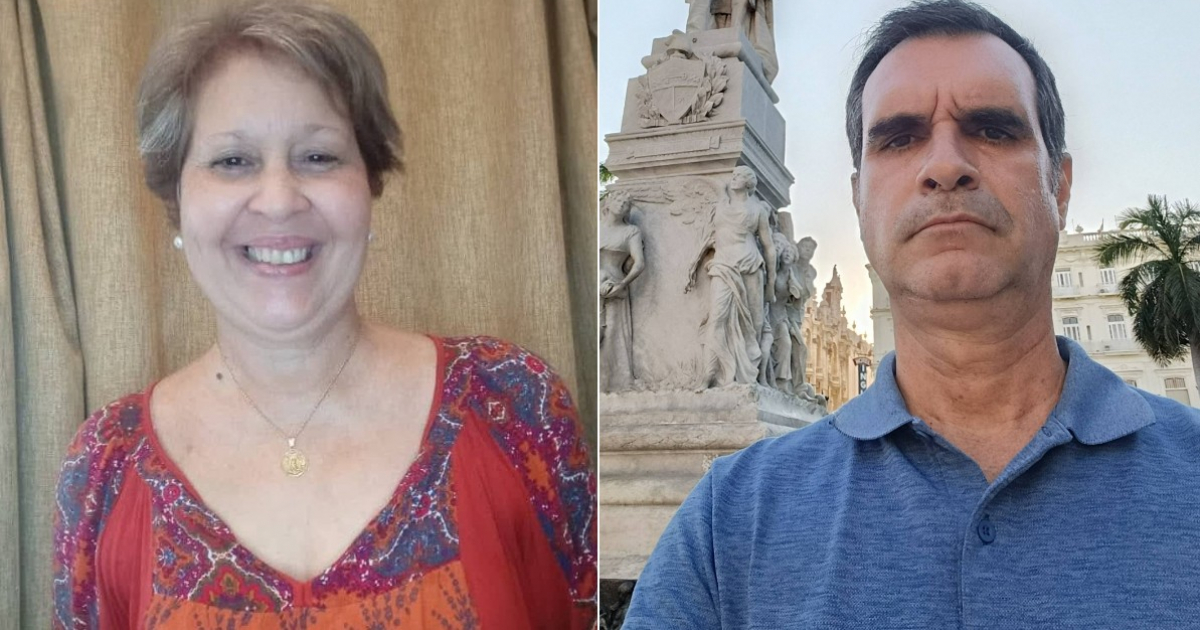
The historian and political activist Alina Bárbara López Hernández publicly expressed her support for architect and university professor Abel Tablada de la Torre after learning of his expulsion from the Faculty of Architecture at the Technological University of Havana (CUJAE) due to critical publications on the Internet.
In a message posted on Facebook, López stated that the case shows that in the country, there is no tolerance for intellectuals who raise their voices against injustices.
"I have known Abel Tablada for a long time; in addition to being a friend, I consider him not only a great architect and professor, as well as an excellent writer whom I have had the pleasure of editing, but above all, he is a person with remarkable civic qualities," he wrote.
As noted, in a political system that has made the silence of intellectuals the norm, Tablada chose to openly denounce issues that others prefer to remain silent about, such as the repression of dissent, the situation of political prisoners, urban deterioration, and corruption.
"That is not something permitted in Cuba, which is why the administration of CUJAE has terminated his contract and does not even allow him to teach pro bono at that university, despite the students' demand for their professor to return to the classroom," he specified.
In his publication, he quoted the jurist René Fidel González, who also suffers exclusion from the university system, and argued that these episodes are not isolated incidents, but rather part of a mechanism that is triggered whenever someone publicly questions the established order.
For López, the Tablada case is another example of how state institutions can close off job opportunities to those who stray from the official narrative.
The intellectual concluded her message with an expression of solidarity towards the professor and urged to persist in civic action for the democratization of the country.
"For a country where we are not forced to remain silent at the expense of our jobs and academic careers," he emphasized.
The statement by Professor Alina reignites the debate about the real margin for criticism within Cuban universities, institutions that are directly dependent on the State and where the exercise of independent thought faces strict limits.
In a context where employment and professional stability are closely tied to official structures, publicly questioning political or economic management can lead to professional sanctions that impact both the careers and personal lives of those involved.
Who is Abel Tablada and why was he expelled?
The case of Abel Tablada gained attention after activist Magdiel Jorge Castro shared a screenshot of a WhatsApp message in which the teacher was saying goodbye to his students.
In that text, he explained that some reflections published on his personal profile "had not been to the liking of the university administration." Among the highlighted articles is an analysis of Etecsa's funds in 2025 and another titled "The University and Resilience," published on February 2.
In this last piece, Tablada described the conditions of Cuban universities: power outages, transportation issues, lack of resources, and teacher salaries of $10 and $15 a month. He also warned about the decline in student preparation and the loss of equity in access to higher education.
He pointed out that accepting those prolonged conditions as normal could become a dangerous form of resignation, and he emphasized the urgency for a sincere national debate, with genuine citizen participation and without foreign interference. "The worst solution is to pretend that nothing is happening," he wrote.
So far, there is no official confirmation regarding a formal expulsion or the exact scope of the measures taken. In statements to journalist Mario Pentón, the professor stated that the matter is being addressed through internal channels, without providing details.
He neither confirmed nor denied the authorship of the message circulating on social media. According to reports on the internet, the university administration allegedly prevented him from continuing to teach following his posts, even when he offered to do so without compensation.
The controversy gains more visibility due to the academic's family connection: his sister is Johana Tablada, an official at the Ministry of Foreign Affairs and the deputy head of the Cuban Embassy in Mexico, who has always denied that there is political repression on the Island.
The sanction against a close relative of yours has been interpreted as a signal that institutional control makes no distinctions when it comes to punishing critical stances.
A committed intellectual, unafraid of repression
Alina Bárbara López Hernández, for her part, is a prominent Cuban intellectual with a history of detentions and sanctions due to her civic activism against the dictatorship.
Born in Matanzas, she holds a degree in Political Science from the University of Havana and has worked as a professor, essayist, editor, and researcher, with published works in national and international journals.
In recent years, she has been one of the most prominent voices of independent civic activism.
Since March 2023, he has been trying to go every day on the 18th to the Parque de la Libertad in Matanzas to hold a peaceful protest against the repressive situation in the country, wearing only a blank sign hung around his neck.
On February 18, she was detained along with activist Leonardo Romero Negrín while heading to that location; both remained in custody for 12 hours and were charged with "contempt," which they denied.
In 2023, she was convicted of "disobedience" after refusing to comply with extrajudicial summonses from State Security, deeming them illegitimate, which resulted in house arrest.
She has endured numerous arrests, some of which were violent.
In 2024, she was expelled from the UNEAC for political reasons, accused of engaging in "activities against the revolution" and showing solidarity with the July 11th movement. López then stated that the decision was a result of pressure from State Security and not a fair assessment of her work.
There is also a pending trial for the alleged crime of assault, which was supposed to take place on January 30 and was suspended without any explanation.
His support for Abel Tablada is part of that trajectory of defending the right to dissent.
For the historian, the professor's case is not an isolated incident, but rather a manifestation of an institutional model that penalizes public questioning and severely restricts debate within academic spaces that, in theory, should be dedicated to the free exchange of ideas.
Filed under: