
Related videos:
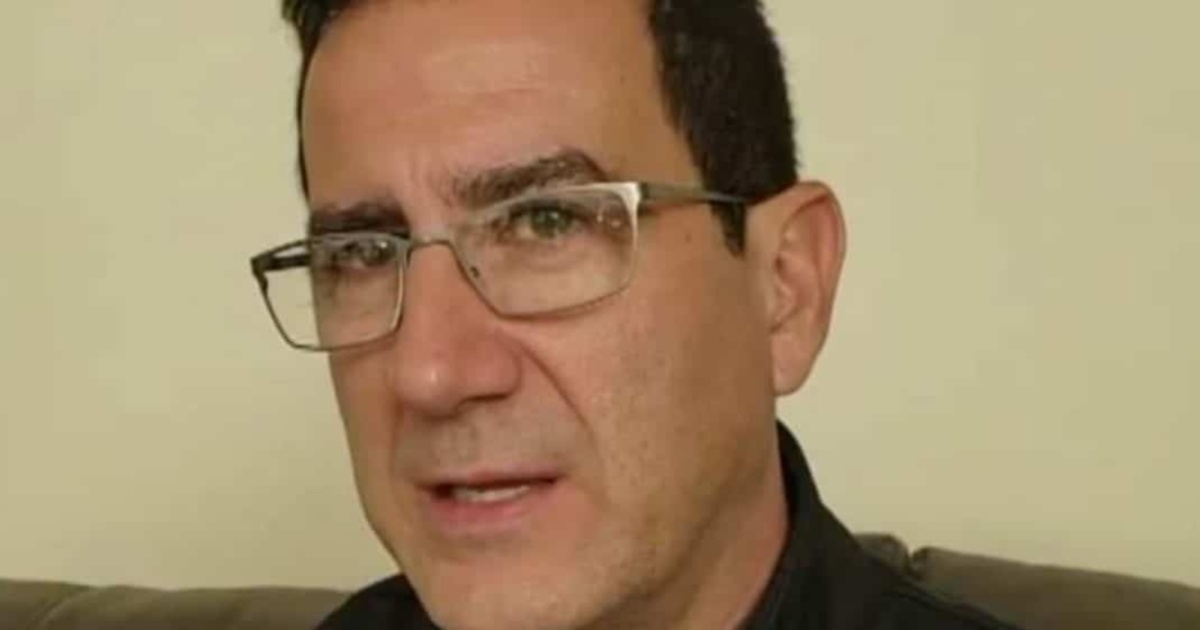
The Cuban priest Alberto Reyes Pías stated that, in his opinion, a significant portion of Cubans would be willing to accept even an amnesty for the current rulers of the country if it meant they could step down and pave the way toward freedom.
In statements made to Spanish journalist Albert Castillón for his YouTube channel, the Camagüey parish priest responded to the question of whether the people would be willing to forgive the regime in exchange for regaining their freedoms.
Her response was emphatic.
"Absolutely, yes," Reyes stated, explaining that what many Cubans desire is simply for the current political system to stop governing the country.
According to what was expressed, the prevailing sentiment is not marked by desires for punishment or revenge, but by the urgency to put an end to the crisis and open a new chapter for Cuban society.
"What we want is: 'go away, take your millions, live like princes, negotiate the amnesty, whatever you want, whatever you want, but just leave,'" he said.
For the religious individual, the utmost priority is for the country to regain freedom, even if that means accepting that the leaders obtain guarantees to step down from power without facing legal consequences.
"The priority is freedom. And in that sense, if they negotiate an amnesty and take everything, we don’t care," he explained.
However, he warned that there is a central fear among citizens: that any negotiations may ultimately allow those currently in power to remain in control in another form.
"Our only fear is that they reach a negotiation in which they remain in power. That is our only fear," he emphasized.
Reyes insisted that, in his view, the debate within Cuban society does not revolve around punishments or the recovery of the money accumulated by the power elite.
"The Cuban people are not talking about revenge, nor about how they are going to take the money, nor about the millions of GAESA. We are talking about freedom," he concluded.
A reflection that is part of a broader discussion
Reyes has been sharing critical reflections on the political, economic, and social situation in Cuba on social media.
In a lengthy message recently shared on Facebook, the religious leader stated that the need for political change on the island has become evident after decades under the same system.
"That Cuba needs a change in government and political system is evident," he wrote then.
In his view, the political model that has governed the country for decades has not only failed, but has done so profoundly, leaving Cuban society in a state of economic and social decline.
The priest argued that, after nearly seventy years under the same power structure, living conditions reflect the exhaustion of the system.
"After nearly 70 years under a totalitarian regime, the living conditions on the Island could not be worse, and the situation of the people could not be more lamentable," he expressed in that text.
Factors that pressure the system
In his analysis, Reyes noted that there are several factors that could push Cuba towards a scenario of political transformation.
Among them, he mentioned the worsening of the economic crisis the country is experiencing, a situation that, in his view, has reached unprecedented levels in recent history.
He also referred to international pressure, especially from the United States, and the progressive distancing of some of Havana's traditional allies, such as Russia and China.
He noted that this is compounded by the absence of a new international partner willing to financially support the Cuban government, as has happened at other times in recent history.
Father Alberto also spoke about the increasing diplomatic isolation of the Cuban government and the rejection it faces regarding some of its initiatives abroad, such as the international medical mission programs that have been promoted by Havana for years.
In his opinion, the government is trying to buy time in the face of this adverse situation, but it has increasingly less support on the international stage.
"It seems that increasingly more doors are closing, fewer and fewer people are believing them, and fewer and fewer people are willing to continue losing money and credibility by supporting a failed dictatorial regime," he wrote.
Change also depends on the people
Beyond those external factors, it is asserted that the decisive element for a potential political change lies within Cuban society itself.
According to what he explained, the people have begun to experience a transformation in their attitude toward power.
"The most important key is not there, but in a people that has grown weary, in a people that for the first time in a long time has begun to believe that it has the right to freedom and prosperity, and has decided to take action to achieve it," he stated.
To illustrate this change, the priest recalled several events from recent years that reflect a greater willingness among citizens to express their discontent.
Among them, he mentioned the emergence of the San Isidro Movement, the gathering of young people in front of the Ministry of Culture, the protests of July 11, 2021, and the recent demonstrations by university students against the rise in internet fees from ETECSA.
It was also emphasized that in recent years, Catholic bishops in Cuba have made increasingly clear statements about the country's situation.
New initiatives within civil society
Reyes also referred to the emergence of new initiatives within Cuban civil society.
Among them, she mentioned the group known as "El 4tico," which she described as one of the most profound reflections to emerge in the recent public debate.
Following the imprisonment of some of its members, the priest noted that a new phenomenon has emerged called "Out of the Box," driven by young Christians who are motivated by their faith.
According to the explanation, this involves a new generation of social leaders who have the support of religious communities.
"Young leaders of a different generation, young people who do not work alone, because they have the support of their Christian communities, communities that will not hesitate to defend them," he stated.
In his opinion, these movements reflect the emergence of new players within Cuban society.
A prior call to seek international support
Days earlier, the priest himself had made a public call for Cuba to consider a dialogue with the United States focused on alleviating the suffering of the population.
In another message shared on social media, the priest criticized that many analyses of the relationship between Washington and Havana focus solely on the governments and overlook the reality of the citizens.
According to what was expressed, a large part of the Cuban people do not identify with the government and live under an authoritarian system that limits their rights.
Reyes also questioned those who interpret any international support for the cause of freedom in Cuba as interference.
"The Cuban people are not responsible for the anti-American complexities, and those who hold such feelings should express them in another way, without placing their ideology above the hunger and misery of an entire nation," he stated.
To explain the vulnerability of Cuban society in the face of state power, he used a metaphor: he compared the situation to that of an eight-year-old child who is bullied by someone stronger and who would hardly be able to defend himself alone.
In their opinion, the Cuban people have been trying for years to confront repression with the limited resources available to them.
He also questioned those who criticize any rapprochement with the United States, recalling that in historical moments such as World War II, American intervention was crucial in defeating Nazi Germany.
According to the priest, if there are countries that proclaim themselves as democratic, they should have "the decency and courage" to defend the true freedom of Cubans.
"Without the help of someone stronger, we are left with no choice but to sink deeper and deeper until we die and see our children die," he warned.
Reyes' statements and reflections come amid a climate of growing political tension and economic crisis within Cuba, a situation that has rekindled the debate about the political future of the Island and potential pathways for systemic change.
Filed under: