
Related videos:
The Cuban leader Miguel Díaz-Canel publicly thanked Mexico for the aid sent to Cuba on Wednesday and asserted that the solidarity of that country supports the Island's "resistance" against the pressure from the United States.
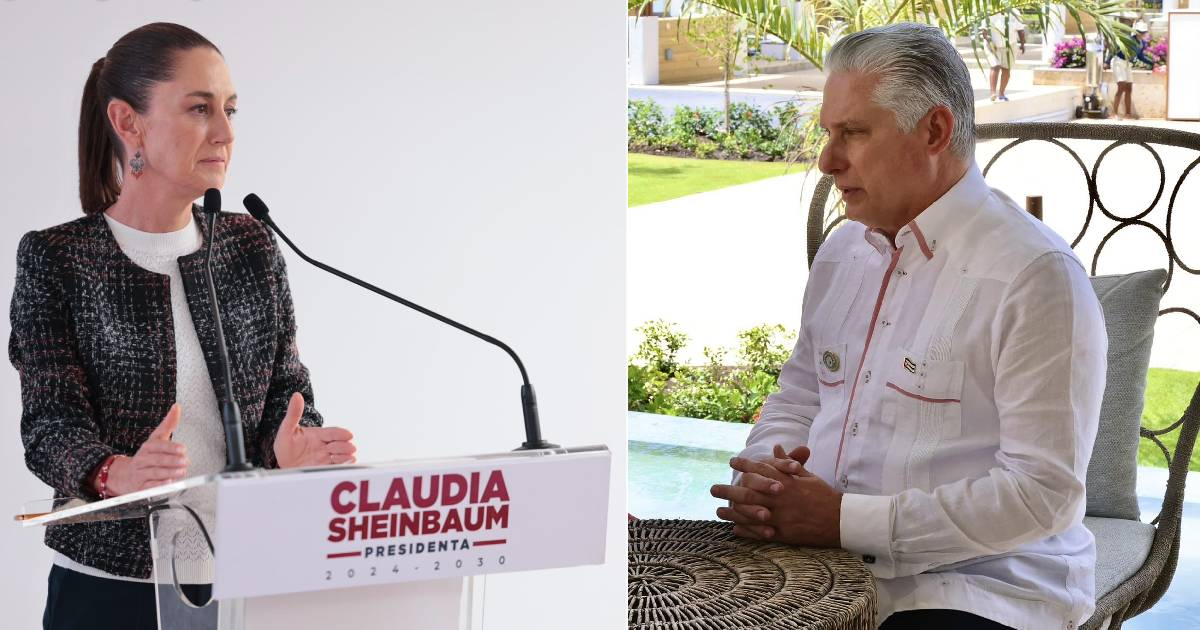
The Cuban ruler expressed his message on X, where he stated that the aid sent by Mexican President Claudia Sheinbaum can only be compared, “in magnitude,” to “its opposite: the U.S. government’s effort to suffocate us.”
In that same message, Díaz-Canel explicitly thanked Mexico.
"Like the support sent by the beloved Claudia Sheinbaum, the call from La Jornada supports and encourages our resistance as a brotherly embrace. THANK YOU MEXICO, ALWAYS," he wrote.
The post by the Cuban leader directly referred to an article published in La Jornada, a Mexican newspaper that spread a call for support for the Cuban people amid the current crisis.
The text states that, "in this difficult hour for the sovereignties of Latin America," the "criminal blockade" against Cuba particularly hurts Mexicans, and it calls for support for the Island in light of the intensification of the embargo and the shortages resulting from that situation.
The call also proposes a fundraising effort to acquire food, medicine, generators, and other essential products.
To this end, according to the document, a bank account of the Civil Association Humanity with Latin America was made known, with the aim of gathering contributions from those who wish to cooperate with Cuba.
The text also supports the actions of the Government of Mexico led by Claudia Sheinbaum Pardo and warns that, if necessary, a call will be made to support it against any reprisals for maintaining a policy of cooperation with Cuba based on principles such as the self-determination of peoples, non-intervention, and international cooperation for development.
The call also rejects President Donald Trump's "threats" to impose tariffs on countries that supply fuel to Cuba, considering them “illegal, inhumane, and unjustified” measures that severely affect the Cuban population and restrict the freedom of other states to determine their trade and cooperation relationships with the Island.
Among the signatories of the appeal are personalities such as Elena Poniatowska, Enrique Semo, Ignacio Ramonet, Marcos Roitman, Laura Esquivel, Carlos Pellicer López, Enrique Dussel Peters, Jesusa Rodríguez, and Laura Restrepo, according to the contents of the file.
With that message, Díaz-Canel not only expressed gratitude for the material assistance coming from Mexico, but he also framed that support within a political narrative of "regional solidarity," appealing to the relationship with his ally, Mexico.
The aid from Mexico began to reach Cuban homes amid extended blackouts and a severe economic crisis.
The first shipment included food items such as rice, beans, oil, cookies, sardines, and canned goods, transported by ships of the Mexican Navy.
Subsequently, Mexico made a new humanitarian aid shipment to the island with nearly 1,200 tons of supplies transported on two logistical support ships that departed from the port of Veracruz.
Among other products, there were mainly beans, powdered milk, and other essential foods.
According to Mexican authorities, the shipment was authorized by President Claudia Sheinbaum with the aim of providing support to the Cuban civilian population amidst the deep economic crisis the country is facing.
Filed under: