
Related videos:
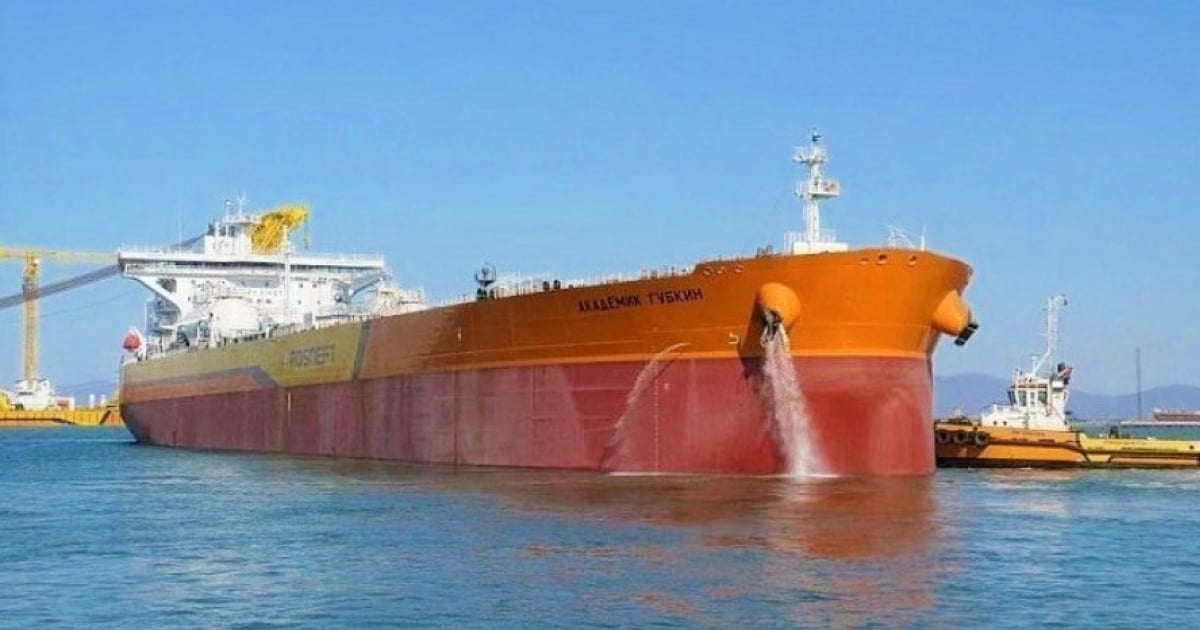
The United States temporarily lifted some of the sanctions imposed on Russian oil transported by sea, allowing the sale of crude and petroleum products that were already loaded onto ships before March 12 for a period of one month.
According to a report from El País, the decision has generated criticism in Europe and Ukraine due to the financial relief it may represent for the Kremlin during the ongoing war and amid the energy crisis exacerbated by the conflict with Iran.
The measure was confirmed by the U.S. Department of the Treasury through a license issued by the Office of Foreign Assets Control (OFAC), which states that the authorization will be valid until April 11 and only applies to Russian oil that was already in transit at sea.
The Treasury Secretary, Scott Bessent, emphasized that this is a “limited” and “short-term” authorization aimed at allowing that oil to continue reaching the global market.
According to CNN, the Trump Administration's decision aims to curb the rise in crude oil prices following the war initiated by the United States against Iran and the closure of the Strait of Hormuz, through which approximately one fifth of the world's oil passes.
That interruption has caused an international energy shortage that has compelled Washington to temporarily ease previous restrictions on the Russian oil sector.
The economic dimension of the matter
The economic dimension of the relief is one of the central points of the debate. Kiril Dmitriev, special envoy of Vladimir Putin and director of the Russian Direct Investment Fund, estimated that the easing would allow for the placement of about 100 million barrels of Russian oil in the markets.
For his part, Ukrainian President Volodymyr Zelensky estimated that Moscow could obtain around 10 billion dollars, equivalent to about 9 billion euros, resources that, he warned, could be used to sustain the war against Ukraine.
The reaction from Europe was immediate. El País reports that the President of the European Council, António Costa, described Washington's decision as "very concerning" and criticized its unilateral nature.
From Kiev, Zelensky presented it as a direct blow to the Ukrainian strategy of economic suffocation against Russia, which is based on sanctions, blocking energy revenues, and international pressure to limit the Kremlin's financial capacity.
Financing to the Kremlin?
The report includes criticism from Democratic Senator Jeanne Shaheen, a senior member of the Senate Foreign Relations Committee, who accused Trump of filling "the Kremlin's war chest" while Russia supports Iran and American families face rising prices.
According to this reading, the decision not only eases the pressure on Moscow but also contradicts the previous goal of restricting the cash flow that finances the Russian war in Ukraine.
The U.S. concession comes at a delicate moment for the Russian economy.
The text points out that the Kremlin's accounts were already affected by previous sanctions against Rosneft and Lukoil, and that the Russian public deficit reached 3.4 trillion rubles between January and February, nearly the government's annual target for the entirety of 2026.
During that same period, total budget revenues fell by 10%, with a collapse of half the money coming from hydrocarbons.
Despite this, the easing of restrictions could provide immediate relief. The Financial Times, referenced in the document, estimated that Russia could gain about 150 million dollars extra for each day that the sanctions remain partially suspended.
Furthermore, the authorization would allow the Kremlin to sell that oil without applying the heavy discounts it had previously been forced to offer to offset the risk of sanctions against its buyers.
Before the war with Iran, Russian crude was being sold at a discount of up to 30 dollars compared to international prices.
Washington had already softened its veto on the sale of Russian oil to India the previous week, and the new license officially confirms a more permissive policy regarding Russian crude stored in what is known as the high seas fleet.
According to information provided by CNN, this easing will only benefit oil already loaded on ships before March 12; if Trump does not extend the measure, new oil extracted by Russia will continue to be subject to U.S. restrictions.
The decision is also set against a broader geopolitical context. The White House and the Kremlin have maintained a direct line of communication regarding the energy crisis since the onset of attacks against Iran, and Trump announced that he would ease sanctions on the oil sectors of several countries after speaking by phone with Putin.
A political background
The immediate backdrop is Iran's blockade of the Strait of Hormuz and the rise of Brent crude towards $100 per barrel, a high price, though still within historical parameters.
At least 16 oil tankers, cargo ships, and other vessels have been attacked in the Strait of Hormuz, the Persian Gulf, and the Gulf of Oman in the last two weeks, while Iran is believed to have placed mines in the area, and U.S. forces claim to have sunk 16 mine layers.
The information provided indicates that analysts, economists, and operators have warned that even a quick end to the war would not guarantee the immediate reopening of the strait, prompting several countries to start drawing from strategic reserves and implementing measures to moderate energy consumption.
In that scenario, the easing of restrictions on Russian oil appears as a stopgap measure to increase the supply available in the international market.
Nonetheless, some cited experts believe that this additional injection of liquidity will not, by itself, change the course of the war in Ukraine, as Russia's economic problems are not limited to public budgets, but also relate to the overall imbalance of its civilian economy due to the burden of the military industry.
Nevertheless, Washington's decision represents a partial relief for Moscow and a political setback for Kiev, which sees one of the pillars of its international strategy—the pressure on Russian energy exports—temporarily weakened.
Filed under: