
Related videos:
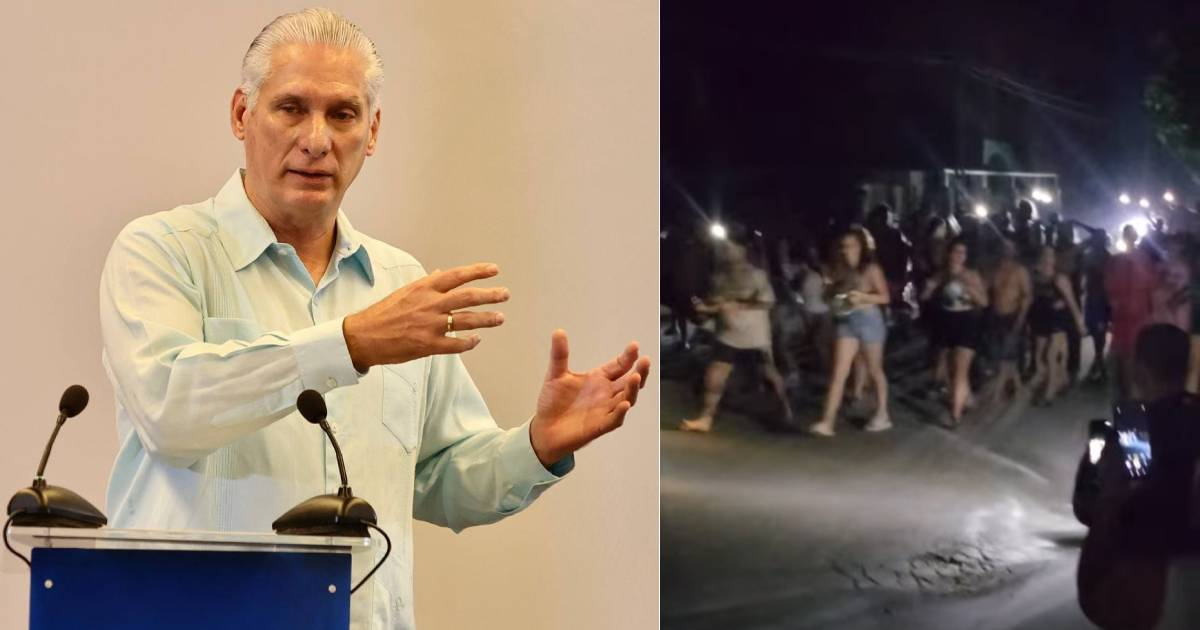
The Cuban leader Miguel Díaz-Canel sparked a strong reaction on social media after publishing a message in which he condemned the recent protests that took place in Morón, Ciego de Ávila, in a context marked by prolonged power outages and increasing social discontent.
In his post, Díaz-Canel stated that he understands “the frustration caused to our people by the prolonged blackouts,” which he attributed to the “energy blockade by the United States, which has cruelly intensified in recent months.” The president claimed that complaints and demands are “legitimate” as long as they are made “with civility and respect for public order.”
However, he warned that “what can never be understood, justified, or tolerated is the violence and vandalism that threatens public peace and the security of our institutions,” and concluded with a direct warning: “There will be no impunity for vandalism and violence.”
The message provoked an avalanche of critical comments from Cubans inside and outside the island, many of whom blamed the government for the economic and energy crisis facing the country.
On the social network X, several users challenged the official discourse and the use of the term vandalism to describe popular discontent. "I've been seeing this crisis for years, not just now. You are the ones to blame," wrote a user. Another responded directly to the ruler: "Just give up power once and for all. Freedom."
Other comments echoed accumulated frustration from years of difficulties. “There is no peace for citizens when it was promised years ago that blackouts would come to an end,” one user pointed out. Another stated: “Violence and vandalism are the reality this country is facing. The rest is action and reaction.”
There were also those who recalled historical episodes to challenge the government's stance. "Fidel did worse things when he was fighting against Batista... they planted bombs and cut off the power, but today they say young people can't fight against the dictatorship because it's vandalism," commented another user.
On Facebook, the responses followed the same critical line. "No one attacked the peace of the citizens; it was the people themselves who can no longer endure another day of that government," wrote a user. Another comment stated, "You are the ones provoking the unrest; step down and allow the freedom of a whole people who are crying out for it."
Some internet users insisted that the protests are a direct consequence of the deterioration of living conditions on the island. “It’s not vandalism; it’s the exhaustion of a people who are suffering from hunger, blackouts, and need,” wrote one individual.
The critics also referred to the lack of political freedoms. “The frustration we have is that they do not allow us to choose our future. We want free elections,” stated another user.
Although some voices emerged among the comments defending the government's position and condemning the disturbances, the majority expressed outrage, fatigue, and demands for political and economic changes.
The protests in Morón took place amidst a severe energy crisis that has caused widespread blackouts in several provinces of the country, a situation that has intensified public discontent in a context marked by food shortages, inflation, and deterioration of basic services.
Filed under: