
Related videos:
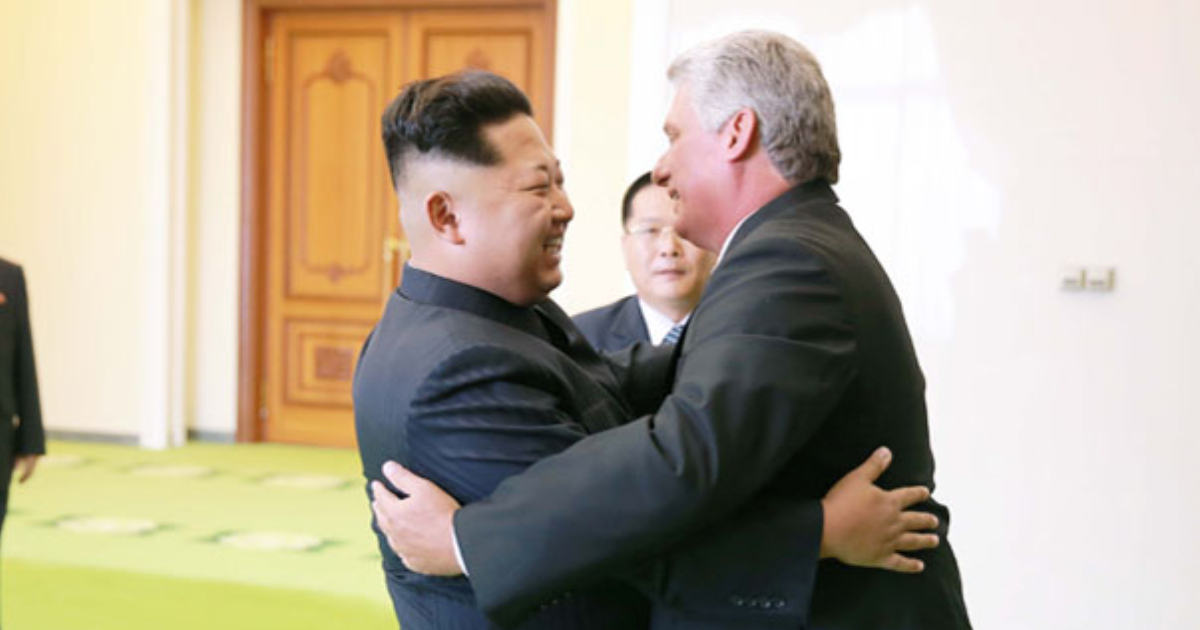
North Korean leader Kim Jong-un sent a message of support to Miguel Díaz-Canel in which he expressed his hope that Cuba "overcomes the pressure maneuvers of hostile forces" and achieves success in the defense of its sovereignty and security, according to the state agency KCNA in response to a previous congratulatory letter sent by the Cuban leader.
According to the text, Kim's communication was a response to the congratulatory message that Díaz-Canel had sent him following his reelection as secretary general of the Workers' Party of Korea during the IX Congress of that political organization.
The North Korean agency stated that in that response, Kim conveyed his wishes to the Cuban party, government, and people amid the current pressure exerted by Washington on the island.
The central statement attributed to the leader of the Democratic People's Republic of Korea was that Cuba should "overcome the pressure tactics of hostile forces and achieve success in the struggle to defend the sovereignty and security of the country."
That formulation frames the message as a gesture of political solidarity between two allied governments, presented in a context of escalating tensions between Havana and Washington.
Kim's statement came just one day after Díaz-Canel publicly confirmed that his government is in contact with officials from the U.S. administration to attempt to resolve bilateral differences "through dialogue."
The Cuban leader explained that these exchanges aim to find a possible solution to the disagreements between the two countries.
In that same appearance, Díaz-Canel referred to the economic and energy situation that Cuba is facing.
He spoke about "energy blockade and scarcity" and stated that no fuel ships have entered the country for over three months, which, he said, forces them to work under "very adverse conditions" with an impact on the entire population.
Tensions with the U.S.
The exchange between Pyongyang and Havana is situated within a broader escalation with the United States.
On January 29, Donald Trump signed an executive order declaring a "national emergency" in response to the alleged "unusual and extraordinary threat" that, according to Washington, Cuba poses to U.S. and regional security.
The text points to the regime in Havana for aligning with "numerous hostile countries," for hosting "transnational terrorist groups," and for allowing the deployment of military and intelligence capabilities from Russia and China on the Island.
The United States announced the imposition of tariffs on countries that sell oil to Cuba, along with threats of reprisals against those who act against the executive order from the White House.
These measures are part of the pressure environment that Kim referred to in his message.
Filed under: