
Related videos:
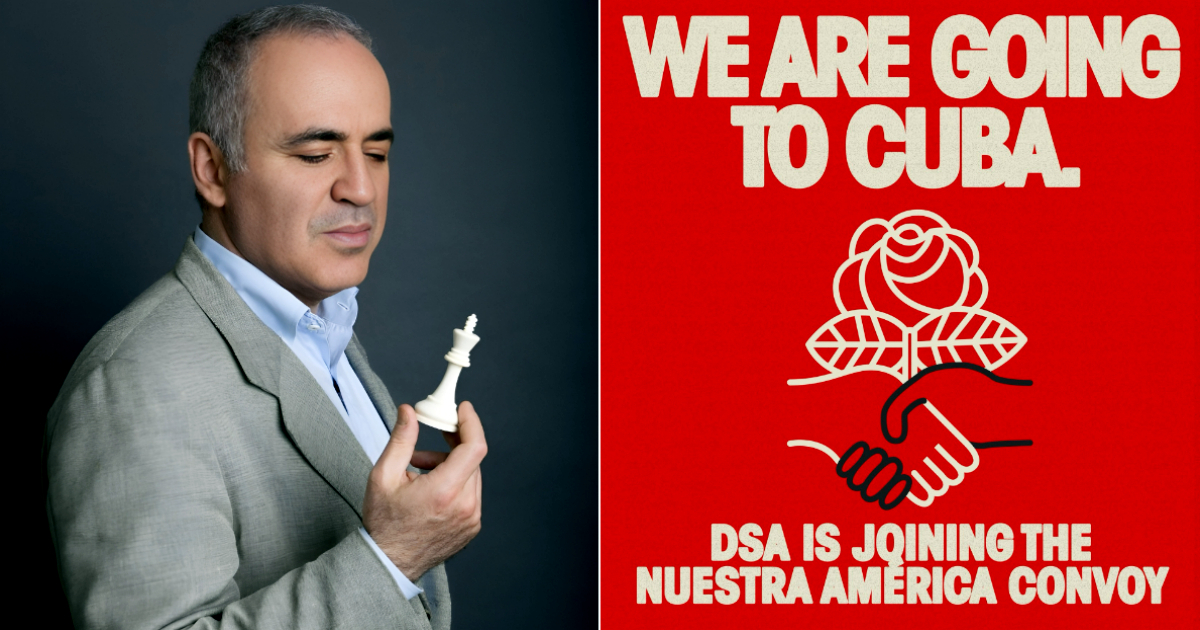
The controversy surrounding the international convoy "Nuestra América," which is set to arrive in Havana on March 21, has gained a new significant critical voice: that of former world chess champion and political activist Garry Kasparov, who delivered a strong message against the Western participants of the initiative.
“Why don't we exchange these idiots for an equal number of Cubans who want to live in the free world?” wrote Kasparov on the social network X, in response to an announcement from the American group Democratic Socialists of America (DSA), which confirmed the dispatch of a delegation of 20 members to Cuba as part of the convoy.
The message from the Russian chess player, known for his strong stance against authoritarian regimes, suggests that those who advocate for socialism "should see how it works in practice," while the United States would welcome "hardworking people who love freedom."
The statement from the "ogre of Baku" adds to the growing international controversy surrounding the flotilla, supported by political figures and leftist activists who claim that the island is "under siege" due to U.S. sanctions.
Among those who have announced their participation is French MEP Emma Fourreau, as well as climate activist Greta Thunberg, whose stance has already sparked a strong reaction from Cubans on social media.
Reactions from exile
Kasparov's statement resonates with a feeling that is increasingly evident among Cubans both on and off the island, who are questioning the approach of the initiative.
Since the exile, the slogan has gained strength: “If they enter, we will too”, referring to the possibility that foreign activists may arrive in Cuba while millions of Cubans face restrictions in returning freely to their country.
For many, the underlying issue is not humanitarian aid itself, but rather the fact that the convoy presents itself as an act of solidarity without addressing the lack of political freedoms on the island.
Debate on the Cuban crisis
The international convoy aims to deliver food, medicine, and other supplies amid a profound economic crisis in Cuba, characterized by blackouts, shortages, and a decline in basic services.
However, critics point out that the organizers' discourse attributes the situation solely to external factors, without mentioning the impact of decades of state control, repression, and poor economic management.
Kasparov's words, in that context, reflect a broader critique: the gap between those who defend the Cuban model from afar and those who face its consequences within the country.
Filed under: