
Related videos:
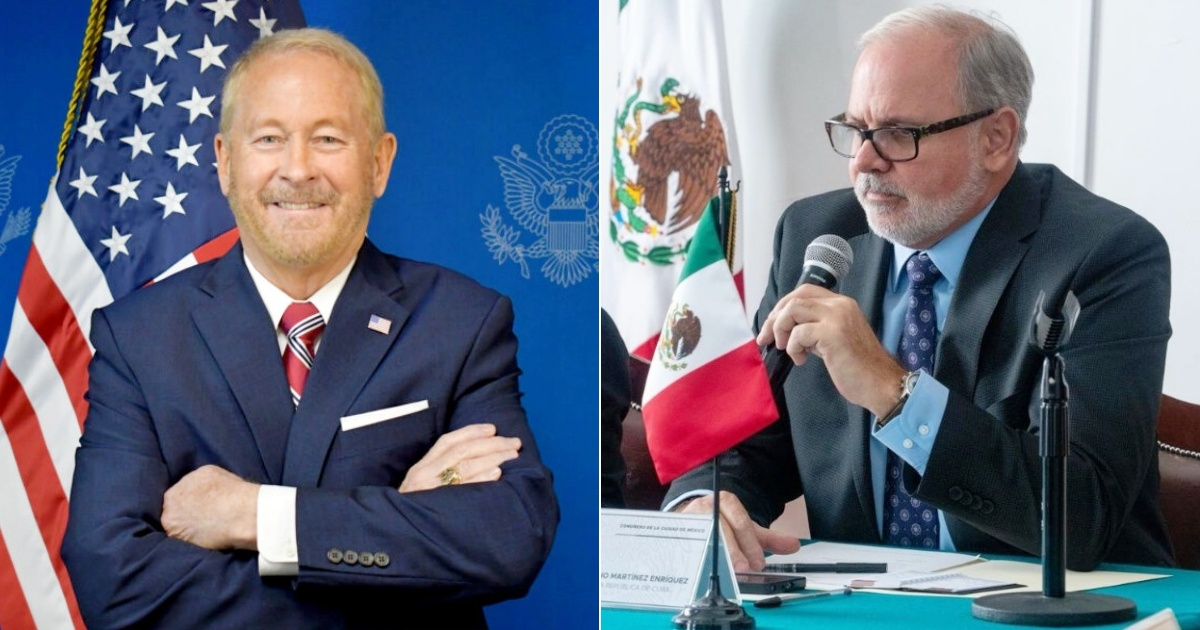
A new episode of diplomatic tension surrounding Cuba erupted in Mexico following a public exchange between the United States ambassador, Ronald Johnson, and the representative of the Cuban regime, Eugenio Martínez Enríquez, amidst the debate over international aid to the island.
The controversy began when Johnson posted on his account on X a message in which, quoting Secretary of State Marco Rubio, he stated: "the best way to help the Cuban people is by empowering them", and not by empowering the regime that "has oppressed them for decades."
His words were interpreted as a direct criticism of the support initiatives promoted from Mexico towards Cuba, which triggered a swift reaction from Cuban diplomacy.
The Cuban ambassador responded harshly to the message from the American representative.
“The disrespectful comment from the head of the U.S. mission in Mexico surely reflects his annoyance at the solidarity and brotherhood shown by Mexicans with the Cuban people. Those acts truly empower the people," he wrote, using questionable syntax.
"What he defends is to make a people like the Cuban one, which is already free, suffer," he added.
The exchange escalated with the intervention of Johana Tablada de la Torre, ambassador of the island's Foreign Service in Mexico, who expanded the criticisms against Washington.
“Helping Cuba means respecting the rights of our peoples. The U.S. can suspend the persecution of trade, fuel, travel, investment, transfers, remittances, and sources of livelihood for the population. It chooses to tighten the blockade and suffocate in order to cause suffering, destabilize, and dominate. They will fail!”, wrote Tablada de la Torre, also in a questionable manner.
The crossing was not limited to the diplomatic arena.
Mexican Senator Lilly Téllez supported the U.S. stance with a succinct "Exactly"; while users on social media also joined the debate with critical messages regarding the Mexican government's support for Havana.
Among them, a user wrote: "What López Obrador and Claudia Sheinbaum have done is exactly that, empower the regime that has oppressed [Cubans] for decades."
The confrontation takes place in a context of rising regional tensions regarding policy towards Cuba, with differing positions between the U.S.—which maintains a strategy of pressure on the regime—and Latin American governments that advocate for cooperation and the provision of humanitarian aid.
López Obrador adds controversy to Mexico's aid to Cuba
The discussion has intensified following former President Andrés Manuel López Obrador's call to organize a collection to support the "brother people of Cuba," an initiative that has rekindled the debate over whether this aid directly benefits the population or ultimately strengthens the Cuban state apparatus.
That call has already begun to translate into donations from Mexican politicians associated with the government, who have contributed money to an account set up to channel resources to the island, amid the economic crisis facing the Caribbean nation.
The campaign has generated both support and criticism, including warnings about potential legal risks for those maintaining financial ties with the United States due to the current sanctions regime against Cuba.
In parallel, Mexican President Claudia Sheinbaum announced that she will also make a personal donation, defending the aid as an act of historical solidarity and reiterating her government's stance of support for the Caribbean nation.
Meanwhile, from Havana, Miguel Díaz-Canel publicly expressed his gratitude for Mexico's support.
Filed under: