
Related videos:
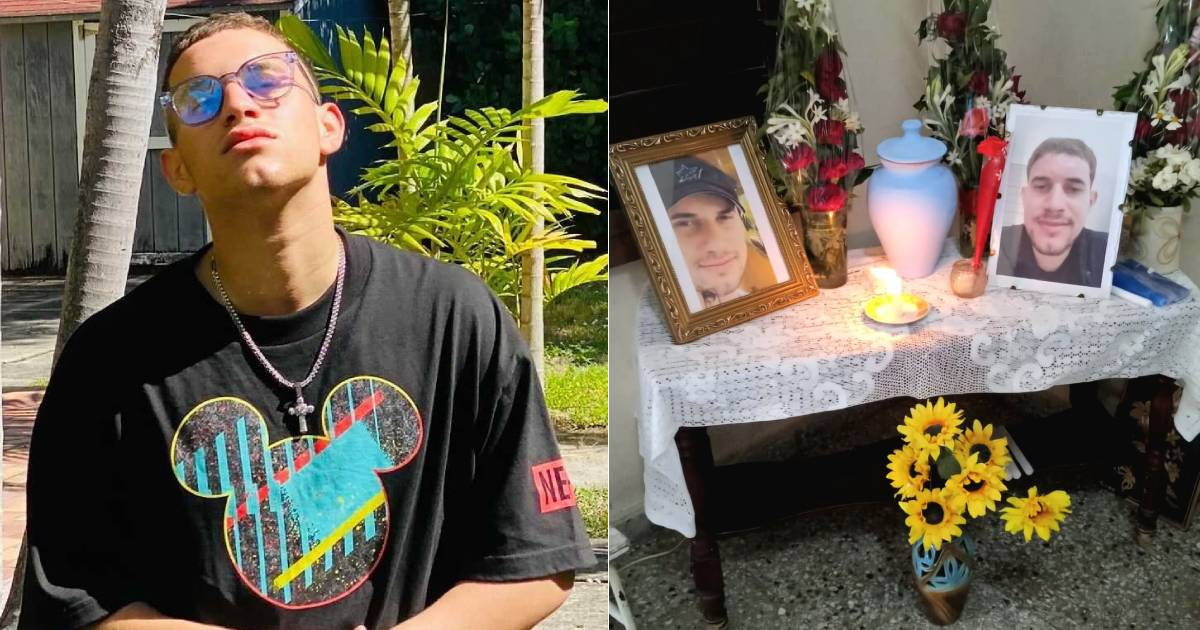
The family of the young Cuban Ledián Padrón Guevara, one of the five who died in the armed confrontation off the coast of Corralillo, Villa Clara, reported that they were not allowed to say goodbye to their loved one because his body was allegedly cremated by decision of the authorities, which forced them to hold a funeral without the remains.
The complaint was published on social media by the activist Niurka Préstamo, who shared images of the wake held without the young man's body. The small altar set up to bid farewell to him displayed only two photographs of Ledián, flowers, candles, and an urn, in an atmosphere marked by the grief of family and friends.
"This is how the funeral of Ledián Padrón took place, one of those killed in the ambush and massacre on the boat in Corralillo, a funeral held without the body since the regime had ordered cremation to ostensibly cover up evidence," Préstamo wrote in his post.
The situation has sparked outrage among those close to the family, who believe that the cremation prevented a dignified farewell and a clear understanding of the circumstances surrounding the death.
Padrón Guevara, 25 years old, is the youngest of the four men who died during the incident that occurred on February 25 off Cayo Falcones, when a boat from Florida was intercepted by units of the Border Guard Troops. The others were Pavel Alling Peña, Michael Ortega Casanova, and Héctor Duani Cruz Correa.
The Ministry of the Interior reported that it was an "armed infiltration with terrorist aims" and that during the operation there was an exchange of gunfire that resulted in four deaths and six arrests.
However, days later, Roberto Álvarez passed away, one of the survivors who remained hospitalized, bringing the total number of deaths related to the incident to five.
According to journalist Daniel Benítez, Álvarez was moved from intensive care in Villa Clara to a hospital in Havana, where he suffered a hemorrhage and later a heart attack, according to the information relayed to his family.
Ledián Padrón was a native of Camagüey and had lived between Houston and Miami. According to testimonies cited by journalist Javier Díaz from Univision 23, the young man had recently moved to South Florida and had begun training related to a possible action against the Cuban regime.
His name did not initially appear on the official list released by the Cuban authorities, which created uncertainty among his family members. As the hours passed, he was confirmed among the deceased in the confrontation.
Filed under: