
Related videos:
The President of the United States, Donald Trump, called several NATO countries "cowards" for refusing to assist in the opening of the Strait of Hormuz amid the crisis stemming from the conflict with Iran.
Through his social network Truth Social, Trump strongly criticized his allies' stance and claimed that without the leadership of the United States, NATO lacks real strength.
"Without the United States, NATO is a paper tiger," he stated.
The leader criticized that the countries in the bloc did not want to participate in the offensive to curb Iran, but now they are complaining about the economic consequences.
"They did not want to join the fight to stop a nuclear-capable Iran. Now that that battle has been won militarily, with very little danger to them, they complain about the high oil prices," he stated.
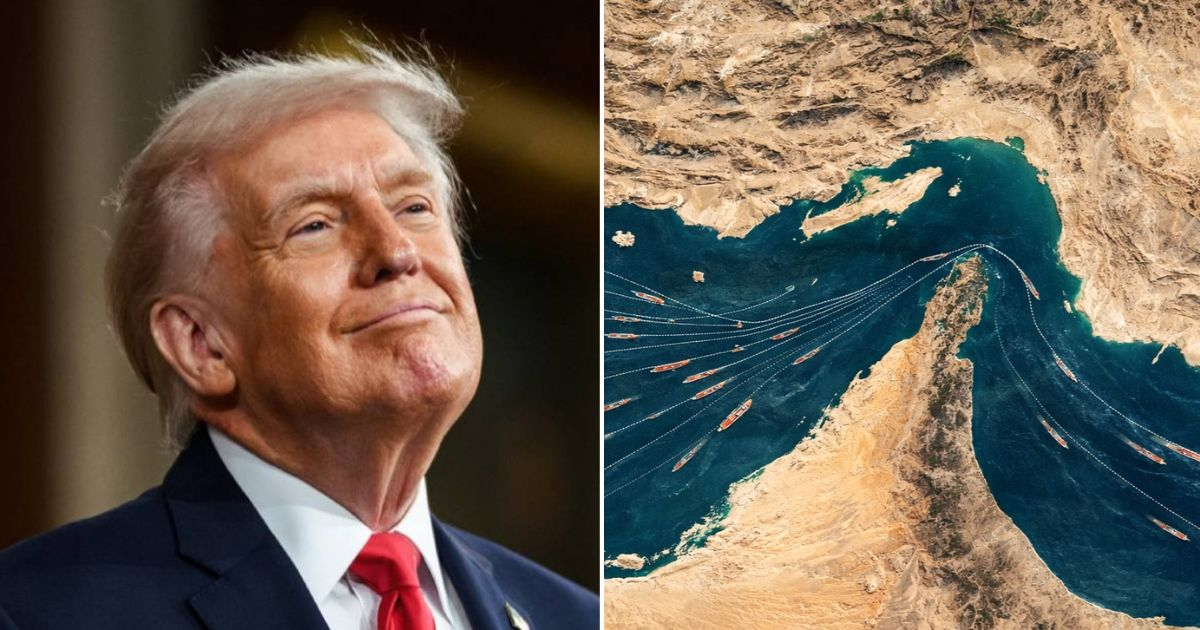
Trump also noted that opening the Strait of Hormuz would be a straightforward operation from a military standpoint and crucial for stabilizing oil prices.
"They do not want to help open the Strait of Hormuz; a simple military maneuver that is the only reason for those high oil prices. Something so easy for them to do, and with so little risk. Cowards, and we will remember this," he wrote.
According to information from EFE, the statement comes after several allies, along with countries such as Japan, Australia, and South Korea, declined to join a coalition led by Washington to ensure navigation along this strategic route, through which nearly 20% of the world's hydrocarbon trade passes.
Trump insisted that the United States does not need the support of other countries to act, although he questioned the lack of commitment from the Atlantic bloc at a moment he considers crucial for global security and the containment of Iran.
Recently, the U.S. President issued a stern warning to NATO countries, stating that the military alliance could face “a very bad future” if its members do not cooperate to ensure the passage of vessels through the Strait of Hormuz, which has been closed by Iran following recent U.S. attacks in the region.
Furthermore, he raised the possibility that his country might stop ensuring the security of the Strait of Hormuz and transfer that responsibility to other nations that rely on this strategic route for the transportation of oil and gas.
Filed under: