
Related videos:
Speculations about a possible change in the leadership of power in Cuba are gaining strength again, with the possibility that a member of the Castro family will replace Miguel Díaz-Canel as president of the island.
According to a report by the Associated Press (AP), experts and analysts believe that the current leader, appointed at the time by Raúl Castro, may not complete his term amid the worsening economic and energy crisis that the country is facing.
Díaz-Canel, who took office as president in 2018, has been seen as a figure lacking real power within the regime's structure, where control remains concentrated in the military apparatus led by Raúl Castro, who is still regarded as the dominant figure in Cuba.
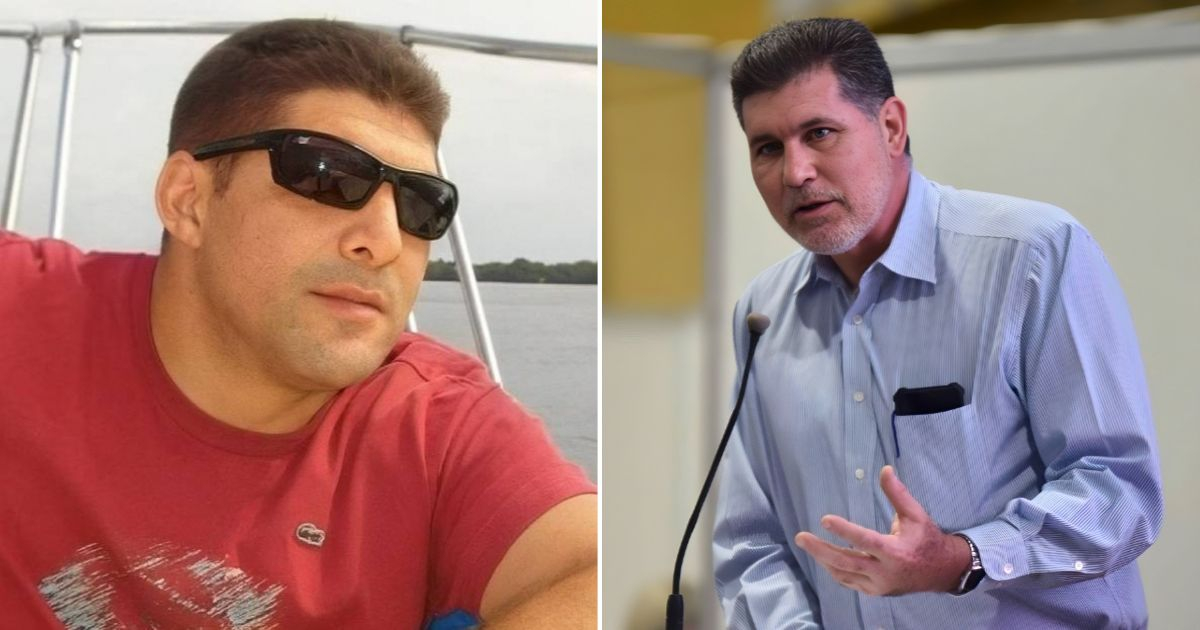
In this scenario, two names linked to the Castro family circle have gained visibility as potential successors: Oscar Pérez-Oliva Fraga and Raúl Guillermo Rodríguez Castro.
Pérez-Oliva, the great-nephew of Raúl Castro, has quickly risen within the government.
He currently holds the position of Vice Prime Minister and heads the Ministry of Foreign Trade, roles that place him in a strategic position within the state apparatus.
Analysts describe him as having a more technical profile and experience in economic management, which could make him a viable figure for transition within the system, although without suggesting profound structural changes.
On the other hand, Raúl Guillermo Rodríguez Castro, known as "El Cangrejo" and the grandson of Raúl Castro, has also been mentioned amid the speculation.
Although he has not held formal positions in the government, he has been connected to the power circle, including security roles close to his grandfather.
His recent appearances in forums related to government decisions and meetings with U.S. officials have caught the attention of observers, although experts believe that his last name could hinder his potential as a transitional figure in the face of external pressures.
Experts cited by AP agree that, regardless of who occupies the presidency, real control of the country will remain in the hands of the military establishment and Raúl Castro, who, at 90 years old, continues to be the key player within the system.
"Real power resides with the military," analysts warn, noting that the formal leadership of the Communist Party does not necessarily entail effective decision-making能力.
The report also highlights the growing social unrest within the island, where food shortages, power outages, and the decline in living conditions have pushed the situation to critical levels.
In this context, Díaz-Canel's figure is perceived as increasingly weakened and unpopular, especially following the repression of the protests in July 2021 and the worsening of the crisis during his tenure.
Despite the speculation, the regime has rejected any possibility of changes driven from abroad. Cuban authorities have insisted that the political system and its leaders are not open to negotiation with other countries.
However, the current scenario raises questions about a potential internal reconfiguration of power, in which, for the first time in decades, a struggle among different figures within the regime for control of the country cannot be ruled out.
Recently, a report published by The New York Times stated that the Administration of Donald Trump would be attempting to remove Cuban leader Miguel Díaz-Canel from power as a condition for achieving significant progress in the discussions held with Havana.
According to that information, U.S. officials reportedly communicated to Cuban negotiators that Díaz-Canel must resign, although they would leave it to the Cuban side to decide how to execute that step.
However, the U.S. Secretary of State, Marco Rubio, denied the report and through his account on X, Rubio described the information as "fake news" and harshly criticized the media that, he said, rely on unreliable sources.
For its part, The New York Times publicly responded to the U.S. Secretary of State, defending the accuracy of the information and asserted that Rubio did not provide any factual rebuttal to the published content.
The Cuban regime stated that it will not negotiate with the United States any changes in its political system nor the departure of leaders such as Miguel Díaz-Canel.
Filed under: