
Related videos:
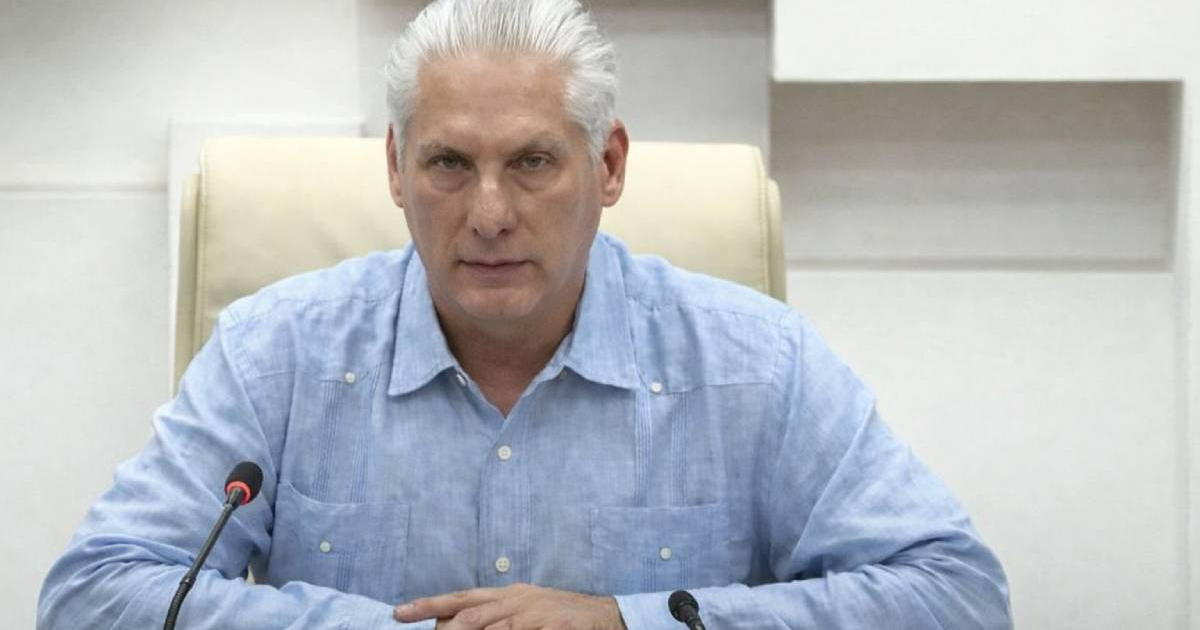
Miguel Díaz-Canel dismissed any transformation of the Cuban political system and assured that his government is progressing in an update of the economic model with its own elements.
In an exclusive interview with the Mexican newspaper La Jornada, in Havana, the president stated that the ongoing reforms do not signify a political opening similar to that of other socialist countries.
"It is not copying. It is a Cuban system, but it shares elements of the Chinese and Vietnamese models," he stated. He also reiterated that the Communist Party will continue to be the "guiding force of society."
Her statements come amid a deep crisis in Cuba, marked by fuel shortages, power outages, inflation, and daily challenges that are pushing thousands of families into extreme poverty.
The new economic strategy, as he stated, combines "centralized planning and market mechanisms to avoid speculation," as well as greater coordination between the state and non-state sectors.
The goal is to achieve "sustainable development, with social justice, inclusivity, and equity," he said.
He also mentioned the possibility of expanding the participation of Cubans living abroad in the national economy, under strict regulations. "Their investment in our country is carried out within the framework of our legal norms," he specified.
The ruler attributed the severe economic situation facing Cuba to the tightening of U.S. sanctions, especially since 2019. He asserted that the country is facing an "energy blockade" that has limited fuel arrivals and worsened problems in electricity generation.
"It's been almost four months since we received a drop of fuel," he stated, describing a situation that has affected the daily lives of Cubans, with prolonged blackouts and challenges in transportation, production, and food distribution.
Miguel Díaz-Canel assures that "Cuba resists, functions, continues dreaming."
In the political realm, he insisted that any dialogue process with Washington is based on mutual respect. He confirmed recent contacts between officials from both countries, although he avoided providing details. "These processes are very sensitive," he noted.
He stated that "the most failed act of the U.S. governments in these 67 years of revolution is not being able to seize control of Cuba," and added that this inability "provokes anger" in Washington.
When asked about possible changes in the political system or in the mechanisms of participation in the country, Díaz-Canel rejected personalizing decisions and defended the collective nature of the regime. "In Cuba, processes like these cannot be personalized," he stated.
He also acknowledged the existing social unrest due to the crisis. "Life is very tough," he admitted, while defending the government’s management and assuring that there is a willingness to improve spaces for popular participation.
The president emphasized the historical relationship with Mexico, which he described as "dear," and expressed gratitude for the support received during difficult times.
The interview reflects the official stance of the Cuban regime. Díaz-Canel aims to maintain political control while trying to implement economic adjustments in a context of strong criticism, pressures from the United States, and various limitations in Cuba.
Filed under: