
Related videos:
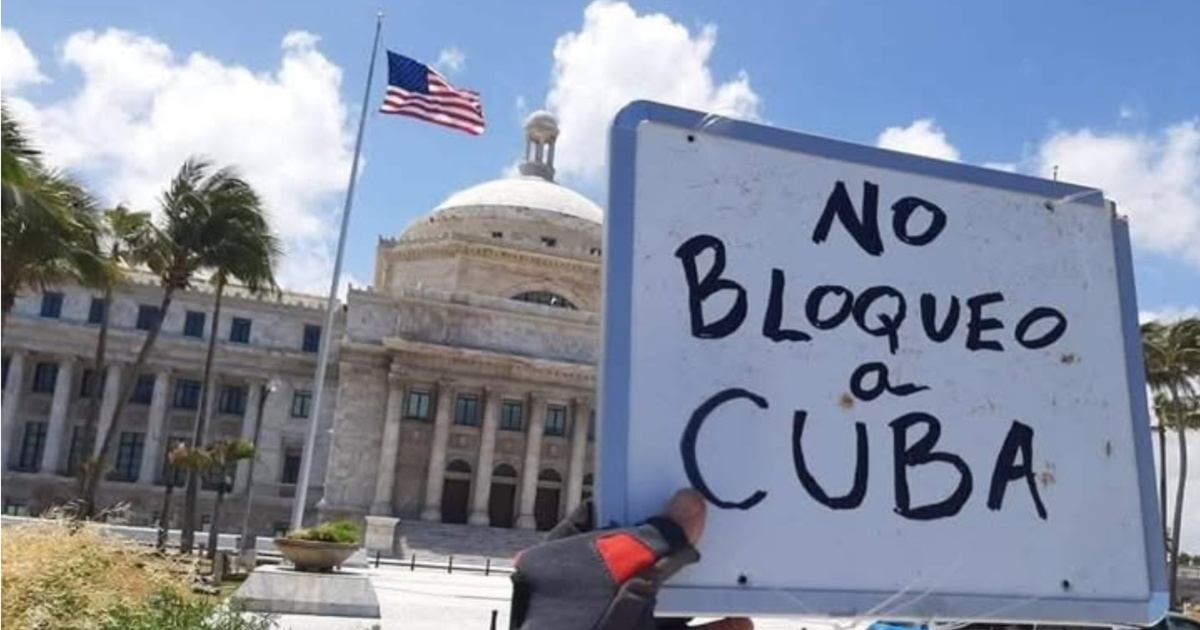
Organizations aligned with the Cuban regime launched the campaign "One Million Friends for Solar Power in Cuba" in San Juan, Puerto Rico, an initiative aimed at raising funds to finance the installation of renewable energy systems on the Island.
According to the official media Cubainformación, the proposal was promoted by the Continental Latin American and Caribbean Network of Solidarity with Cuba and Just Causes, along with the Committee of Solidarity with Cuba in Puerto Rico, and invites citizens to make donations starting from two dollars.
The organizers frame the initiative as a response to the Cuban energy crisis and attribute the difficulties to the "economic, commercial, and financial blockade imposed by the United States," without mentioning the structural deterioration of the electrical infrastructure or decades of lack of investment by the regime itself.
The irony of the solidarity call is hard to overlook: days before the campaign launch, the Ministry of Energy and Mines of Cuba published a resolution in the Official Gazette establishing a scheme whereby citizens must pay in dollars to access state solar energy.
According to that resolution, one kilowatt of solar power costs $600 for 20 years, $312 for 10 years, $168 for five years, and $90 for two years, in exchange for a discount of 125 kWh per month for each contracted kilowatt.
The mechanism does not involve the installation of panels in homes, but rather payment for capacity within the system controlled by the Electric Union, which maintains complete control over generation and distribution.
In practice, the model shifts the cost of state-generated electricity onto the citizens, with access conditioned on the availability of dollars, deepening inequality in a country where many Cubans do not have stable access to foreign currency.
A complete irony
Thus, while organizations aligned with the regime collect international donations to install solar infrastructure, Havana is creating mechanisms to charge ordinary Cubans for that same energy.
The organizations driving the campaign are part of an ecosystem of groups that promote the regime's official narrative abroad.
The Committee of Solidarity with Cuba in Puerto Rico included in its work agenda for January 2026 campaigns for the freedom of Nicolás Maduro and Cilia Flores, as well as a rejection of the U.S. military presence in Puerto Rico.
The Continental Network acts in coordination with the Cuban Ministry of Foreign Affairs and has publicly congratulated the Maduro government of Venezuela.
The campaign is being launched at the worst moment of the energy crisis in Cuba in decades.
So far in 2026, the National Electric System has experienced at least four total collapses, with power outages lasting between 15 and twenty hours daily in Havana and up to 48 hours in provinces such as Santiago, Holguín, and Matanzas. Nine of the 16 thermal power plants in the country are currently out of service.
The crisis worsened in January 2026 following the disruption of the Venezuelan supply of between 25,000 and 35,000 barrels of oil per day, along with Executive Order 14380 from the Trump administration, signed on January 29, which imposes tariffs on countries that supply crude oil to Cuba.
On March 26, the UN launched an emergency humanitarian action plan valued at 94.1 million dollars for Cuba.
Francisco Pichón, the UN resident coordinator on the Island, warned: "If the current situation continues and the country's fuel reserves are depleted, we fear a rapid deterioration, with the potential loss of life."
Despite millions in donations—China contributed 114 million dollars in 2023 for 22 photovoltaic parks—, renewable energy accounts for less than 5% of Cuba's total generation, far from the official target of 24% by 2030.
Filed under: