
Related videos:
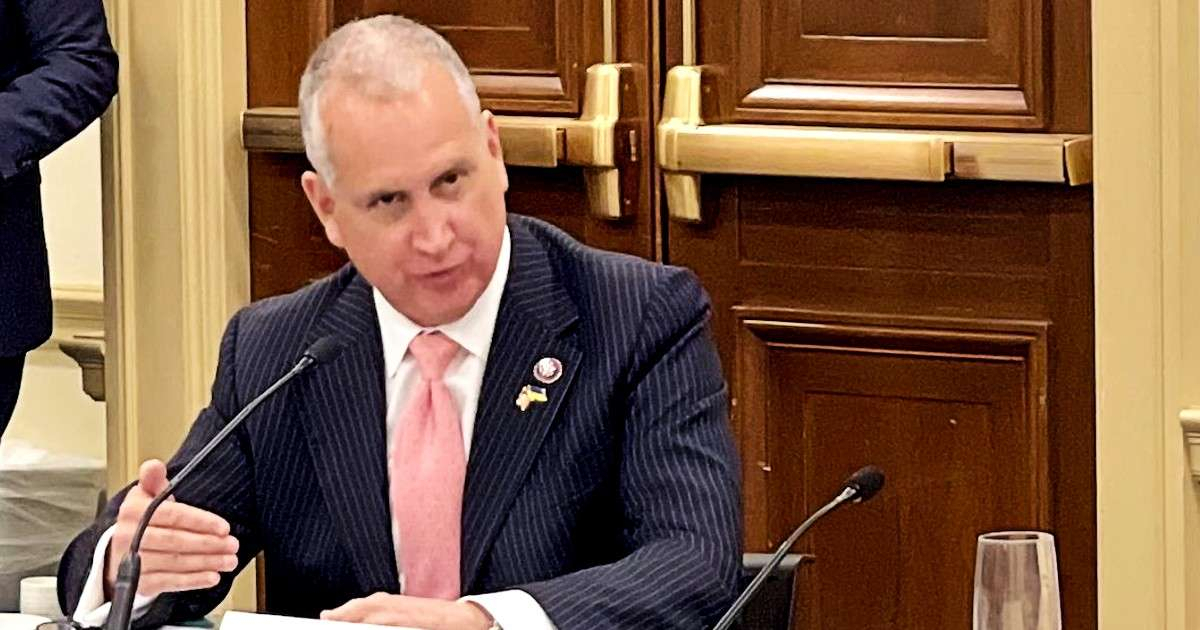
The Republican congressman from Florida Mario Díaz-Balart published a message on X this Thursday, recalling the three conditions set by U.S. law for lifting the embargo on Cuba, invoking the memory of his brother Lincoln as the reference who always reiterated them.
Díaz-Balart referenced the LIBERTAD Act - known as the Helms-Burton Act - to emphasize that the embargo would end in a day if those three conditions are met: "1. Release of all political prisoners. 2. Legalization of all political parties, unions, and the press. 3. Call for free and multi-party elections for the Cuban people."
The congressman concluded his message with a direct question and a statement: "Which of those conditions does not befit the Cuban people? The freedom of Cuba is drawing near."
The message is also a posthumous tribute to Lincoln Díaz-Balart, who passed away on March 3, 2025 at the age of 70 in Key Biscayne, Miami, following a battle with cancer.
Lincoln, a Republican congressman from Florida from 1993 to 2011, was the main legislative architect of the Helms-Burton Act, which in 1996 converted the embargo into a permanent state policy, making it impossible for it to be revoked by presidential decree without Congressional approval.
Díaz-Balart gave an exclusive interview to The Floridian, where he stated that any transition in Cuba "requires a regime change" and warned that many of the most capable individuals to lead it are currently imprisoned.
The congressman noted that there are favorable conditions for a transition: "You have good people there, a very solid law, and now you have an administration that is doing the right thing," referring to the government of Donald Trump, which has intensified pressure on Havana following the capture of the Venezuelan dictator Nicolás Maduro in January.
Since then, the U.S. has imposed an effective oil blockade which cut off more than 26,000 daily barrels of Venezuelan supply to Cuba.
On January 29, President Trump signed an executive order declaring a national emergency to impose tariffs on countries, shipping companies, and insurers that supply crude oil to the Island. Cuba is experiencing its worst energy crisis since 1962, with power outages lasting between 20 and 25 hours a day and a deficit of 1,900 megawatts.
Díaz-Balart has also denied rumors about potential immunity agreements for Raúl Castro or Miguel Díaz-Canel, stating that there are no formal negotiations that do not include the departure of the Castro family and the end of the current system.
"The tyranny in Havana will not survive Trump's presidency," he declared days ago.
The Cuban economy could contract by 7.2% in 2026, according to forecasts from The Economist Intelligence Unit (EIU), having already accumulated a decline of 23% since 2019.
Meanwhile, Díaz-Canel promises "unwavering resistance" in the face of pressure that is unprecedented in decades.
Filed under: