
Related videos:
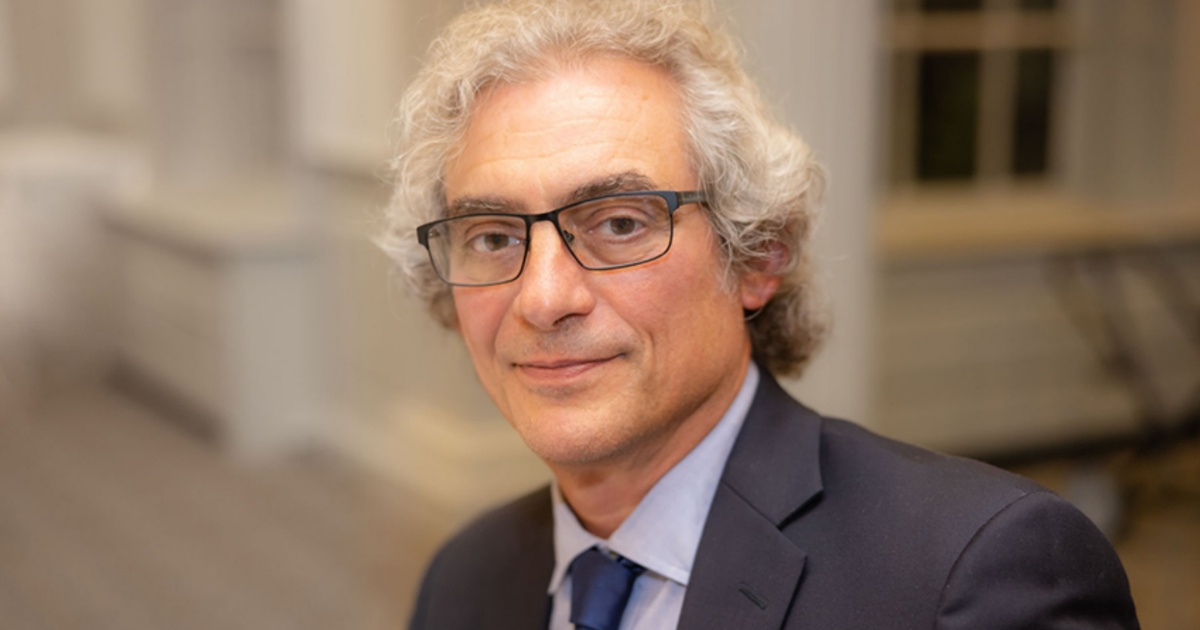
The historian Alejandro de la Fuente, a professor of Afro-Latin American studies and director of the Cuba Program at the Rockefeller Center for Latin American Studies at Harvard, described the regime's management as an unforgivable incompetence in light of the historic opportunities it missed, in an extensive interview where he provides a devastating diagnosis of the island's collapse.
In an interview with El País, De la Fuente, author of the book Una nación para todos, stressed that his critique is not aimed at ideology but at the inability to govern: "There lies the regime's unforgivable incompetence —and notice that I am not talking about ideology; I am talking about incompetence—".
The most illustrative case, according to the academic, was Barack Obama's visit to Havana in March 2016, which he described as a monumental opportunity wasted.
“Obama arrives with an agenda of openness. He is an immensely popular figure in Cuba. The transformation that Havana undergoes in those months is enormous,” De la Fuente pointed out.
However, in the very month of the visit, Fidel Castro published "The Brother Obama," reinstating an anti-imperialist rhetoric, the Foreign Minister Bruno Rodríguez described the visit as "an attack on the values of Cuba," and Raúl Castro referred to the United States as "the enemy."
For De la Fuente, the explanation is structural: "Cuban institutions react with terror because they do not know how to deal with the United States in any dynamic other than confrontation."
De la Fuente also asserts that the Trump Administration's approach is like an Obama 2.0, but with gunboats. However, he explains that the U.S. cannot be reduced solely to its extractivist dimension.
“Such logic collapses in Cuba. There isn’t much to extract. And I have the attention span of Trump, which is quite limited. But beyond that: the United States cannot be reduced to this situation. Obama is also part of the history of the United States. There are other United States with financial and commercial interests that are not completely incompatible with what many Cubans desire. It doesn't have to be the most extractivist version,” he says.
The collapse began before Trump
About the origin of the current collapse, the historian was categorical: "The collapse did not start with Trump's executive order in January of this year. That order exacerbates a process that had already been occurring. My impression is that this collapse perhaps began around 2020 or 2021."
The clearest turning point, in his opinion, was the protests of July 11, 2021 and Díaz-Canel's response: "The famous phrase —'the order to fight has been given'— at a moment that could have been used to foster a national dialogue. That was a missed opportunity."
De la Fuente also cited the demographer Albizu Campos to highlight the crisis: "If a country loses 20% of its population without a war involved, that qualifies as a collapse, and that precedes the whole current situational crisis."
Real negotiations go through Gaesa
Regarding the current negotiations between Washington and Havana, the academic revealed that they do not go through Díaz-Canel or the Foreign Ministry: "It is, in fact, a conversation with the Gaesa conglomerate, which is the real power in Cuba. The Trump administration is, in this sense, speaking with the right people."
Regarding a possible political change, De la Fuente was direct: "If the United States accepts that its demand for change can be met with the replacement of Díaz-Canel, I believe we will see it. And I also think that it will not change anything within Cuba."
The historian also addressed the role of the Venezuelan subsidy: "it bought a quarter of a century with the Venezuelan subsidy. And if one were to summarize Fidel Castro's political genius, it would be that he managed to secure a new subsidy," referring to the replacement of Soviet support with that of Hugo Chávez.
The historical responsibility lies in Havana
Although he criticized Trump's maximum pressure policy on ethical grounds —"when we talk about pressuring Cuba, we are really talking about pressuring Cubans"— De la Fuente was clear about where the historical responsibility lies: "If we were to understand the agency of that tragedy, we would see that it is not in Washington. That agency is in Havana. Those who have failed, those who have let opportunities slip away, are in Havana."
Finally, the academic praised the dynamic strength of the emerging private sector within the island.
"I have enormous faith in the capabilities of Cubans. Those outside support those inside; those inside manage the businesses of those outside. Cubans have been reconstituting networks that are not very visible, which have grown and flourished in the shadow of power. There are entrepreneurs who speak of fair wages for their employees. A young, dynamic business group is committed to a national project where independence and well-being go hand in hand. What they lack are institutional spaces," he added.
Filed under: