
Related videos:
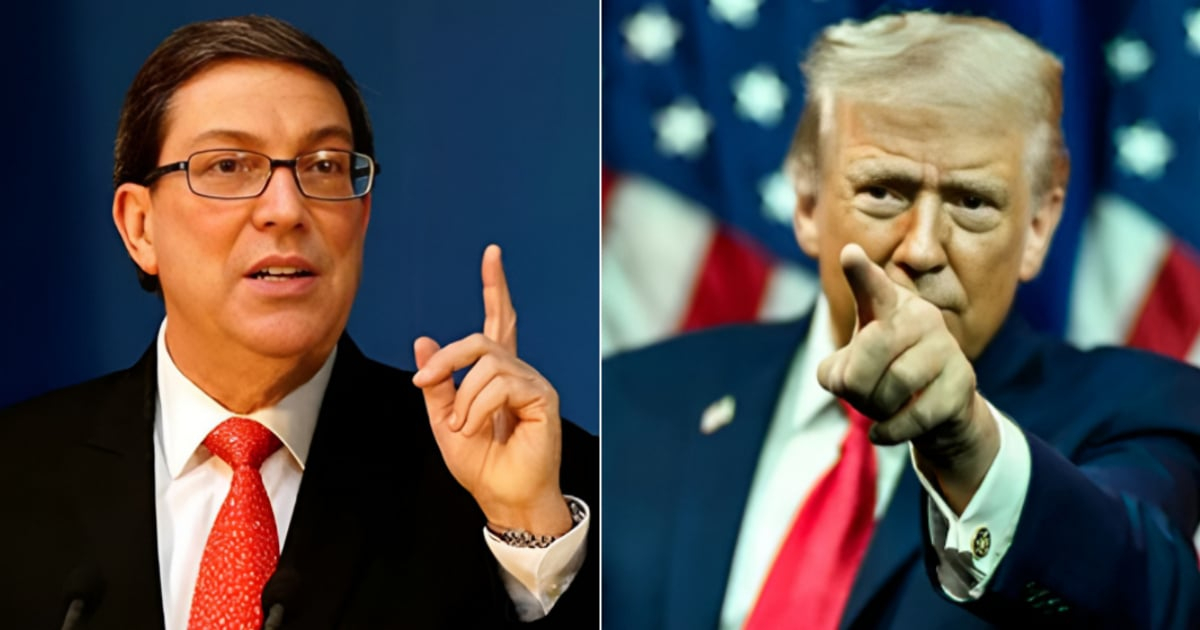
Cuban Chancellor Bruno Rodríguez Parrilla published a message this Saturday on his X account in which he attributes the U.S. embargo to the slowdown in the country's performance, the impact on the economy, and the cut in sources of income, while ignoring decades of the regime's own failures that have plunged Cuba into one of its worst crises.
Rodríguez believes that the U.S. economic war against Cuba has achieved its goal for over 67 years of limiting the country's performance, affecting the economy, stalling productive development, cutting off sources of income, and denying access to markets and technology.
"The economic war of the US against Cuba has served, for over 67 years, the purpose of limiting the country's performance, affecting the economy, hindering productive development, cutting off sources of income, and denying access to markets and technology. An asymmetric, abusive, and ruthless aggression like this is not needed against a government that is considered incompetent," he said on X.
The chancellor went further and provided a striking justification for the U.S. pressure: "The U.S. resorts to this brutal assault because it is aware of the strength of the government under attack, the viability of its socialist system, and, above all, its demonstrated commitment to social justice and solidarity."
The statement is hard to uphold in light of the reality facing the island. Cuba is experiencing blackouts of up to 24 and 25 hours daily, with a power generation deficit nearing 1,900 MW.
The Cuban GDP has experienced a decline of 23% since 2019, and organizations such as The Economist Intelligence Unit project an additional contraction of 7.2% for 2026.
Díaz-Canel himself acknowledged in March that Cuba has been without receiving a drop of fuel for almost four months and that it produces only 40% of the crude oil it needs, while failing to take any internal responsibility for the collapse.
Independent analysts point out that the causes of the crisis are structural and predate the tightening of the embargo: outdated electrical infrastructure from the 1950s and 60s, inefficient centralized planning, historical dependence on external subsidies —first from the Soviets, then from the Venezuelans— and the opacity of Grupo Gaesa.
Cuba ranks 175 out of 176 in the 2026 Economic Freedom Index, classified as "repressed," just above North Korea.
Rodríguez's speech also failed to convince Cubans on social media. "Bruno, 99% of the citizens in your country want you out of the government. Come on, listen to them, hypocrite," responded a user.
Another was more direct: "Cuba is collapsing on its own. There’s no need to attack it."
The 80% of Cubans believe that the current situation is worse than the Special Period of the 1990s, according to a survey conducted this month, which turns the minister's argument into a propaganda exercise that directly contradicts the daily experience of the population.
Filed under: