
Related videos:
The fuel crisis in Cuba continues to generate tensions and public complaints.
The editorial team at CiberCuba received a report from a reader warning about alleged irregularities at the service station located at Línea and E in Vedado, Havana, where — according to their claims — certain individuals are being systematically favored amid long lines.
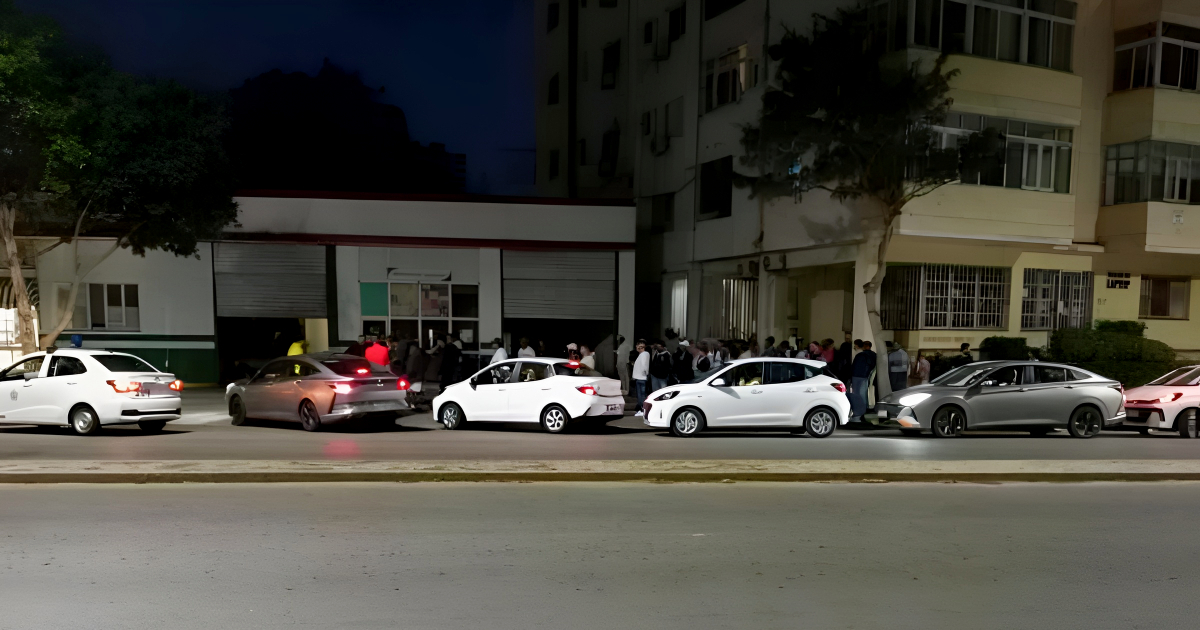
"To file a complaint, please. This is really going beyond the limit," wrote the complainant, who also sent several images taken at night showing long lines of vehicles waiting to refuel at that central gas station.
According to their testimony, the situation occurs daily: “The same people are being served every day. And those of us who sleep in line cannot refuel.”
The citizen claims that some vehicles manage to refuel several times, while others remain for hours —or even all night— without success.
The same cars pass three or four times, he reported, pointing to a possible scheme of favoritism or corruption in the management of fuel at that particular spot in the capital. He also made a direct appeal: “To the relevant authorities, please take action.”
The images received show long lines of cars at the gas station on Línea and E, a scene that has become common in Havana and other provinces of the country amid an energy crisis that has drastically reduced the supply of fuel.
In this context, queues of over 12 hours, the use of informal appointment systems, and reports of reselling or favoritism have been constant in recent months. Scarcity has also driven up the black market, where the price of a liter of fuel can exceed 1,000 CUP, well above the official rates.
This situation is compounded by the lack of transparency in distribution. Currently, there is no public or stable list of gas stations authorized for different types of customers, including small and medium-sized enterprises (Mipymes).
Although some private companies have been importing fuel since February 2026, it is not sold through its own network; rather, it is managed by state entities such as CIMEX and CUPET and is distributed at regular service stations.
In practice, this means that access to fuel depends on the availability at the time, agreements with state entities, and allocations that are not always clear or public.
Some stations may prioritize certain customers or types of fuel, which fuels the perception of chaos, inequality, and potential irregularities as reported in this case.
Despite some measures taken by the government—such as allowing small and medium enterprises to import fuel through state intermediaries—citizens and experts agree that issues of distribution, control, and transparency persist, affecting both the population and the private sector.
So far, there is no official information regarding investigations or sanctions related to these types of complaints. In the meantime, users continue to face long waits and uncertainty in accessing a resource that is becoming increasingly scarce on the Island.
Filed under: