
Related videos:
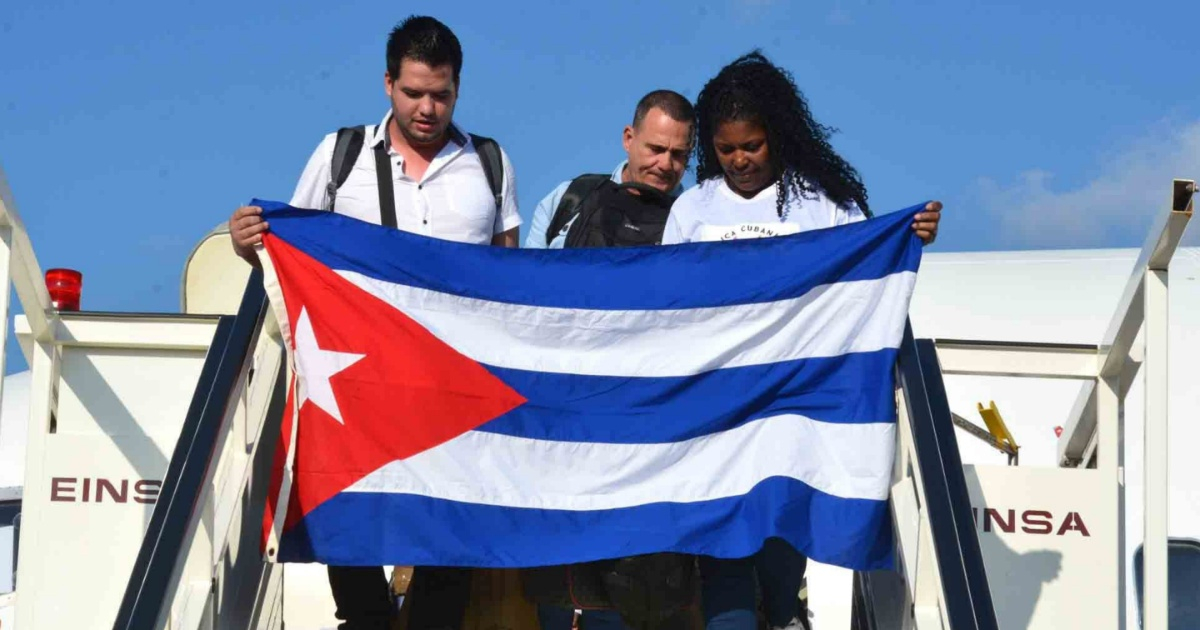
While Jamaica canceled its medical cooperation agreement and returned the 277 Cuban healthcare professionals who were operating on the island, the regime's Foreign Ministry published a message celebrating their return as an act of "dignity, humanism, and solidarity." The official tweet, accompanied by the hashtag #CubaPorLaSalud, stated that "in the face of external pressures, Cuba reaffirms its commitment to help without political, economic, or social conditions."
The group of doctors was welcomed at José Martí Airport by the Deputy Prime Minister, in an event that the regime presented as a triumphant return, although the reality behind the closure of the mission tells a very different story.
Jamaica notified the Cuban embassy on March 4 that it would not renew the agreement, bringing an end to years of medical cooperation between the two countries.
Among the reasons put forward by the Jamaican authorities were irregularities in the working conditions of Cuban professionals: doctors without direct payments or their own passports, a systematic practice that has been widely denounced.
The model of Cuban medical missions has been questioned internationally due to its salary retention structure. According to documented reports, the regime retains between 70% and 90% of those payments that contracting countries pay for the services of health professionals.
In response to the criticisms, Cuban Foreign Minister Bruno Rodríguez insisted that the goal is to cut the revenues of the Cuban economy, attributing the cancellations to external pressures rather than to the conditions under which the doctors operate.
For his part, Miguel Díaz-Canel defended the scheme by stating that doctors receive the entire Cuban salary plus additional fees, a claim that contradicts the testimonies of numerous professionals and findings from international organizations.
The working conditions of Cuban doctors abroad have been documented by Human Rights Watch, the UN, and the European Parliament, who have noted that the scheme may constitute a form of forced labor.
The case of Jamaica is not isolated. Honduras withdrew 172 doctors in February, joining a regional wave of cancellations in the early months of 2026 that impacts one of the primary mechanisms for generating foreign currency for the Cuban regime.
Filed under: