
Related videos:
The military rhetoric of the Cuban regime continues to harden and now directly targets one of the most sensitive issues for society: children.
In recent posts on social media, the Central Army of Cuba stated that, in the event of a potential conflict, "the vast majority of Cubans —women, men, the elderly, and even children— will not evade their duty to the Fatherland," in a message that has raised alarms due to the intensity of its rhetoric.
The statement, laden with historical references and political slogans, insists that the current generation must be prepared to "defend the Revolution with arms" if necessary, in the context of the centenary of the birth of the dictator Fidel Castro.
This is not an isolated event. Other military structures have echoed the same tone. From the very Central Army, it was reiterated that “there will be no truce in duty” and that those who believe in the Revolution —“women, men, the elderly, the youth, and even children”— are ready to defend it. For its part, the Eastern Army appealed to ideological continuity, assuring that the new generations will keep “the ideas of the Commander-in-Chief alive.”
The emphasis on the participation of minors in a potential war scenario occurs amidst a rising discourse that has already been causing concern among Cubans.
Days earlier, the Ministry of the Revolutionary Armed Forces (MINFAR) had issued an openly threatening message by stating that any enemy could “blow up with a mine” or be annihilated in ambushes, while Deputy Foreign Minister Carlos Fernández de Cossío confirmed that the country is preparing for the possibility —though not likely— of a military aggression from the United States.
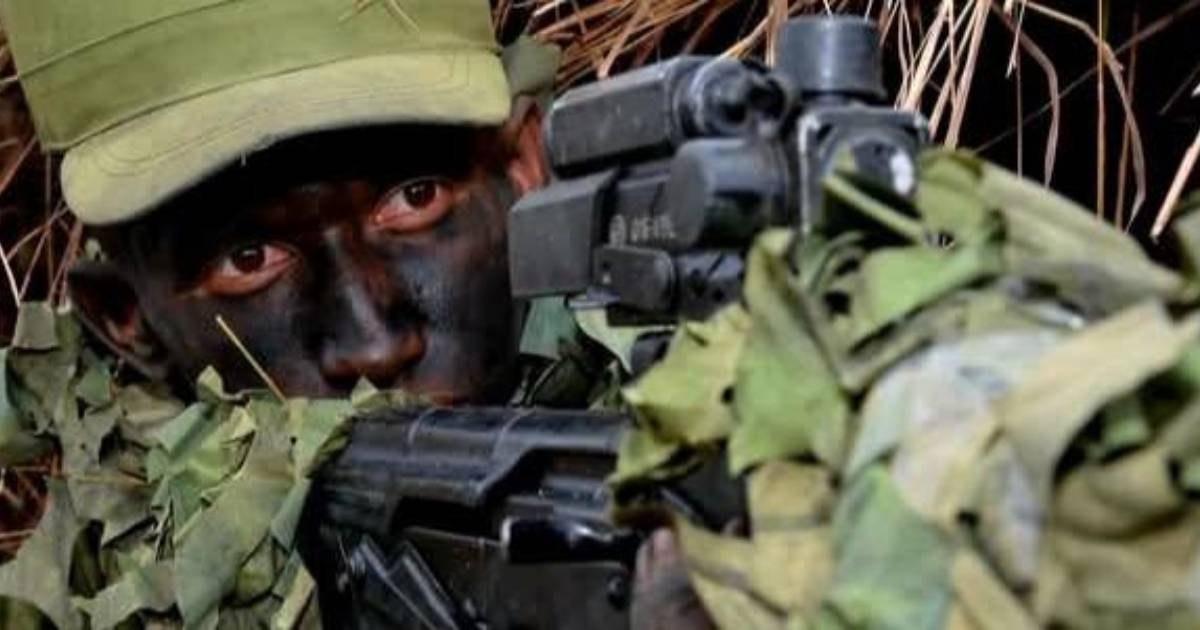
In parallel, the regime has intensified military preparations within the country. Since January, exercises such as the so-called University Bastion have included drills with rifles, mines, and combat maneuvers, not only involving university students but also school-aged children, within the concept of "war of the whole people."
This shift towards militarization occurs in a particularly delicate context for the population. Cuba is going through a deep economic crisis, with blackouts, shortages, and a massive migration that has fractured thousands of families.
For many Cubans, the issue is not only political but also deeply human. The idea that children and young people might become entangled in a logic of military confrontation strikes directly at the fears of parents who are already facing daily uncertainty both inside and outside the island.
While the official discourse insists on defense and sovereignty, concern is growing over the real cost that such a call might have for a generation marked by crisis and exodus.
Filed under: