
Related videos:
Giving birth in Cuba today is not just an act of love. For many women, it has become an experience marked by fear, uncertainty, and survival.
A recent report from the BBC reveals the reality for hundreds of pregnant women on the island, forced to face their final months of gestation and the moment of childbirth amid prolonged power outages, food shortages, and an increasingly deteriorated healthcare system.
Mauren Echevarría Peña, a 26-year-old woman admitted to a maternity hospital in Havana, is expecting to give birth in a matter of days. Her pregnancy has been complicated, with gestational diabetes and hypertension. But there is something that worries her even more: the possibility that her delivery coincides with another nationwide blackout.
The scene is not difficult to imagine in present-day Cuba: dark rooms, doctors working under pressure, and the life of a newborn depending on generators that often lack sufficient fuel.
Although Mauren acknowledges the efforts of the medical staff, the reality is that not all women receive that level of care. According to official figures, there are over 32,800 pregnant women in Cuba, many of whom are facing much more precarious conditions.
Outside the hospital, the situation can be even tougher.
Indira Martínez, seven months pregnant, cannot even guarantee herself basic nutrition. Without electricity for hours or days, cooking becomes a daily challenge. The fridge is empty, using charcoal as the sole alternative, and the lack of essential nutrients defines her routine.
“One must get up early when the light returns to cook whatever little there is,” she says. Her testimony, collected by the BBC, reflects a physical and emotional strain that goes beyond pregnancy.
But Indira's fear doesn't end with childbirth. Her greatest anxiety is the future of her daughter.
"How am I supposed to tell him that he has no future in life? Because he won't," she asserts with a mix of resignation and pain.
That feeling is not isolated. In a country with low birth rates, an aging population, and massive emigration, more and more Cubans are questioning whether bringing a child into the world on the island is a responsible decision.
Meanwhile, the regime insists on solely blaming the United States for the crisis. In February, health authorities stated that more than 32,000 pregnant women were at risk due to the fuel shortage, which they described as a consequence of the “energy blockade.”
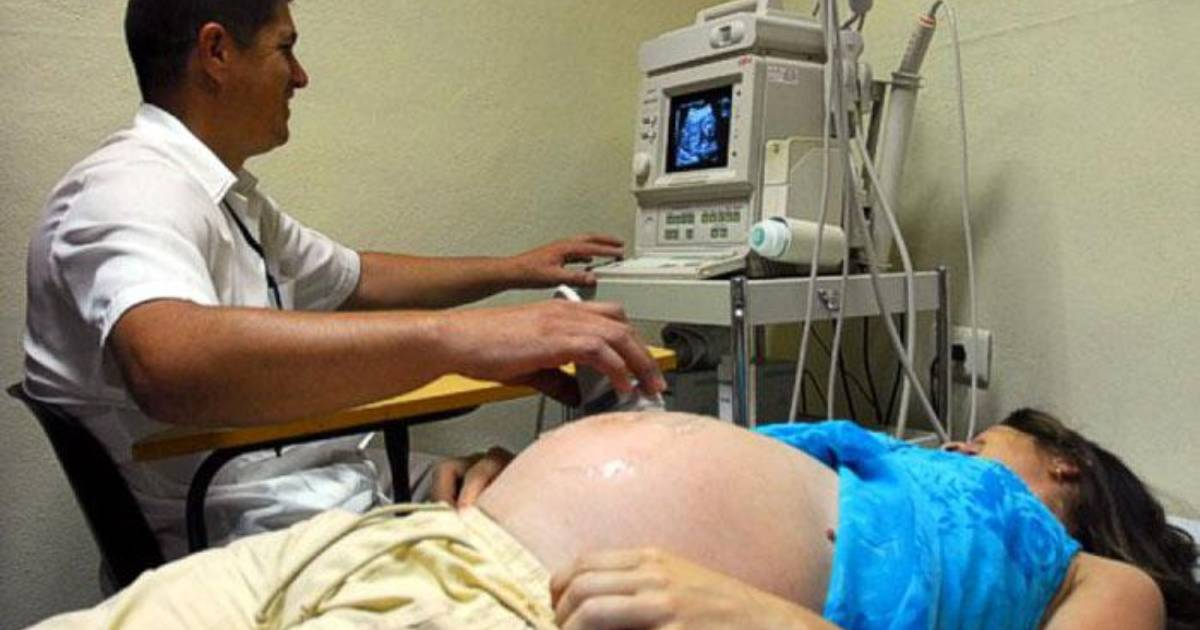
However, within Cuba, reports continue to accumulate, pointing to deeper structural problems. Cases such as that of a hospital in Granma where pregnant women went weeks without ultrasounds due to a lack of fuel, or images of delivery rooms infested with cockroaches in Santiago de Cuba, have fueled public outrage.
Precarity also infiltrates gestures that seek to show solidarity. In Villa Clara, the donation of a simple stew to pregnant women sparked an intense debate on social media, where many saw in the scene not an act of support, but a reflection of extreme scarcity.
And in the midst of that context, life continues to forge its way as best it can.
Just a few days ago, a woman gave birth inside a bus in Havana, assisted by passengers during the journey. Stories that touch the heart, but also highlight the deficiencies of a system unable to ensure minimal conditions for something as fundamental as a safe delivery.
Giving birth in Cuba is no longer just about bringing a child into the world. It’s doing so amidst power outages, with hunger, without certainties, and with the anguish of being unable to promise a better future.
Filed under: