
Related videos:
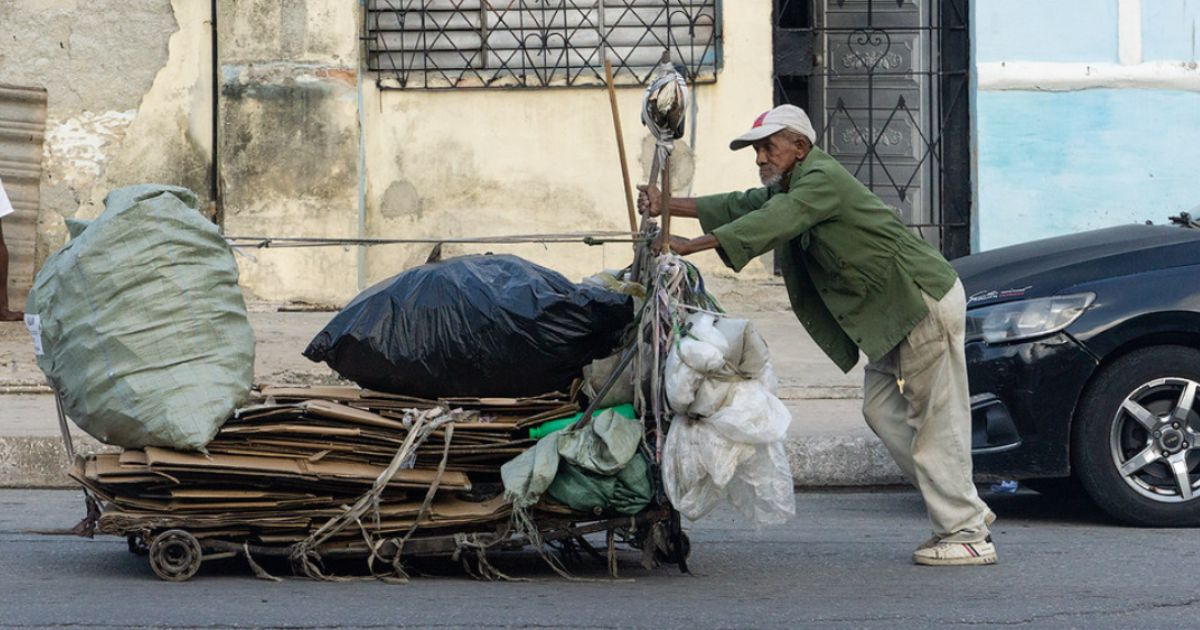
The official portal Cubadebate published an article on Monday titled "Cuba, the Blockade and Hunger as a Weapon of War" in which it attributes the U.S. embargo to the scarcity, health deterioration, and food crisis affecting the island, triggering a flood of mockery and criticism on social media.
The text, published during a severe food crisis when the 80% of Cubans consider it worse than the Special Period of the 1990s, argues that the embargo "causes shortages, deterioration of health services, difficulties in accessing medications, energy problems, obstacles to supply, and a prolonged worsening of material living conditions."
The text invokes the Rome Statute, which classifies the intentional use of civilian hunger as a method of warfare as a war crime, to suggest that the embargo could fall under that category.
However, the article itself acknowledges its legal limitations: "The embargo on Cuba may be unlawful, inhumane, disproportionate, or contrary to the principles of international law, but it would not, without more, fit into the crime of war by starvation," since the Statute requires a formal armed conflict and neither Cuba nor the United States are parties to the treaty.
The text also argues that the embargo creates "a collective psychological injury": socially internalized fear, prolonged anxiety, and structural uncertainty in the face of what it describes as a permanent external threat.
Among the reactions, Elizabeth González Aznar questioned why the official discourse focuses solely on the embargo and neglects internal issues.
"The blockade is very cruel, but what is done wrong here on the inside is even crueler," he wrote, pointing to inefficiency, corruption, and the lack of change as factors that also explain the crisis.
Lucio Enriquez Nodarse was more direct in holding the system itself accountable: “Who is hungry? You? Who causes it? YOU!!!”.
Brandel Osorio scoffed at the official narrative: “That blockade is a bit strange. The people are starving, but the leaders look like cows with how fat they are.”
In the same vein, Allan P. Garrote stated that the situation is not new and linked it to the political system in place for decades: “Blockade and hunger from the PCC, but that’s not new; those measures have existed since 1959.”
Fernando Cuba stated that hunger acts as an internal control mechanism: “Hunger as a weapon of control by the Castro mafia to subjugate the Cuban people.”
Juan Carlos Borrego questioned the inequalities within the country: “If they are the people as they claim, why don’t they suffer from hunger like the rest?”
For his part, David FA rejected the official narrative and noted that the crisis has internal roots, pointing out that external measures are used to justify prior structural problems.
Other comments also pointed to the lack of credibility in the leadership. Ramón González Ramos stated that as long as there is a ruling elite living with privileges, it will be difficult to trust the system.
At the same time, Ana Gloria Marrero Hernández described the embargo as "selective," pointing out that while one part of the country faces shortages, another lives in comfort and privilege.
Yamel Rodríguez García questioned why sectors like tourism do not seem affected by the restrictions: “And why has there never been a lack of resources for hotels?”
Finally, Ariel González Castellón focused on prices and agricultural production, questioning whether these issues can be attributed to the embargo or to internal system failures.
The 2024-2025 sugar harvest produced less than 150,000 metric tons, fewer than in 1899, according to economists, and 94% of Cubans do not trust that the government can reverse the crisis.
The pattern of reactions to Cubadebate is well documented. In February of this year, a call from the portal for sports photos was met with "My sport is surviving" and references to "apagónball," in reference to power outages lasting up to twenty hours.
In March, Cubans labeled the portal as cynical for publishing about gasoline prices in the United States while the island is experiencing a fuel shortage and widespread blackouts.
The Communist Party of Cuba itself acknowledged in December 2024 the shortcomings of the socialist model in food production, a fact that the article from Cubadebate completely overlooks.
According to the World Food Programme, approximately 36% of the Cuban population experiences levels of food insecurity, and more than 70% of households have had to reduce the quantity or quality of their food intake. These figures reflect decades of failure of the centralized agricultural model, not just the impact of the embargo.
Filed under: