
Related videos:
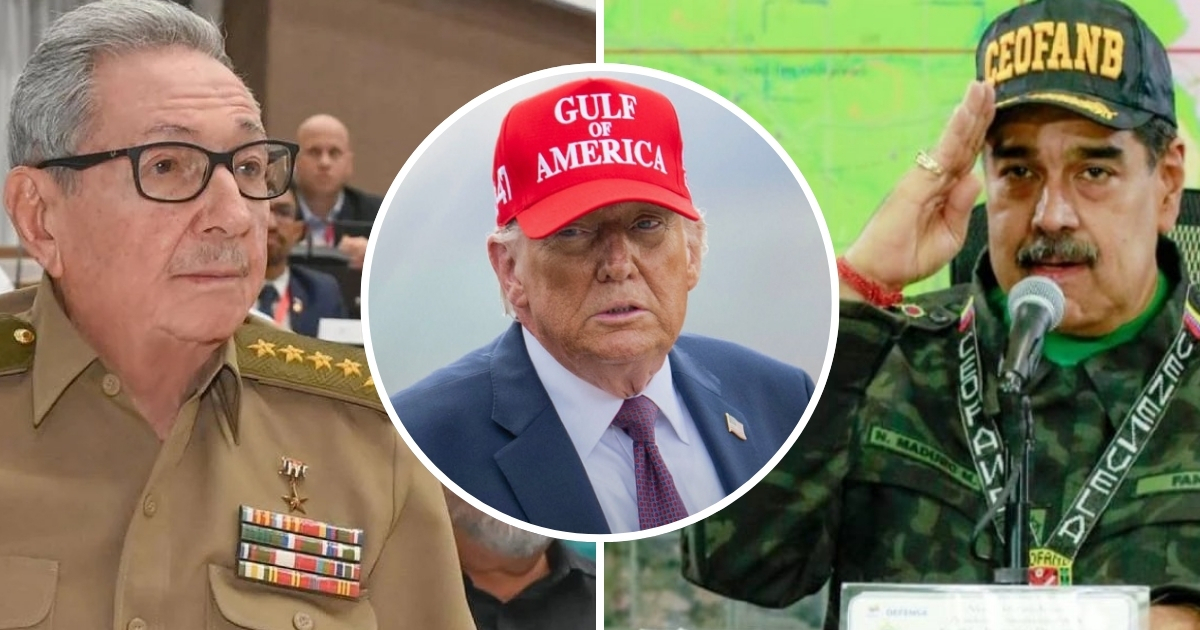
The president Donald Trump declared this Monday that Cuba will be the next target of his maximum pressure strategy, describing the island as "a disaster, a failed country" that "will fail very soon and we will be there to help" the great Cuban Americans.
Trump's words are not isolated rhetoric. They are part of a geopolitical doctrine that, in less than three months, overthrew Nicolás Maduro —captured in Caracas on January 3 during Operation Absolute Resolution— and launched massive attacks on Iranian military installations alongside Israel starting February 28 in the so-called Operation Epic Fury. Cuba is the third vertex of the axis that Washington identifies as a hemispheric threat.
The central legal instrument of this pressure is the Executive Order 14380, signed on January 29, which declared a national emergency due to the threats posed by the Cuban government and authorized additional tariffs on any country supplying oil to the island.
The effect on Cuba has been devastating. Mexico —which covered 44% of Cuban imports with 17,200 barrels daily— suspended shipments on January 9. Venezuela had already halted supplies following Maduro's capture. The Coast Guard intercepted at least seven tankers. The Treasury Department banned Russian oil in March. The result is an unprecedented energy crisis: power outages of up to 25 hours daily, deficits between 1,400 and 2,040 megawatts, and a projected GDP contraction of 7.2% in 2026, with a cumulative drop of 23% since 2019.
However, the pressure has tactical limits. This Monday, Trump confirmed that he would allow the arrival of the Russian tanker Anatoly Kolodkin at the port of Matanzas, calling it a "no problem". The gesture reveals that the strategy avoids a direct confrontation with Moscow, whose commitment to supply Cuba remains despite the sanctions.
According to Bloomberg, the plan does not aim for an invasion but rather to establish the United States as the economic protector of the island —a "friendly acquisition," in Trump's own words—, with three phases designed alongside Secretary of State Marco Rubio: energy blockade, Western investment, and electoral transition. On March 16, Trump declared to Politico: I will have the honor of taking Cuba and I believe Cuba sees the end.
As an institutional counterbalance, last Friday, Democratic representatives Gregory W. Meeks and Pramila Jayapal introduced the Act to Prevent an Unconstitutional War in Cuba, which prohibits the use of federal funds for military actions against Cuba until December 31, 2026, without Congressional authorization. The initiative has 14 co-sponsors. Jayapal accused Trump of "initiating illegal regime change conflicts in Venezuela and Iran." Given the Republican control in both chambers, the chances of approval are slim.
The viability of Trump's forecast faces historical obstacles. During the Special Period of the 1990s, Cuba lost 90% of its oil imports and its GDP fell by 35%, yet the regime survived without political change, adapting with extreme austerity and finding new allies. The difference today is that Venezuela can no longer be the lifeline, and Russia is facing its own limitations due to Ukrainian attacks on oil ports and Western sanctions.
Senator Ted Cruz predicted in March that there is a higher likelihood in our lifetime of new governments in Cuba, Venezuela, and Iran in the next six months. History, however, suggests that regimes under extreme pressure can survive for decades if they maintain internal cohesion and have an external ally willing to absorb costs.
Filed under: