
Related videos:
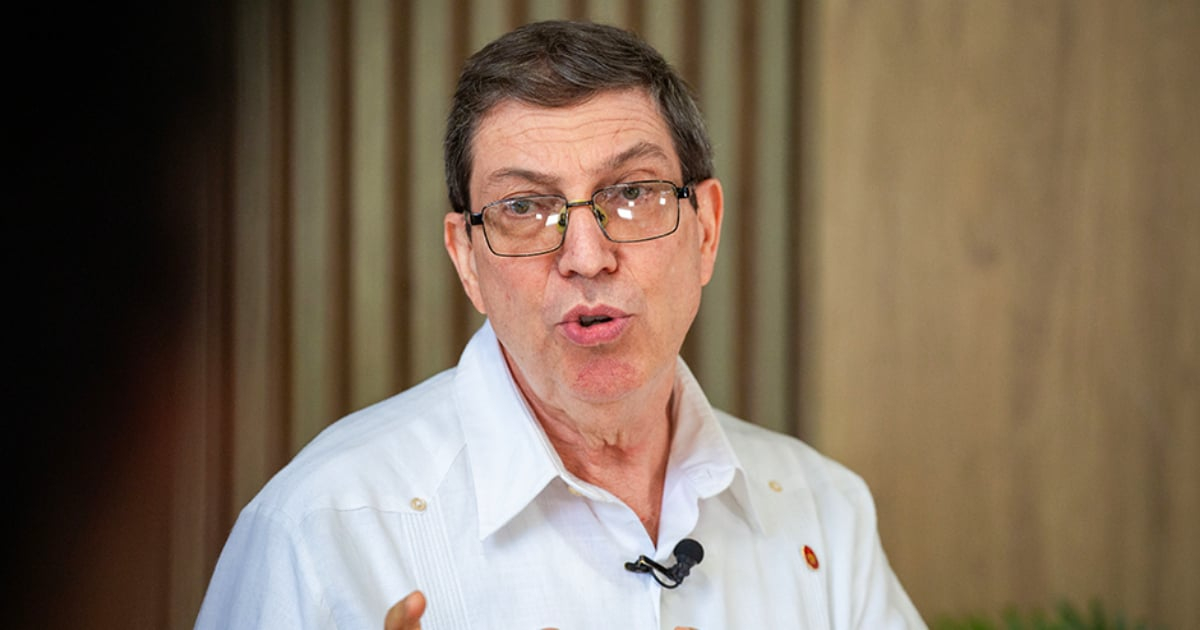
Cuban Foreign Minister Bruno Rodríguez Parrilla published a series of rhetorical questions directed at the United States government this Monday, after Washington claimed it had not taken any "punitive" actions against Cuba.
"What is, if not punitive, the economic embargo? What is, if not punitive, the threat to any country that exports fuel to Cuba?" wrote the Minister of Foreign Affairs of the Cuban regime.
Rodríguez also listed other measures that he described as punitive: the financial persecution of Cuban transactions in any country, restrictions on merchant vessels calling at Cuban ports, the prohibition of visits by Americans to the island, and the lists of state sponsors of terrorism, restricted entities, and restricted accommodations.
The chancellor also questioned Washington's pressures on Caribbean and Latin American governments. "What do the abusive pressures against Caribbean and Latin American governments to abandon medical cooperation programs with Cuba consist of, in order to deprive the country of legitimate income, a purely punitive action?" he wrote.
The message comes amid increasing pressure from the Trump administration on the island. On January 29, Trump signed Executive Order 14380, which declared a national emergency and established an effective oil embargo, imposing sanctions on companies, shipping lines, and insurers that supply crude oil to Cuba.
As a result, Cuba is facing power outages of up to 25 hours a day and a deficit of 1,900 megawatts.
Trump himself declared yesterday, on the same day as Rodríguez's tweet, that he would allow the arrival of the Russian tanker Anatoly Kolodkin in Matanzas with approximately 730,000 barrels of crude oil. "If a country wants to send some oil to Cuba, I have no problem with that," the U.S. president stated, while not altering the existing framework of sanctions.
Two days earlier, on March 28, Rodríguez had already accused the U.S. government of shamelessly lying by denying the energy embargo, and argued that Washington imposes this "fierce blockade" precisely because it acknowledges "the viability of the Cuban socialist system."
The chancellor's statements sparked mostly critical reactions among internet users and the Cuban exile community, who pointed out that the regime uses the embargo as a shield while the population suffers the consequences of decades of poor economic management.
Several users questioned Rodríguez's discussion of external punitive actions without mentioning the government's own responsibility for the energy crisis, food shortages, and the widespread deterioration of living conditions on the island.
The maximum pressure strategy against Cuba is led by Secretary of State Marco Rubio, who demands a complete change of the government system under the Helms-Burton Act of 1996. Trump stated on March 28 at the FII Summit in Miami that Cuba will be next once the conflicts are resolved in the Middle East.
Filed under: