
Related videos:
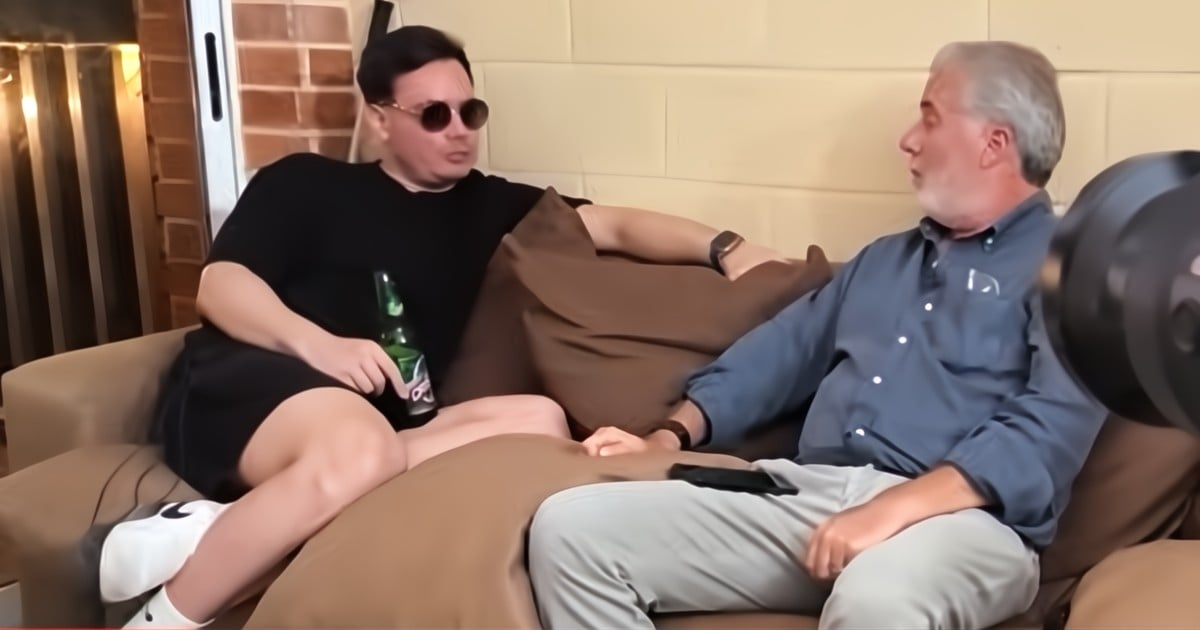
The exclusive interview that CNN conducted with Sandro Castro, the grandson of Fidel Castro, was from the very beginning surrounded by details that did not go unnoticed: the meeting took place at night, during a blackout, in the apartment of the 33-year-old in the Havana neighborhood of Kohly, an area where many military and intelligence officials of the Cuban regime reside.
While the island was enduring one of its frequent power outages, Sandro Castro kept his apartment lit thanks to an EcoFlow battery generator, sipped on well-chilled Cristal beers that his manager delivered one by one, and spoke to CNN correspondent Patrick Oppmann while wearing designer sunglasses, even though it was nighttime.
The contrast between that setting and the austerity message that Castro tried to project —displaying unpainted walls and a nearly empty refrigerator— sparked immediate outrage among Cubans both on and off the island.
During the interview, Castro made statements of significant political impact. He openly criticized President Miguel Díaz-Canel: he isn't doing a good job, because for a long time he should have done many things that have not been done well and that are currently harming us.
He also openly declared himself pro-capitalist: "The majority of Cubans want capitalism, not communism. And that has created differences and, sadly, hatred."
Castro also revealed that he was summoned for questioning by the Cuban State Security due to his satirical videos, although he was released with a warning, a privilege that ordinary citizens would hardly have obtained in similar circumstances.
About his grandfather Fidel, the grandson was conciliatory: "He was a person who had his principles. Everyone is who they are, obviously, but he also respected other people."
Castro denied that his surname gives him advantages: "My name is my name. I am proud of my name, logically. But I don’t see the help you’re talking about. I am just another citizen."
However, he admitted that his nightclub in Vedado cost him "only" 50,000 dollars, a sum unreachable for the vast majority of Cubans, whose average salary does not exceed 20 dollars per month.
The interview sparked controversy on multiple fronts. The journalist Luz Escobar described it as a prime-time whitewashing due to its relaxed tone and the lack of probing questions.
From the other side, the state program Con Filo was criticized for criticizing the regime from a position of privilege.
Filed under: