
Related videos:
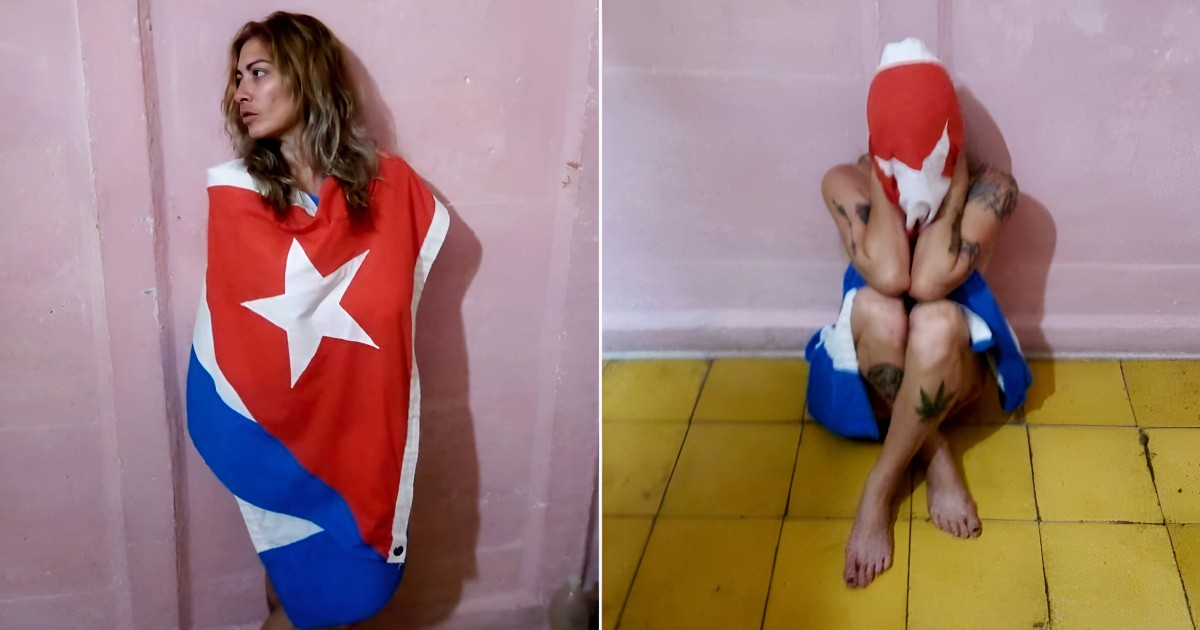
The Cuban political prisoner Aniette González García was detained again last Saturday in Camagüey by State Security agents, just three months after being released, according to a report by her daughter Aniecita Ginestá on social media.
González García had been
According to the family complaint, agents transported her in a patrol car during the morning and held her until night, allegedly for questioning, before releasing her without formal charges.
What makes the situation particularly severe is that the arrest took place in front of her six-year-old granddaughter, the daughter of Aniecita Ginestá, who had already experienced the separation from her grandmother during the three years of imprisonment.
"Last Saturday, they took my mother away in front of my 6-year-old daughter." My daughter knows nothing about politics. She doesn't understand ideologies, conflicts, or 'procedures'. She only knows that this woman is her grandmother," Aniecita Ginestá wrote on her Facebook profile.
The daughter of the activist went further in her complaint and directly pointed out the psychological harm caused to the minor: "Not only was my mother taken from me without any answers. They also instilled anguish and confusion in my daughter, who had already experienced a previous separation. This has consequences. This leaves scars. This is also violence."
Aniecita Ginestá invoked the Convention on the Rights of the Child, the Cuban Family Code, and the Constitution of Cuba itself to demand answers, concluding her denunciation with a powerful statement: "Children are not collateral damage."
The Cuban Observatory for Human Rights condemned the detention and demanded an end to the harassment against the political prisoner, describing the incident as part of a systematic pattern of repression following the sentencing.
That pattern is well known: the regime does not cease its harassment once the sentence has been served; instead, it continues with surveillance, summons, interrogations, and arbitrary detentions to force the exile or silence of dissidents.
The history of González García begins on March 23, 2023, when she was in the Cuban flag in solidarity with the artist Luis Manuel Otero Alcántara, who was sentenced to five years in prison in 2022 for a similar offense.
The Municipal Tribunal of Camagüey of freedom, with the confiscation of the flag — handed over to the Union of Young Communists — and a prohibition on leaving the country. Her appeal was denied on March 30, 2024.
During his confinement in the Villa María Luisa prison, his family reported harassment and lack of medical attention, which prompted the Inter-American Commission on Human Rights to issue precautionary measures in his favor in May 2024.
The case arises in a context of increasing repression: by February 2026, Cuba recorded a historic record of 1,207 political prisoners according to Prisoners Defenders, with 18 new cases just in January of that year.
Filed under: