
Related videos:
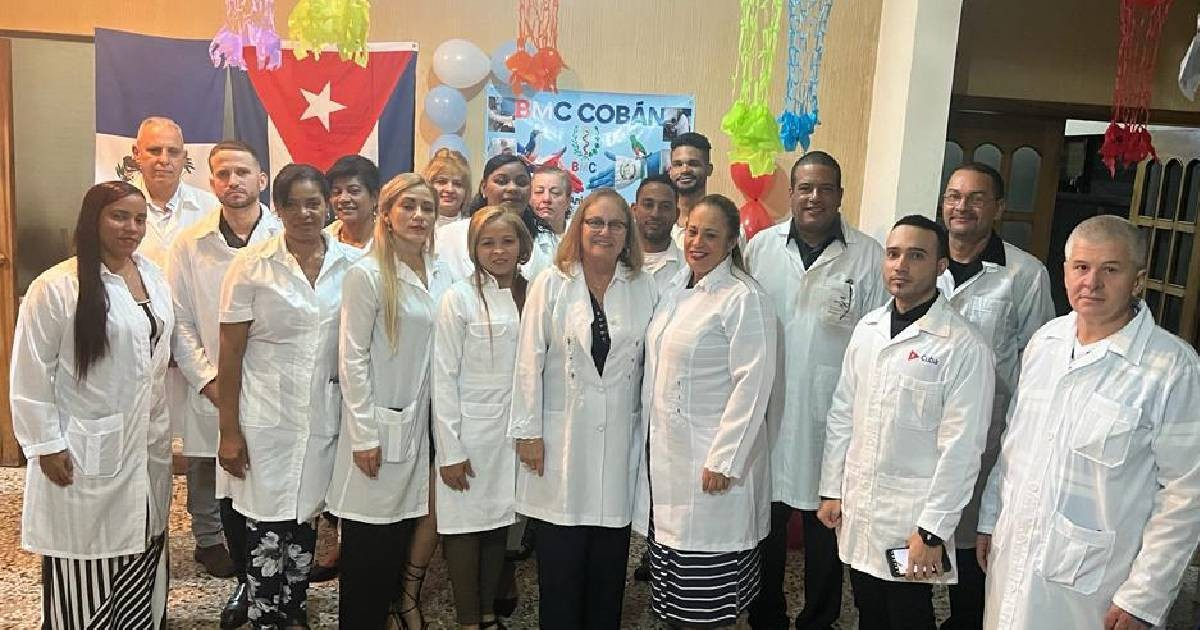
At least 93 members of the Cuban medical brigade will leave Guatemala in April, following the decision of this Central American country not to renew the agreement that had allowed their presence since 1998.
According to local press reports, the Guatemalan government has begun the gradual process of withdrawal, although it did not pay for the return tickets, despite being required to do so by the agreement signed with Cuba, stated the Ministry of Health.
The solution came from the private sector: "The Embassy of Cuba made an agreement with Guatemalan entrepreneurs to purchase the tickets," explained the Ministry of Health to the newspaper Prensa Libre.
The Cuban medical brigade in Guatemala was composed of 412 collaborators in total, including 333 doctors distributed across 11 types of establishments in the public health network.
Forty-five percent of the staff was concentrated in the departments of Quiché, Petén, and Alta Verapaz, primarily in rural areas and hard-to-reach communities.
After the first group in April, a second contingent is scheduled to depart in August 2026, although the Ministry of Health did not specify the number of people involved.
"The necessary arrangements will be made to acquire tickets for the Cuban Medical Brigade, and departures will be carried out progressively," the institution indicated.
The process was formalized through a diplomatic letter signed on January 6, 2026 by Chancellor Carlos Ramiro Martínez Alvarado, addressed to the Embassy of Cuba in Guatemala.
The document notified the non-progressive renewal of the brigadistas' services whose mission has reached its end or will conclude according to the established schedule.
The last formal agreement was signed in 2024 and remains in effect until 2027, but without any new mission renewals.
The exit occurs amidst an investigation by the Guatemalan Public Ministry (MP) which, as of March 24, had recorded more than 60 complaints against members of the brigade for professional impersonation, failure to meet legal requirements, and other offenses.
The Guatemalan shift falls within a diplomatic offensive by the Trump administration.
In mid-2025, the State Department, under the leadership of Marco Rubio, imposed visa restrictions on Central American officials and their families linked to Cuban medical missions, which Washington labeled as forced labor schemes that enrich the Cuban regime.
The pressure triggered a wave of regional cancellations. Honduras did not renew its agreement, which expired on February 25, 2026, and 172 Cuban doctors returned to the island on March 5.
Jamaica unilaterally notified the termination of its agreement on March 4, with 277 professionals withdrawn two days later. Guyana witnessed Cuba unilaterally withdrawing a brigade of over 200 doctors in February, after nearly fifty years of cooperation.
To fill the vacant positions left by the Cuban brigade, the Guatemalan Ministry of Health plans to recruit 1,400 epesistas, medical students in their final year from universities in the country, in addition to hiring local staff with incentives for hard-to-fill positions.
The departure from Guatemala represents another significant blow to the program of Cuban medical services exports, one of the main sources of foreign currency for the regime in Havana.
Filed under: