
Related videos:
The price of oil was shaken once again this Wednesday in international markets, driven by uncertainty over the course of the war between the United States and Iran and the lack of clear signs of de-escalation.
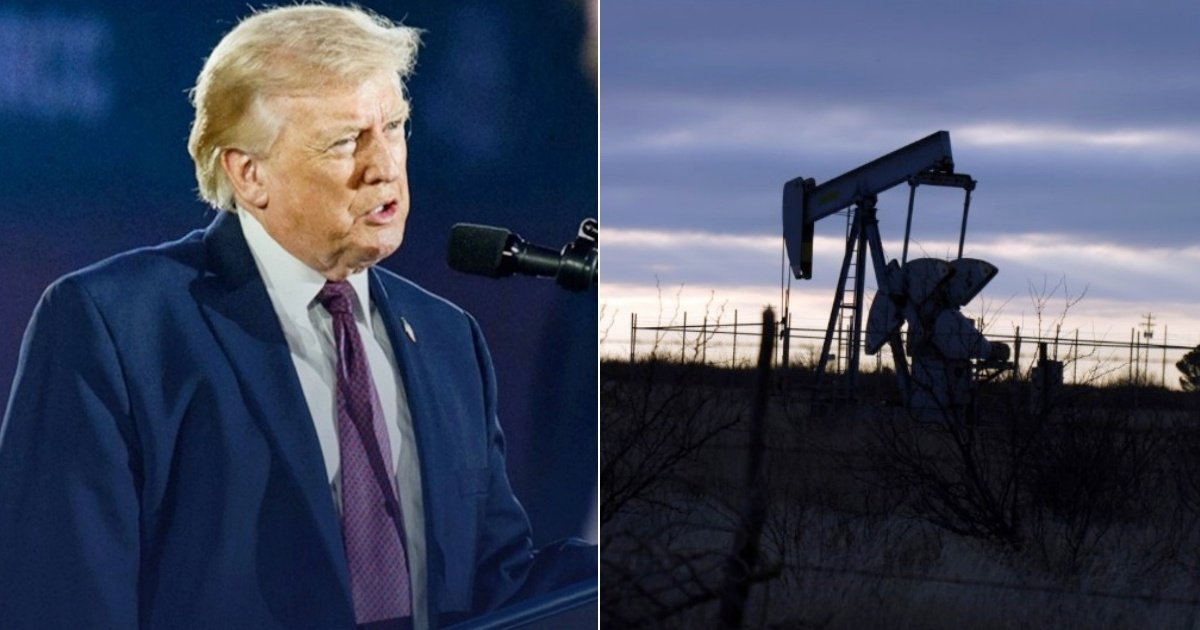
According to the agency EFE, "Texas intermediate oil (WTI, for its acronym in English) surged by 12.79% this Wednesday, reaching $112.93 per barrel", in a direct reaction to the speech by U.S. President Donald Trump, which left more questions than answers among investors.
At 9:00 AM local time in New York, WTI futures contracts were up more than $12 compared to the previous close, reflecting a market dominated by nervousness over the ongoing conflict in the Middle East.
A speech that unsettled the markets
The market reaction was directly linked to Trump's intervention, who avoided giving a clear timeline for the end of the war.
In his message, the leader combined warnings of military escalation with references to possible diplomatic negotiations.
Trump stated that the conflict could extend for "two or three more weeks" until his administration achieves its military objectives.
At the same time, he issued a strong threat: “in the next two or three weeks, we are going to push them back to the Stone Age.”
Although he insisted that his government continues to seek a diplomatic solution, the lack of concrete details about a possible ceasefire or an exit strategy raised concerns in the energy markets.
The Strait of Hormuz, at the center of fear
One of the main factors behind the rise in crude oil prices is the uncertainty surrounding the Strait of Hormuz, a strategic route through which approximately one fifth of the world's oil and gas supply passes.
The possibility that this route remains blocked or restricted continues to drive up prices.
The lack of clarity regarding its immediate reopening has undermined expectations for market stabilization.
Analyst Tom Essaye emphasized this point in his daily report: "Until there is clarity regarding a ceasefire —and ultimately, the reopening of the Strait of Hormuz to tanker traffic— a bullish dynamic driven by fear will persist in the oil market."
A build-up that had been taking shape
The strong surge this Wednesday is not an isolated event.
Days earlier, Texas oil had already surpassed 100 dollars per barrel for the first time since 2022, in a context marked by supply constraints and geopolitical tensions.
Since the onset of hostilities, oil prices have shown a sustained upward trend, driven by disruptions in supply chains, attacks on energy infrastructure, and production cuts in key countries.
The conflict has even led to the partial shutdown of energy facilities and restrictions on maritime transport in the Persian Gulf, exacerbating market volatility.
Direct impact on the economy
The rising cost of oil is already impacting the real economy. In the United States, the average price of gasoline has surpassed $4 per gallon, a level not seen since 2022.
The increase has been rapid: more than a dollar per gallon since the start of the conflict, directly impacting consumers and driving up transportation, production, and distribution costs.
The domino effect is beginning to be felt in multiple sectors. Businesses and households are facing higher expenses, while the risk of inflationary pressures increases. Even services like mail delivery have started to implement temporary surcharges due to the rise in fuel costs.
Meanwhile, diesel —essential for the transportation of goods— has also seen significant increases, further driving up the cost of the supply chain.
A global problem
The energy crisis is not limited to the United States. In Europe, fuel prices are even higher, and uncertainty about global supply keeps the markets on edge.
Countries that are highly dependent on energy imports, such as Cuba, could be particularly affected in a context where they are already facing internal energy crises.
For now, the evolution of prices will depend almost exclusively on the dynamics of the conflict. The duration of the war, the potential reopening of the Strait of Hormuz, and any diplomatic progress will be decisive factors.
Meanwhile, the oil market continues to react to fear and uncertainty. Without clear signs of a ceasefire, oil prices keep rising, solidifying their position as one of the main indicators of the global impact of the war.
Filed under: