
Related videos:
Cuba wakes up this Easter Sunday immersed in an electricity crisis that forecasts blackouts of up to 1,752 MW during peak nighttime hours, according to the official report from the Electric Union (UNE).
The electrical service was interrupted for 24 hours on Saturday, and the impact continued into the early hours of today. The highest recorded impact yesterday was 1,665 MW at 8:00 PM, exceeding the planned amount due to the outage of unit 6 at the Nuevitas Thermoelectric Power Plant (CTE).
At 6:00 AM today, the availability of the National Electric System (SEN) was only 1,258 MW against a demand of 2,366 MW, with 1,109 MW already impacted since early morning.
For the night peak, the situation worsens considerably: the UNE forecasts a supply of 1,278 MW against a maximum demand of 3,000 MW, resulting in a deficit of 1,722 MW and a projected impact of 1,752 MW.
The only expected relief is the launch of unit 5 of Energás Boca de Jaruco, providing a mere 20 MW, a negligible figure compared to the scale of the deficit.
Among the immediate causes are faults in Unit 2 of the CTE Felton and Unit 6 of the CTE Diez de Octubre, in addition to maintenance on Units 5 and 6 of the CTE Mariel, Units 3 and 6 of the CTE Renté, and Unit 5 of the CTE Nuevitas. The limitations in thermal generation amount to 450 MW out of service.
As a partial counterbalance, the 54 photovoltaic solar parks generated 3,915 MWh the previous day, with a peak power of 477 MW at noon. However, this generation is not available during the nighttime peak hours, when the largest deficits are recorded.
This Sunday's crisis is part of a sustained trend throughout the first quarter of 2026, with deficits ranging between 1,500 and nearly 2,000 MW.
The SEN completely collapsed twice in March: on the 16th of that month, with a blackout lasting 29 hours and 29 minutes, and on March 22, in a second collapse triggered also by the failure in unit 6 of the CTE Nuevitas.
The highest recorded impact so far this year was 1,990 MW on March 3rd.
The week leading up to Easter Sunday was also critical: on Thursday, April 2, the maximum impact reached 1,729 MW, on Friday the 3rd it reached 1,609 MW, and on Saturday the 4th, an impact of 1,570 MW was projected, which was ultimately exceeded.
The crisis is worsening due to external factors: Venezuela suspended its oil shipments following the capture of Nicolás Maduro, Mexico reduced its supplies, and the Trump administration declared a national emergency on January 29, authorizing additional tariffs on countries that supply oil to Cuba.
In this context, the shipment of crude oil dispatched by the Russian tanker Anatoli Kolodkin barely covers between seven and ten days of total consumption in Cuba.
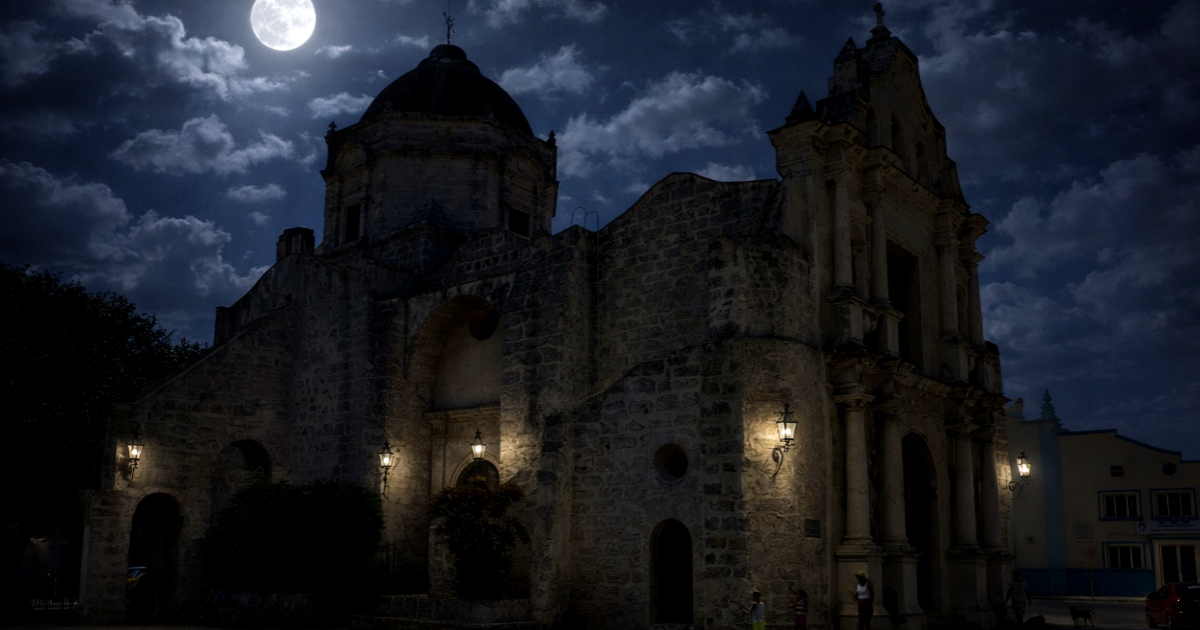
Meanwhile, Cubans celebrate Holy Week amidst blackouts, conducting the Stations of the Cross in the dark and cooking at three in the morning to make the most of the rare moments when electricity comes.
Filed under: