
Related videos:
On the 64th anniversary of the Union of Young Communists (UJC), President Miguel Díaz-Canel gave an exclusive interview to the official newspaper Juventud Rebelde this Saturday, in which he offered Cuban youth a recipe for happiness based on resilience, collective work, and study, while hundreds of them face imprisonment, blackouts, and exile as the only way out.
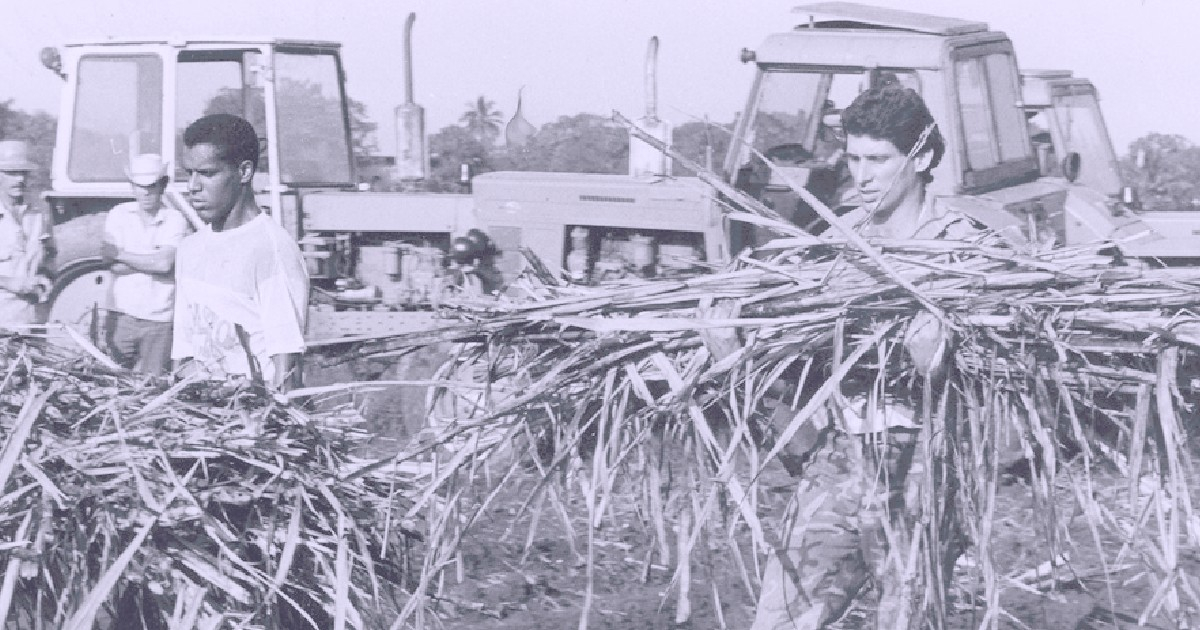
Díaz-Canel recalled his past as a youth leader during the Special Period and compared that crisis with the current one, presenting bicycles as a symbol of generational resilience.
"On bicycles, we went to universities, on bicycles, we went to activities, on bicycles, we went to work, on bicycles, we did volunteer work and connected with different sectors," recalled Díaz-Canel, who was the second secretary of the National Committee of the UJC during the 1990s. The curious detail is that, in the current crisis in the country, there aren't even bicycles available at affordable prices for those who wish to use them for transportation.
When asked what he would say to a young person he wished to inspire for a cause like that of Cuba, the leader replied, "What Carlos Marx said: 'happiness is in the struggle.'" He later emphasized that youth work, the more arduous it is, the more uplifting it becomes. However, successive generations of young people on the Island are quite weary of exaltations, hard struggles, sacrifices, and more sacrifices without seeing the results of a better life.
At another point in his dialogue with the official newspaper, Díaz Canel condensed his "message for the children, adolescents, and young people of Cuba today" into a repeated verb: "Study, study, study." And immediately afterward, citing Ernesto Che Guevara, he reminded them that "the Revolution is what matters." What is the purpose of studying? Thousands of young professionals on the Island, whose salaries barely allow them to make ends meet for a week, might respond.
The contrast between the president's "revolutionary" rhetoric and the reality of the newest generation in today's Cuba is stark.
It is estimated that more than one million Cubans have left the island since 2021, the majority being young people between the ages of twenty and forty, reducing the estimated population to between 8.6 and 9.3 million inhabitants.
According to the Cuban Observatory of Human Rights, 78% of nationals express a desire to emigrate, while 89% live in extreme poverty, according to a study published in 2025.
The very organization that Díaz-Canel leads and currently calls upon reflects this disenchantment: the UJC went from 609,000 members in 2007 to 415,000 in 2024, a loss of more than 200,000 affiliates in 17 years.
The young people who stay and protest face direct repression from the State.
On March 13, 2026, dozens of young people took to the streets of Morón, Ciego de Ávila, shouting "Freedom!" and "Homeland and Life" in response to the blackouts and shortages, resulting in five arrests and one injury.
Three days later, 16-year-old Jonathan David Muir Burgos was arrested and faces charges of sabotage with preventive detention since April 2. The Provincial Court of Ciego de Ávila denied his habeas corpus on March 25. Christian de Jesús Crespo Álvarez, also 16 years old, was detained on March 18 after being identified in videos of the same protests.
One day before Díaz-Canel's interview, the government announced the pardon of 2,010 prisoners. However, activists and independent civil society organizations have warned that those being released are common prisoners, none of whom are political.
While the president urges young people to approach life with "responsibilities, sacrifices, and attitudes," Cuba has experienced six nationwide blackouts since December 2024, the most recent occurring on March 21st.
It was precisely the darkness, the weariness, the feeling of being without horizons that drove the youth of Morón to take to the streets, shouting for freedom—a sentiment that encapsulates what the official discourse refuses to acknowledge.
Filed under: