
Related videos:
The rescue of the second crew member of the F-15E fighter jet shot down in Iran was much more than a "daring" operation, as Donald Trump described it.
New details from the international press reveal an undercover operation involving ground battles, the participation of special forces, the use of armed drones, and the destruction of U.S. aircraft within enemy territory.
According to reports from The Washington Post and The Guardian, the mission lasted nearly two days after the aircraft was shot down, while the officer—a colonel and weapons systems specialist—remained injured and hidden in mountainous areas, evading an intense search launched by the Iranian Revolutionary Guard and local militias.
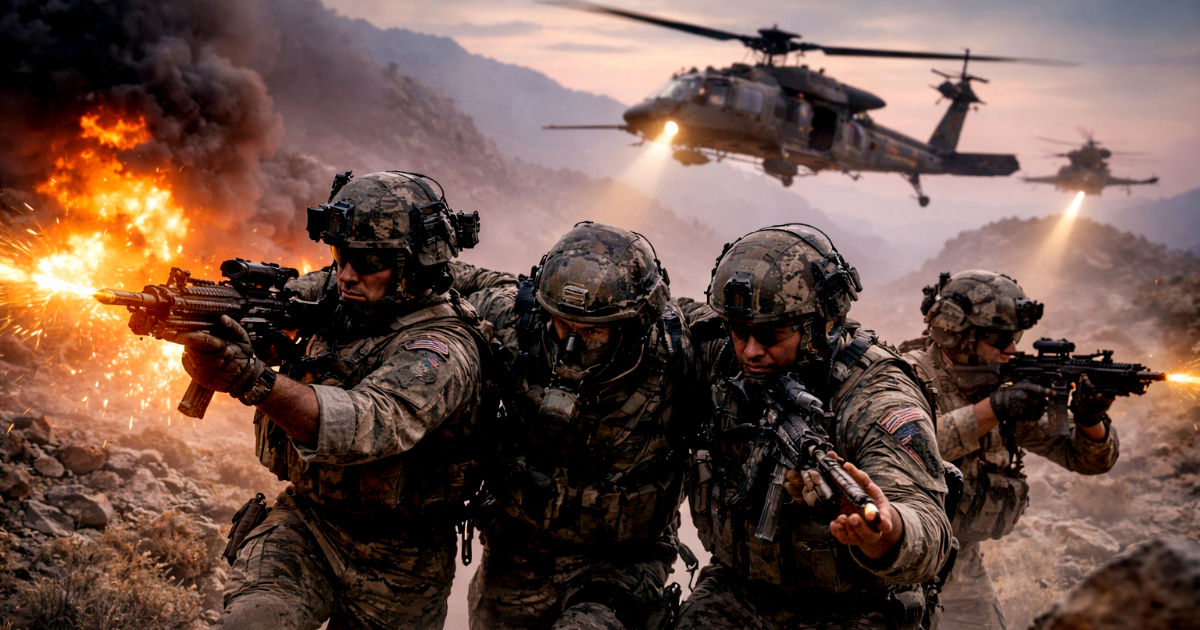
Unlike what was initially known, the rescue was not a simple extraction, but rather an active combat operation.
According to New York Post, MQ-9 Reaper drones and support aircraft continuously attacked Iranian forces that were trying to approach the pilot, in what cited sources describe as a “continuous neutralization” of threats on the ground.
Moreover, media outlets like The Sun point to the presence of elite units, including SEAL Team 6, alongside Air Force rescue teams, confirming that there was a direct insertion of special forces into Iranian territory, an extremely unusual scenario given the military risks involved.
One of the most sensitive elements of the operation was the use of strategic deception. According to several sources, the CIA had disseminated false information claiming that the pilot had already been rescued, with the aim of confusing Iranian forces and buying time to complete the actual operation.
This information warfare component was crucial in a race against time mission, where the pilot had to maneuver through mountainous regions to avoid capture, while Iran was even offering bounties for his location.
Another aspect revealed by the international press is that the United States has operated from a forward position within Iran. Various reports indicate the establishment of a makeshift runway or base that facilitated the coordination of the final phase of the extraction, including the deployment of special operations aircraft.
The magnitude of the risk was reflected in the losses incurred. According to The Wall Street Journal, at least two MC-130J Commando II aircraft —key platforms for special operations— were destroyed by U.S. forces themselves after becoming unusable or compromised on the ground, to prevent their technology from falling into Iranian hands.
These aircraft, which cost between 90 to 110 million dollars each, represent one of the most significant confirmed losses in the operation. This is compounded by damage to helicopters and drones, as well as the prior impact on other aircraft in the context of the rescue.
Despite everything, the White House maintains that the mission was a total success, emphasizing that both crew members of the F-15E were recovered alive. However, the details that continue to emerge point to a much more complex operation, involving real combat, high risk, and critical decisions deep in enemy territory.
Beyond the outcome, the rescue highlights the extent to which the conflict with Iran has escalated into scenarios of direct confrontation, where even a rescue mission can turn into a large-scale military operation, with significant strategic and material consequences.
Filed under: