
Related videos:
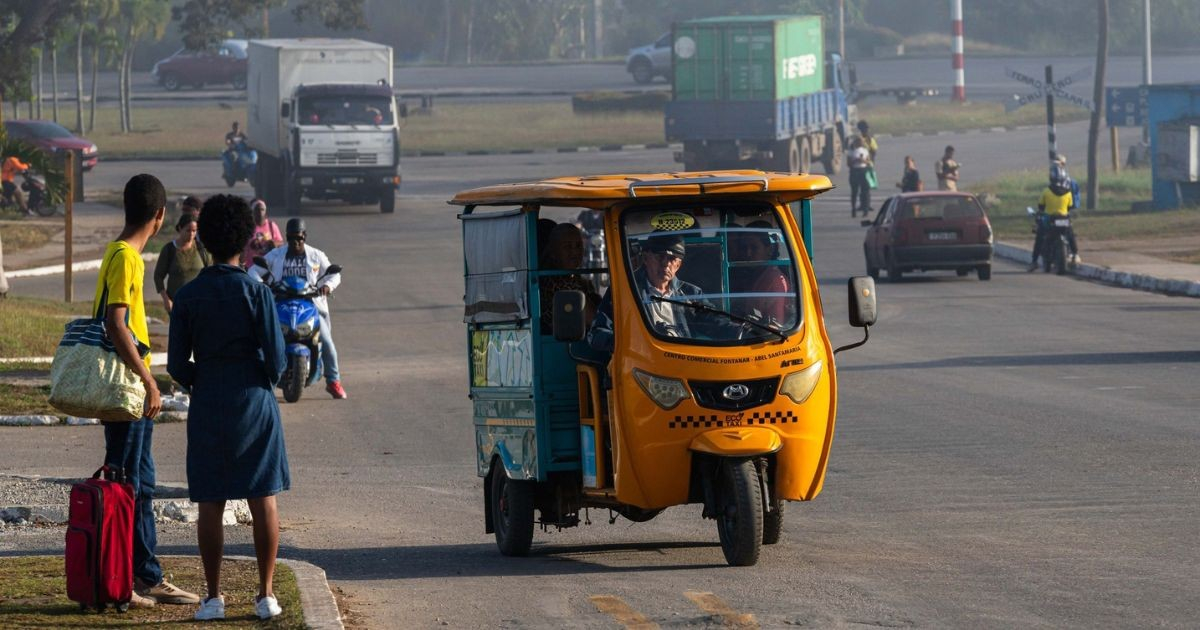
Electric tricycles have become the primary means of transportation in Havana due to the collapse of the bus system and the total fuel shortage that Cuba is experiencing, but their prices are prohibitively high for most of the population.
User Liset de la Caridad summarizes it clearly: "These tricycles significantly address the situation. The only downside is that when a certain hour arrives, prices start to go up, and since I travel far from the center of Havana, I pay almost 1,000 pesos a day," which is equivalent to about two dollars, she reported to EFE.
The data is striking, considering that the minimum monthly salary in Cuba is only 2,100 pesos (about 17.5 dollars), the average salary does not exceed 6,506 pesos (54.2 dollars), and the minimum pensions are at 3,056 pesos (25.4 dollars).
Paying 1,000 pesos in a single day for transportation is equivalent to nearly half of the monthly minimum wage.
Due to the fuel shortage, with streets and roads nearly deserted, an increasing number of Cubans are being forced to rely on tricycles, motorcycles, and electric bicycles to get around the city.
Electric tricycles have become a business. Yamiselis Alfonso, a driver of one of these vehicles, works 12 hours a day on the route that goes "from Fraternity Park to Toyo," covering nearly 10 kilometers with a capacity for six passengers. Alberto Duani, a former bricklayer, has transitioned to being a driver because "there isn't much work" in construction anymore.
Acquiring an electric tricycle is not within everyone's reach: in the informal market, they sell for up to 3,800 dollars, far above the official prices ranging from 1,300 to 2,550 dollars announced by the online international store Casalinda Shop in January.
The regime acknowledged the magnitude of the disaster. Díaz-Canel himself admitted in a press conference on March 13 that no fuel had arrived in Cuba "not a drop" since January. At the beginning of February, he had already announced a plan for "acute fuel shortages" in response to pressures from the United States.
The result was the near-total collapse of state transportation: interprovincial bus departures were reduced to a quarter of their usual frequency, and local transport was practically canceled. In provinces like Ciego de Ávila, only two out of 135 bus routes were operating in March.
The situation has reached an extreme that illustrates the depth of the crisis: the Minister of Transport, Eduardo Rodríguez, announced on March 18 that even hemodialysis patients must travel in taxis or electric tricycles, paying out of their own pockets for a service that was previously guaranteed by the State.
Filed under: