
Related videos:
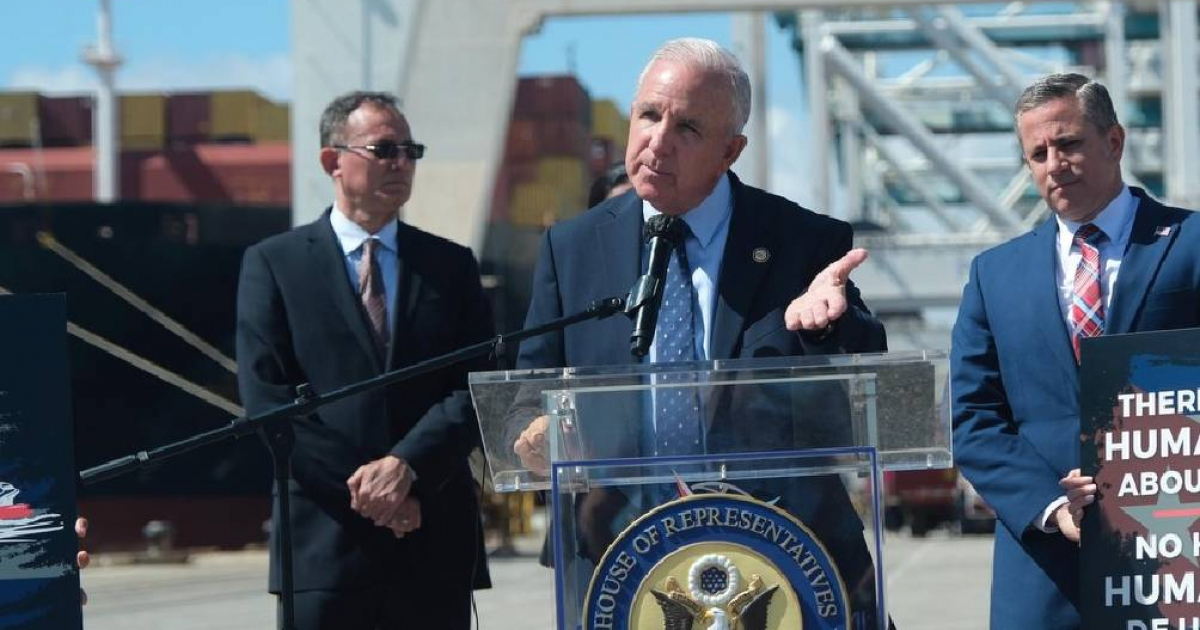
The Republican representative Carlos A. Giménez criticized his Democratic colleagues Pramila Jayapal and Jonathan Jackson on Monday for traveling to Cuba and meeting with the dictator Miguel Díaz-Canel, accusing them of hypocrisy for presenting themselves as defenders of democracy while supporting a regime he described as "repressive and brutal."
The visit of Jayapal and Jackson concluded on Sunday and marked the first documented in-person meeting of U.S. legislators with Díaz-Canel since September 2018.
Giménez, the only member of Congress born in Cuba, published his critique on X with a straightforward message: "This is the difference between Democrats and Republicans: while Democrats go to Cuba to meet with the leaders of a communist and anti-democratic dictatorship, Republicans support the people in their quest for a free and democratic Cuba."
The congressman was even more emphatic when addressing the two legislators directly: "As the only member of Congress born in Cuba, I tell you: Jayapal and Jackson should be ashamed for supporting this repressive and brutal regime. As supposed defenders of democracy, your hypocrisy knows no bounds."
The five-day visit of the two congressmen, both members of the Congressional Progressive Caucus, included meetings with Díaz-Canel, Foreign Minister Bruno Rodríguez, and members of the Cuban parliament, as well as families, religious leaders, entrepreneurs, and civil society organizations.
In a joint statement on Sunday, Jayapal and Jackson described Trump's energy sanctions as a "cruel collective punishment" and an "economic bombardment" of Cuba's infrastructure, and demanded immediate negotiations between Washington and Havana, abandoning the "outdated Cold War policies."
The context of the visit is the energy crisis currently affecting Cuba following the Executive Order 14380 signed by Trump on January 29 of 2026, which imposed an oil blockade on the island through tariffs on countries supplying crude oil to it.
That measure reduced Cuban oil imports by between 80% and 90%, causing blackouts that affected 64% of the country with outages lasting up to 25 hours a day.
On March 30, Trump partially lifted the blockade for humanitarian reasons, allowing the arrival of a Russian tanker with between 700,000 and 730,000 barrels at the port of Matanzas.
During the stay of the Democratic congress members on the island, Díaz-Canel released more than 2,000 prisoners, an act interpreted as a sign of openness to dialogue with Washington.
Giménez, who has actively supported the Trump administration's maximum pressure measures against the Cuban regime, stated in February 2026 that these policies signify "the beginning of the end" of the dictatorship and that Cuba is approaching its "moment of the Berlin Wall".
In March, the congressman also demanded the release of the 1,214 political prisoners confirmed by the organization Prisoners Defenders as of the end of February 2026.
Filed under: