
Related videos:
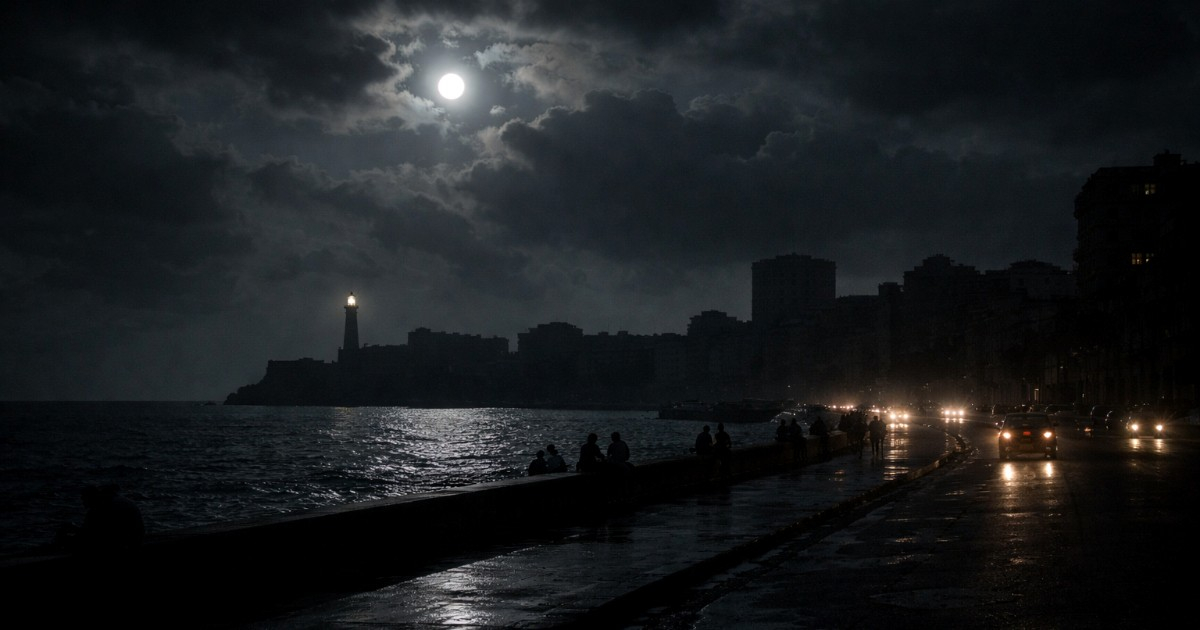
Cuba faces one of the worst electrical days of the year this Tuesday, with blackouts reaching nearly 1,900 MW and the Guiteras still out of service due to a boiler malfunction.
According to the official statement from Unión Eléctrica (UNE), the highest recorded outage this Monday was 1,871 MW at 8:50 PM, and the service was interrupted due to a capacity deficit for a full 24 hours, with the impact extending into the early hours of today.
At 6:00 AM on Tuesday, the availability of the National Electric System was only 1,200 MW against a demand of 2,518 MW, with 1,337 MW already affected.
The outlook for the night peak hours is even more severe: the UNE forecasts a capacity of 1,240 MW against a maximum demand of 3,080 MW, resulting in a deficit of 1,840 MW and an estimated impact of 1,870 MW.
The main cause of the worsening situation is the failure of the Guiteras, the largest power generation plant in the country, located in Matanzas, which unexpectedly went offline early Monday morning due to a puncture in its boiler while supplying 170 MW to the system.
The cooling process necessary to access the damage takes between 30 and 36 hours, and the subsequent repair requires at least an additional 72 hours, which keeps the plant out of the system for several days.
Unit 2 of the Felton Thermal Power Plant is also reported as out of service, while several units from the Mariel, Renté, and Nuevitas plants are under maintenance, with 366 MW of thermal generation offline due to limitations.
As the only relief anticipated for the peak this Tuesday, the state company announces the entry of unit five from the Energás Boca de Jaruco Thermal Power Plant with 20 MW, along with the completion of its combined cycle adding another 20 MW. These figures are insufficient to offset the structural deficit.
During the daytime, the 54 photovoltaic solar parks installed in the country contributed 3,518 MWh this Monday, with a peak power of 514 MW at midday, although this generation does not cover the nighttime peak hours when demand is at its highest.
The crisis is set against a backdrop of sustained deterioration that intensified in 2025, when electricity generation dropped by 13.7% compared to the previous year, falling from over 21,000 GWh in 2019 to under 16,000 GWh.
La Guiteras has accumulated multiple breakdowns so far in 2026: in February due to a boiler defect, in March because of a pipe rupture, and now in April due to the flat tire that has it out of service.
Cuba also experienced two complete system failures in March: on the 16th of that month, with a blackout that lasted 29 hours and 29 minutes, and on March 22, when more than 90% of Havana was left without electricity.
The Ministry of Energy and Mines announced this Tuesday that the Turkish barges will begin generating electricity in the second half of April, supported by 730,000 barrels of Russian fuel unloaded last Friday, a temporary measure that will not resolve the structural deficit in the short term.
Filed under: